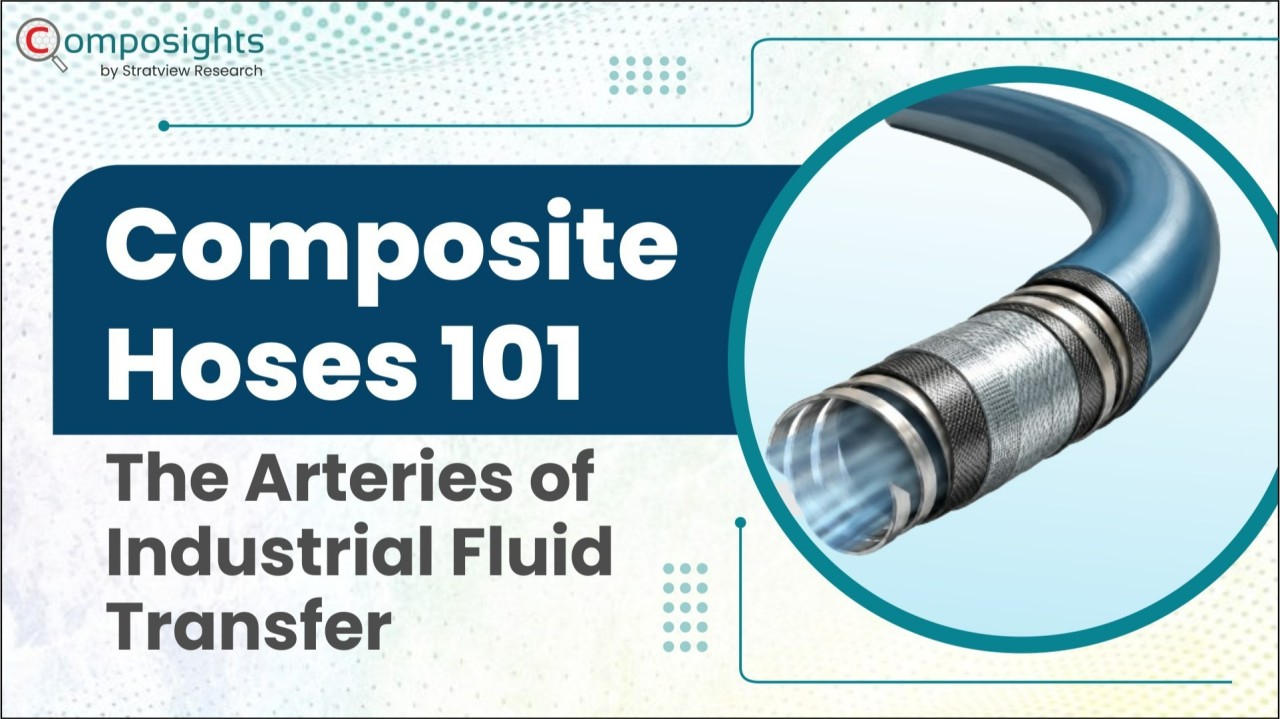
Every day, millions of liters of fuels, chemicals, solvents, and industrial gases move through refineries, chemical plants, marine terminals, tank trucks, and manufacturing facilities. While pumps, valves, and storage tanks often receive the spotlight, the safe movement of these fluids depends on a less visible but equally critical component: the hose.
A hose failure can lead to product loss, operational downtime, environmental incidents, and serious safety risks. As industries place greater emphasis on workplace safety, environmental compliance, and operational efficiency, composite hoses have emerged as a preferred alternative to conventional rubber and metallic hose technologies.
Combining lightweight construction, exceptional flexibility, and broad chemical compatibility, composite hoses are increasingly becoming the backbone of modern fluid transfer operations.
What Is a Composite Hose?
A composite hose is a highly flexible, non-vulcanized industrial hose designed for transferring liquids, vapors, and gases under demanding pressure or vacuum conditions.
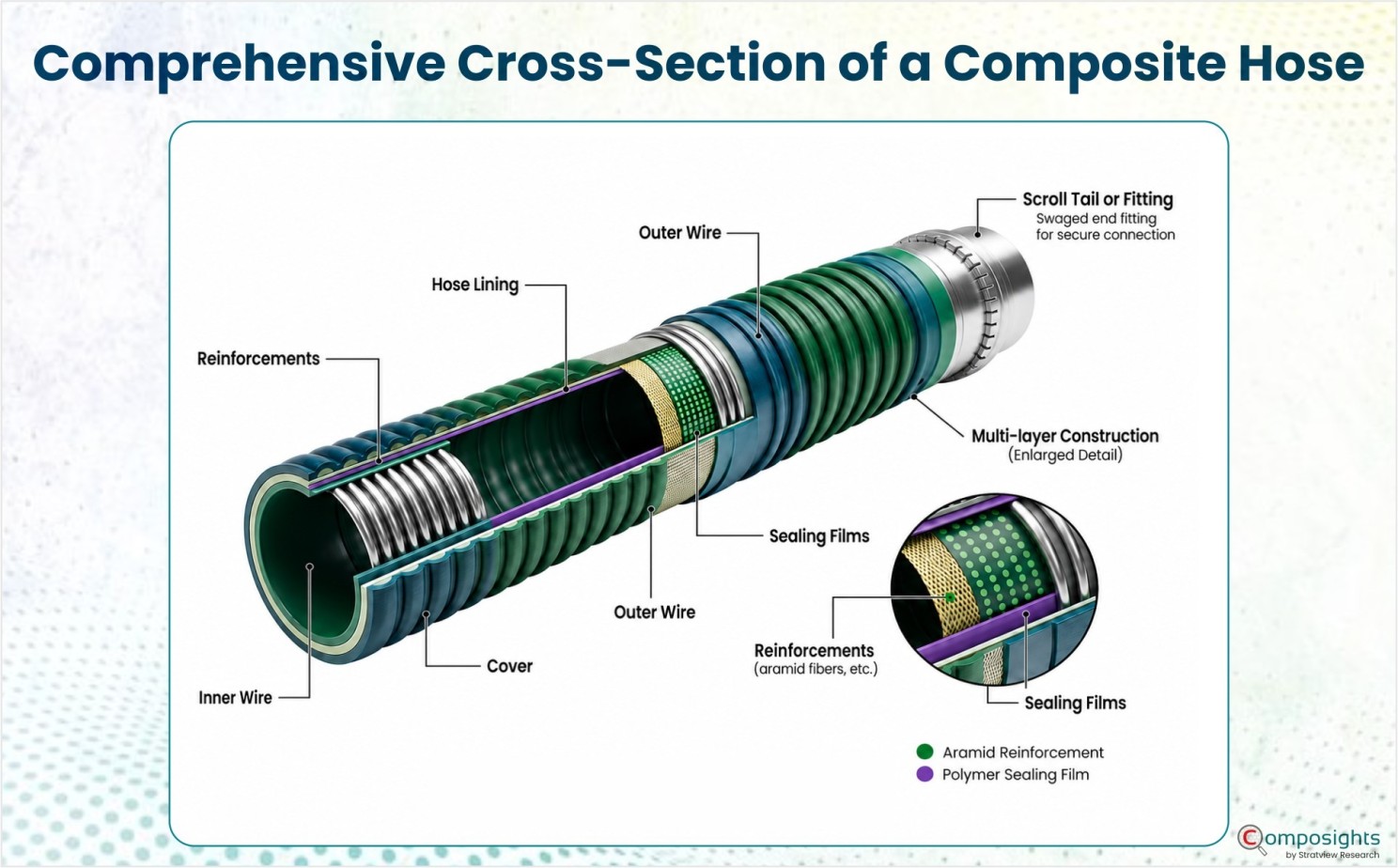
Unlike conventional rubber hoses, which rely on chemically bonded layers, composite hoses are constructed by wrapping multiple layers of specialized thermoplastic films and reinforcement fabrics between two interlocking metal wire helices.
Think of a composite hose as an engineered multi-layer barrier system. Each layer performs a specific function, from chemical resistance and pressure containment to vapor sealing and structural reinforcement. This unique construction enables the hose to remain flexible, lightweight, and highly resistant to a wide range of industrial media.
The result is a transfer solution that can safely handle aggressive chemicals, petroleum products, cryogenic fluids, and food-grade materials while maintaining excellent handling characteristics.
Why Industries Are Switching to Composite Hoses
Several operational advantages are driving the growing adoption of composite hose technology.
-
Superior Flexibility: Composite hoses offer significantly tighter bend radii than traditional rubber or metallic hoses. This makes them easier to maneuver during loading, unloading, and transfer operations, particularly in confined spaces.
-
Reduced Weight: Many composite hose assemblies can be 30–40% lighter than comparable rubber hoses, reducing operator fatigue and improving handling efficiency during repetitive transfer activities.
-
Broad Chemical Compatibility: By selecting the appropriate liner materials, composite hoses can safely transfer a diverse range of products, including acids, alkalis, solvents, fuels, edible oils, and specialty chemicals.
-
Enhanced Safety: Unlike conventional hose technologies that may fail suddenly, composite hoses are designed with multiple containment layers. In many cases, deterioration becomes visible before a major failure occurs, providing operators with valuable warning signs.
-
Strong Vacuum Performance: The internal wire helix helps prevent hose collapse during suction applications, making composite hoses suitable for both pressure and vacuum service.
Inside the Construction of a Composite Hose
To understand why composite hoses perform differently from conventional hose technologies, it helps to look inside their construction.
- Inner Helix Wire
The inner helix provides structural support and prevents collapse under vacuum conditions. Depending on the application, materials may include stainless steel, galvanized steel, or aluminum.
- Inner Sealing Liner
This layer serves as the primary barrier between the transferred media and the hose structure. Common materials include polypropylene (PP), PTFE, nylon, and polyamide, selected according to chemical compatibility requirements.
Graphic Courtesy of Stratview Research
- Reinforcement and Sealing Layers
Multiple technical films and fabrics are wrapped around the liner to create a robust pressure barrier. These layers work together to minimize permeation while enhancing mechanical strength.
- Outer Helix Wire
The outer wire locks the hose structure together, helping maintain pressure integrity and providing resistance against external crushing forces.
- Outer Cover
The outer cover protects the hose from abrasion, weather exposure, UV radiation, and everyday handling damage.
Did You Know?
A composite hose may contain more than a dozen individual layers of films, fabrics, and reinforcement materials, with each layer engineered to perform a specific role in pressure containment, chemical resistance, flexibility, or vapor control.
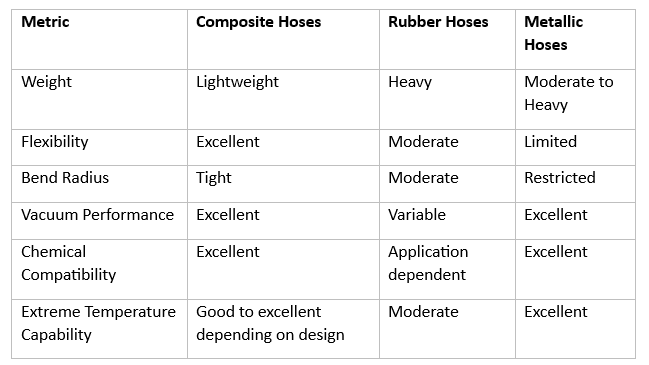
Composite Hoses vs. Rubber Hoses vs. Metallic Hoses
 Courtesy of Stratview Research
The combination of flexibility, lightweight construction, and chemical resistance often positions composite hoses as a practical middle ground between rubber and metallic alternatives.
Key Specifications
When evaluating composite hoses, engineers typically focus on several critical operating parameters:
- Nominal Bore Size: Typically available from 25 mm (1 inch) to 300 mm (12 inches).
- Working Pressure: Commonly ranges from 5 to 25 bar, depending on design and application.
- Temperature Capability: Standard designs can operate from approximately –30°C to +150°C, while specialized cryogenic variants can handle significantly lower temperatures.
- Electrical Continuity: Metal helices are connected to end fittings to help dissipate static electricity during fuel and solvent transfer operations.
Types of Composite Hoses
Because composite hoses are manufactured using layered construction techniques, they can be customized for highly specific applications.
(a) Petroleum Composite Hoses
Used for transferring gasoline, diesel, aviation fuel, crude oil, and other petroleum products at terminals, refineries, and tank truck loading facilities.
(b) Chemical Composite Hoses
Designed to handle aggressive acids, alkalis, solvents, and specialty chemicals commonly found in chemical processing operations.
(c) Cryogenic Composite Hoses
Engineered to maintain flexibility and performance at extremely low temperatures, making them suitable for LNG, LPG, and other cryogenic fluid applications.
(d) Vapor Recovery Hoses
Used to capture and return hydrocarbon vapors during loading and unloading operations, helping facilities reduce emissions and improve environmental compliance.
(e) Food-Grade and Pharmaceutical Hoses
Manufactured using approved liner materials for transferring edible oils, syrups, beverages, and pharmaceutical ingredients without compromising product quality.
How to Select the Right Composite Hose: The STAMPED Method
Selecting the wrong hose can create safety risks and shorten service life. For this reason, many engineering and procurement teams follow the STAMPED methodology:
- S – Size: Required diameter and length.
-
T – Temperature: Internal and external temperature conditions.
-
A – Application: Operating environment and use case.
-
M – Media: Chemical composition and concentration of the transferred product.
-
P – Pressure: Operating and surge pressure requirements.
-
E – End Fittings: Connection type and material compatibility.
-
D – Delivery: Applicable testing standards and certification requirements.
The STAMPED framework helps ensure that hose specifications align with real operating conditions.
Composite Hoses in the Years Ahead
The role of composite hoses is expanding as industries seek safer, lighter, and more efficient fluid transfer solutions. According to Stratview Research, the global composite hoses market is projected to reach approximately USD 400 million by 2032, supported by stricter environmental regulations, growing LNG and cryogenic infrastructure, and increasing focus on workplace safety and ergonomics.
While often overlooked, composite hoses remain a critical link between storage, transportation, and processing systems. As industrial operations continue to evolve, their combination of flexibility, chemical resistance, and operational reliability will keep them at the center of modern fluid handling applications.
Subscribe to our newsletter
Related Blogs:
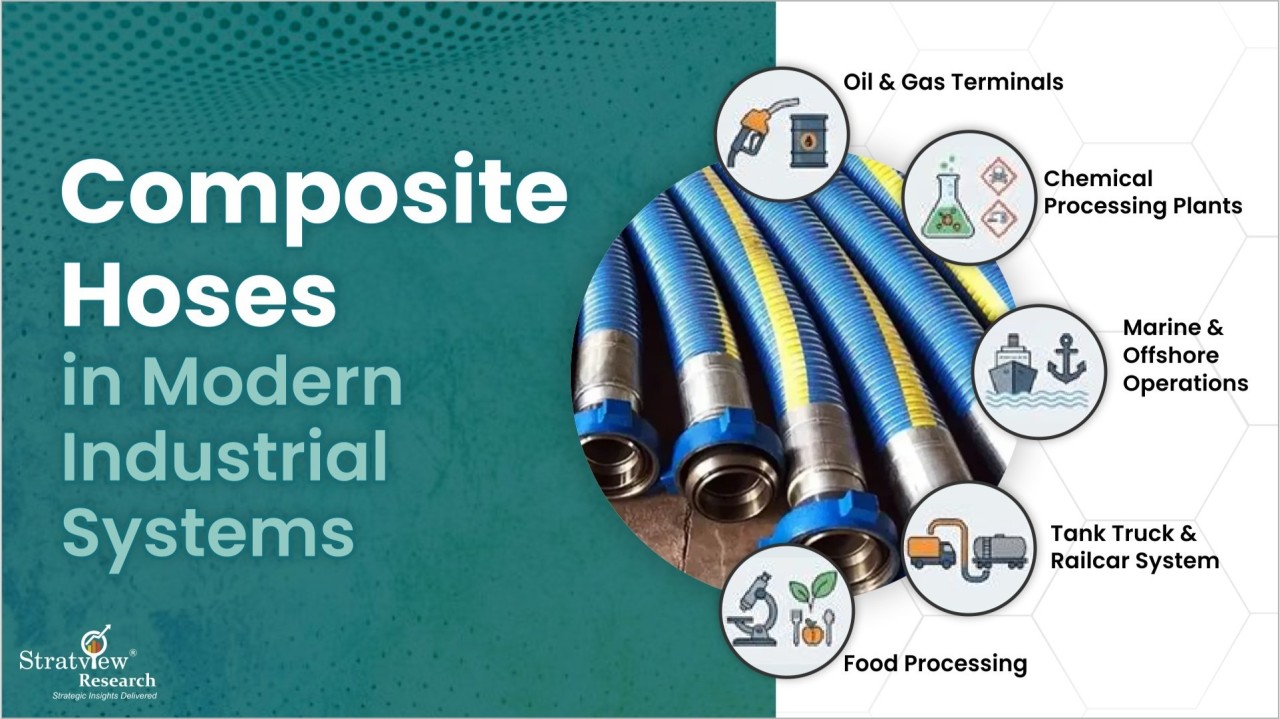
Composite Hoses in Modern Industrial Systems – From Internal Construction to Industrial Impact
How Much Do You Really Know About Hydraulic Hoses?
Didn’t find what you were looking for?
Tell us about your requirements
(Our team usually responds within a few hours)