In today’s industrial fluid transfer environments, where safety, chemical compatibility, and operational reliability are critical, traditional hose technologies are increasingly being challenged. Composite hoses have emerged as a preferred solution across industries such as oil & gas, chemical processing, marine transfer, and bulk handling, offering a versatile alternative to traditional rubber and metallic hoses. Engineered using multiple layers of thermoplastics and reinforcement materials, composite hoses combine flexibility with structural integrity, enabling safe handling of a wide range of aggressive fluids under varying operating conditions.
This blog, Composite Hoses 101, provides a technical overview of composite hoses, covering their construction, performance characteristics, key types, and industrial applications.
What are composite hoses?
Composite hoses are flexible, non-vulcanized industrial hoses designed for the transfer of liquids, vapours, and gases in demanding applications. Unlike rubber hoses, which rely on bonded layers, composite hoses are built using multiple layers of thermoplastic films and fabrics supported by metal wire helices. This construction method allows composite hoses to deliver high flexibility, excellent chemical resistance, and reliable pressure and vacuum performance. Their lightweight nature and broad chemical compatibility make them ideal for dynamic loading and unloading operations.
What is the Structure of a Composite Hose?
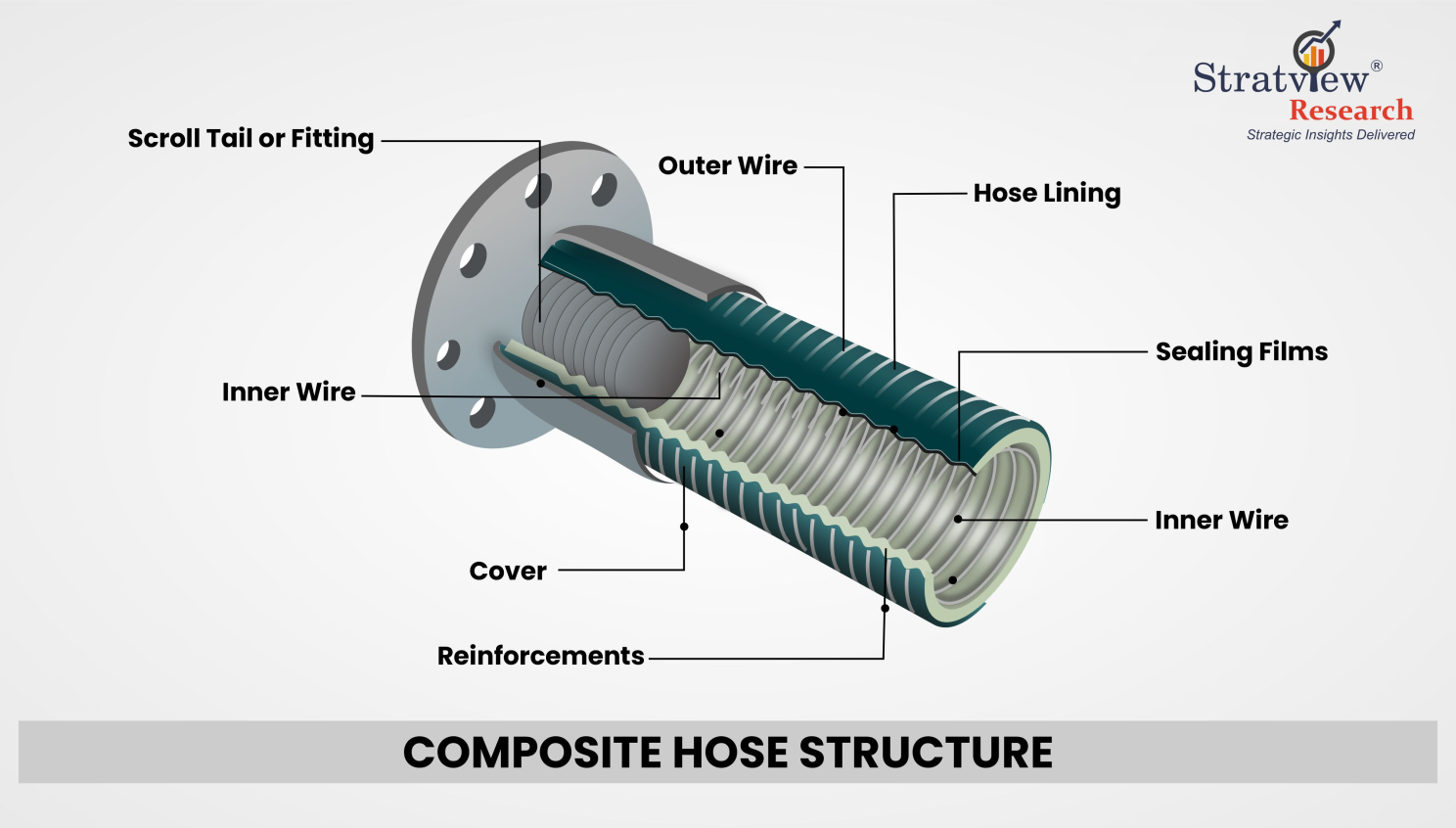
A composite hose consists of multiple engineered layers, each designed to provide strength, flexibility, and chemical resistance. The key components include:
Inner Helix Wire: Manufactured from cargo-compatible metals such as galvanized steel, stainless steel, or aluminium, the inner helix wire provides internal structural support. Its pitch corresponds with the outer helix, preventing hose collapse under vacuum and supporting the inner liner and reinforcement layers.
Inner Liner: The innermost fluid-contact layer, typically made from polypropylene, PTFE, polyethylene, or PVC. It acts as the primary chemical barrier, and liner selection is critical to ensure compatibility with the conveyed media.
Reinforcement and Sealing Layers: Multiple layers of thermoplastic films and fabrics, including polypropylene, polyamide, acrylic, and PTFE, are incorporated to provide effective pressure containment, flexibility, and chemical resistance.
Outer Helix Wire: Interlocked with the inner helix, the outer wire enhances structural integrity, enabling the hose to achieve its rated working pressure.
Outer Cover and End Fittings: An external protective cover safeguards the hose against abrasion, UV radiation, and environmental exposure, while wet-sealed or dry-sealed end fittings provide reliable, leak-free connections.
Hose Structure
Key Technical Specifications and Performance Characteristics
- Nominal Bore Sizes: Available from 25mm to 300mm and more, suitable for both low- and high-volume fluid transfer applications
- Working Pressure: Typically rated between 5 and 25 bar, with higher-pressure designs available for LPG and ammonia service
- Operating Temperature Range: –30°C to +150°C, depending on liner material selection
- Electrical Properties: Anti-static or electrically conductive designs to reduce static discharge risk
- Lightweight and Flexible Design: Approximately 30–40% lighter than comparable rubber hoses, with highly flexible construction that enables tight bend radii, smooth handling, and reduced operator fatigue during loading and unloading operations
- Chemical Resistance: Compatible with hydrocarbons, solvents, acids, and alkalis; polypropylene and PTFE liners provide broad chemical compatibility
- Corrosion Resistance: Non-metallic liner and reinforcement layers resist corrosion in chemical and marine environments
What are the Types of Composite Hoses?
Composite hoses are classified according to their service requirements and fluid compatibility:
- Petroleum Composite Hoses: Transfer gasoline, diesel, crude oil, aviation fuel, and other hydrocarbons in terminals, tankers, and refineries.
- Chemical Composite Hoses: Handle corrosive acids, alkalis, solvents, and specialty chemicals safely.
- Cryogenic Composite Hoses: Designed for LPG and LNG transfer, retaining flexibility at sub-zero temperatures.
- High-Temperature Composite Hoses: Suitable for elevated-temperature chemical and process applications.
- Vapor Recovery Composite Hoses: Capture and transfer hydrocarbon vapors during loading/unloading.
- Food-Grade Composite Hoses: FDA-compliant liners for edible oils, beverages, syrups, and other food liquids.
What are the industrial applications of composite hoses in modern industry?
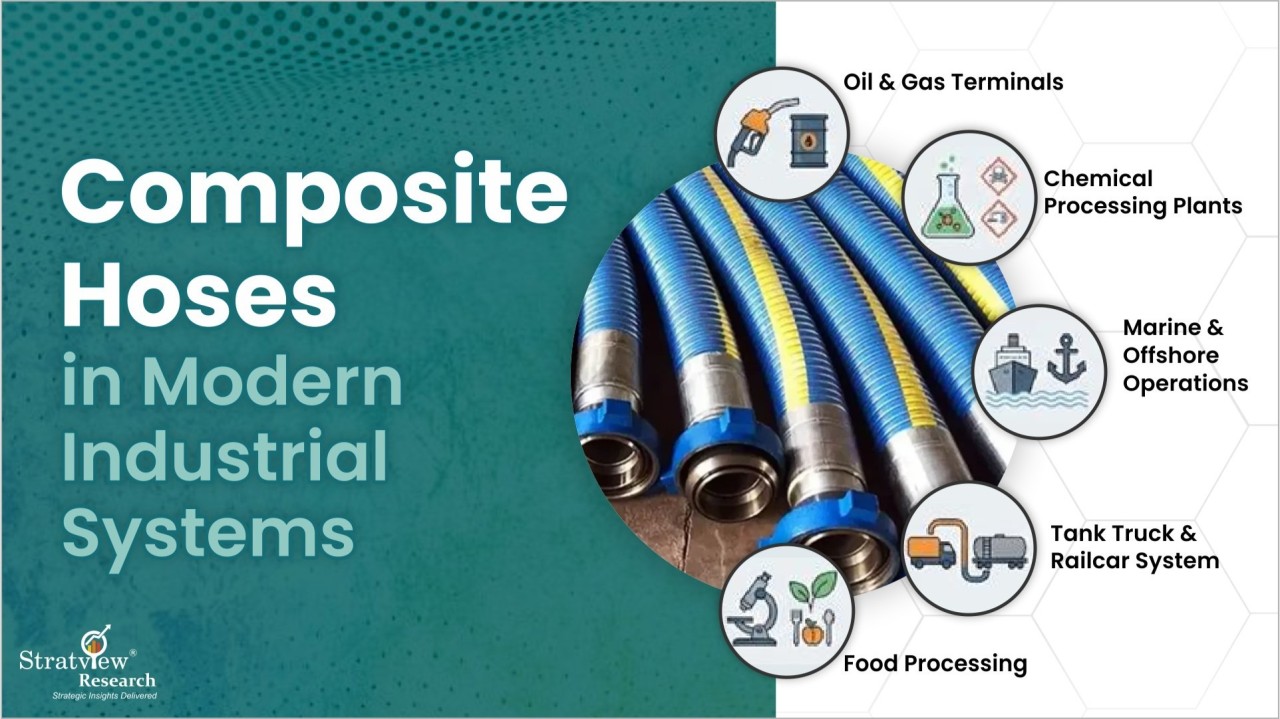
Composite hoses are widely deployed in oil and gas terminals for the safe loading and unloading of fuels and hydrocarbons. In chemical processing plants, they enable reliable transfer of corrosive and hazardous chemicals while minimizing contamination risks. Marine and offshore operations utilize composite hoses for ship-to-ship and ship-to-shore transfer due to their corrosion resistance, flexibility, and durability in harsh marine environments. In tank trucks, railcars, and bulk storage systems, composite hoses improve handling efficiency and reduce operator fatigue. Additionally, industries such as food processing, pharmaceuticals, and specialty chemicals rely on composite hoses for hygienic fluid transfer, chemical compatibility, and compliance with regulatory standards.
The Road Ahead for Composite Hoses
With their wide-ranging applications across industries, composite hoses are becoming increasingly essential for safe and efficient fluid and gas transfer. The market is projected to reach approximately USD 400 million by 2032, growing at a CAGR of 3.3%, driven by rising industrial and petrochemical investments, stricter environmental and safety regulations, expanding global trade, and increasing demand for lightweight, corrosion-resistant, and versatile hose solutions. As industries continue to emphasize efficiency, safety, and operational reliability, composite hoses are poised to remain indispensable components in modern industrial systems worldwide.
TAGS: energy and power