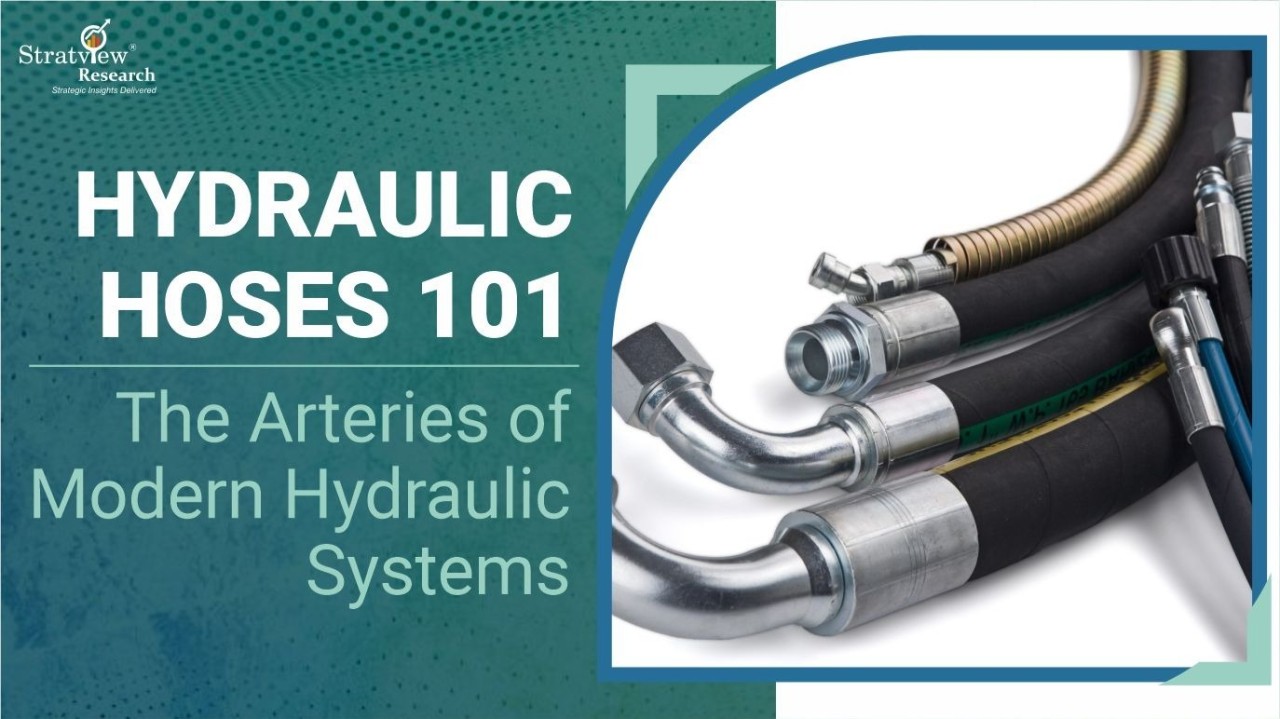
When people think about hydraulic systems, they usually picture massive excavators, towering cranes, or powerful agricultural tractors. Yet behind every lift, push, and precise movement is a component that often goes unnoticed: the hydraulic hose.
Think of a hydraulic hose as the circulatory system of a machine. Just as blood vessels carry blood throughout the human body, hydraulic hoses transport pressurized hydraulic fluid between pumps, valves, cylinders, and motors. Without them, hydraulic power simply couldn't reach the components that do the actual work.
Although often overlooked, hydraulic hoses are indispensable to modern industry. In fact, their growing importance is reflected in market demand, with the global hydraulic hoses market valued at USD 6.4 billion in 2025 and projected to reach USD 8.7 billion by 2031, driven by rising investments in construction equipment, industrial automation, agriculture, mining, and heavy machinery worldwide.
Unlike ordinary rubber hoses, hydraulic hoses are built to withstand extreme pressure, constant vibration, harsh weather, and continuous mechanical movement. Their job isn't just to move fluid, it's to transfer energy safely and efficiently, even in some of the world's toughest operating environments.
How Does a Hydraulic Hose Work?
Hydraulic systems rely on Pascal's Law, which states that pressure applied to a confined fluid is transmitted equally in all directions.
A hydraulic pump pressurizes the fluid, and the hydraulic hose carries this pressurized fluid to cylinders or hydraulic motors. Once the fluid reaches these components, its hydraulic energy is converted into mechanical force that powers lifting, pushing, rotating, or steering movements.
This efficient transfer of hydraulic energy allows machines to generate tremendous force while maintaining precise control and flexibility.
What's Inside a Hydraulic Hose?
Although it may look simple from the outside, a hydraulic hose is a carefully engineered assembly of three essential layers.
-
The inner tube is responsible for carrying hydraulic fluid and is typically made from synthetic rubber, thermoplastic, or PTFE, depending on the application.
-
Surrounding it is the reinforcement layer, which provides the hose with its pressure-bearing strength. This reinforcement may consist of textile fibers, braided steel wire, or multiple spiral steel wire layers for heavy-duty applications.
- Finally, the outer cover shields the hose from abrasion, UV exposure, oil, chemicals, moisture, and other environmental hazards that could shorten its service life.
Together, these layers enable hydraulic hoses to perform reliably under demanding operating conditions.
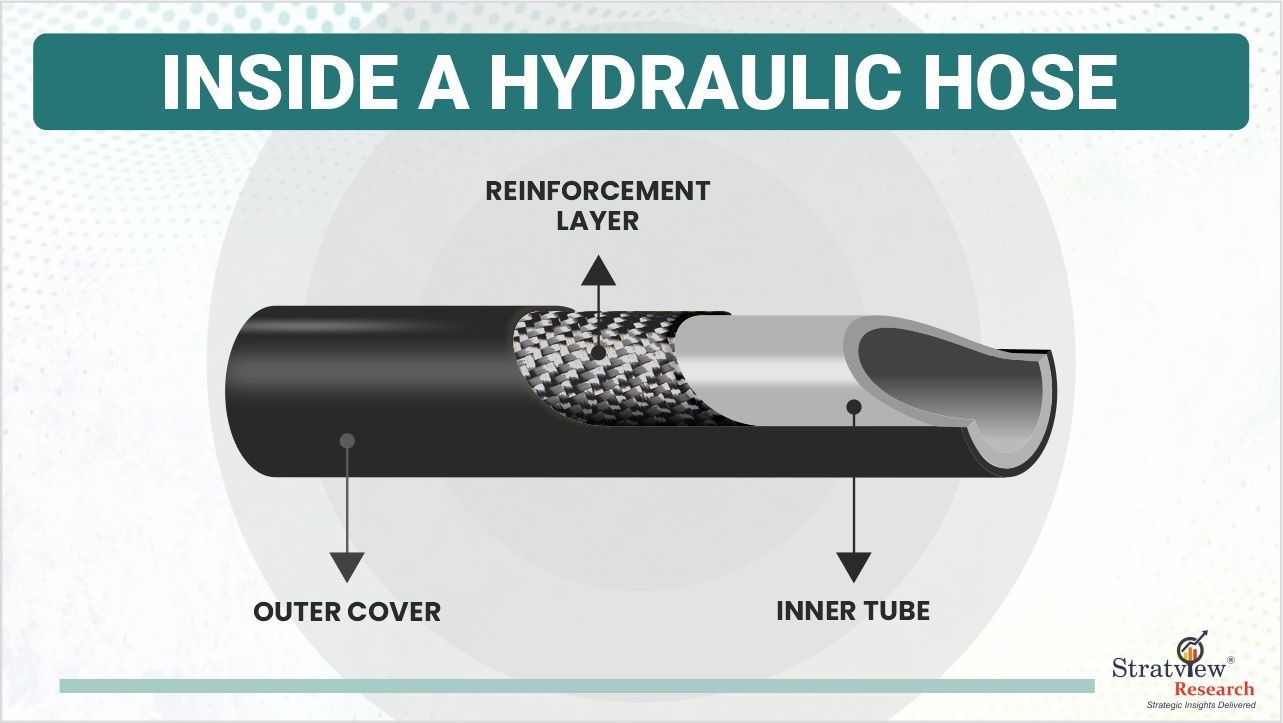
Image Courtesy of Stratview Research
Hydraulic Hose Types Based on Reinforcement
No single hydraulic hose is suitable for every application. Different applications require different reinforcement constructions to meet specific pressure, flexibility, and environmental requirements.
Braided hydraulic hoses are among the most common and are widely used in construction equipment, industrial machinery, and agricultural vehicles because they offer an excellent balance between flexibility and pressure resistance.
For applications involving extremely high pressures, such as mining equipment, excavators, and heavy industrial machinery, spiral wire hoses are preferred. Their multiple layers of spiral steel reinforcement allow them to handle significantly higher operating pressures.
Textile-reinforced hoses are typically used in low-pressure return lines or lubrication systems, while PTFE hoses are ideal for applications involving high temperatures or aggressive chemicals, making them popular in aerospace and chemical processing industries.
Hydraulic Hoses Classified by Pressure Ratings
Hydraulic hoses are also classified according to their working pressure, the maximum pressure they are designed to withstand safely during normal operation.
-
Low pressure: Below 250 PSI and most commonly with textile/fabric braid reinforcement
-
Medium pressure: Up to 3,000 PSI and most commonly with wire braid reinforcement
-
High pressure: 3,000–6,000 PSI with a mix of wire braid and spiral braid reinforcement
Where Are Hydraulic Hoses Used?
Hydraulic hoses are found wherever fluid power is required to perform heavy-duty work. Their versatility makes them indispensable across numerous industries.
Agriculture: Hydraulic hoses power tractors, harvesters, sprayers, and loaders, enabling lifting, steering, and implement control in demanding field conditions operations.
Construction: Excavators, bulldozers, cranes, loaders, and concrete pumps rely on hydraulic hoses to perform digging, lifting, earthmoving, and material handling using high-pressure hydraulic systems.
Industrial & Manufacturing: Hydraulic presses, injection molding machines, CNC equipment, forklifts, and automated production systems depend on hydraulic hoses to deliver precise and reliable fluid power.
Mining: Hydraulic hoses operate drilling rigs, crushers, loaders, haul trucks, and underground mining equipment while enduring extreme pressure, abrasion, vibration, and harsh operating environments.
Transportation: Commercial trucks, buses, trailers, refuse collection vehicles, and rail equipment use hydraulic hoses for steering, braking, suspension, lifting, and cargo-handling applications.
Oil & Gas: Hydraulic hoses transfer pressurized fluid within drilling rigs, offshore platforms, blowout preventers, hydraulic power units, and valve control systems operating under demanding pressure and environmental conditions.
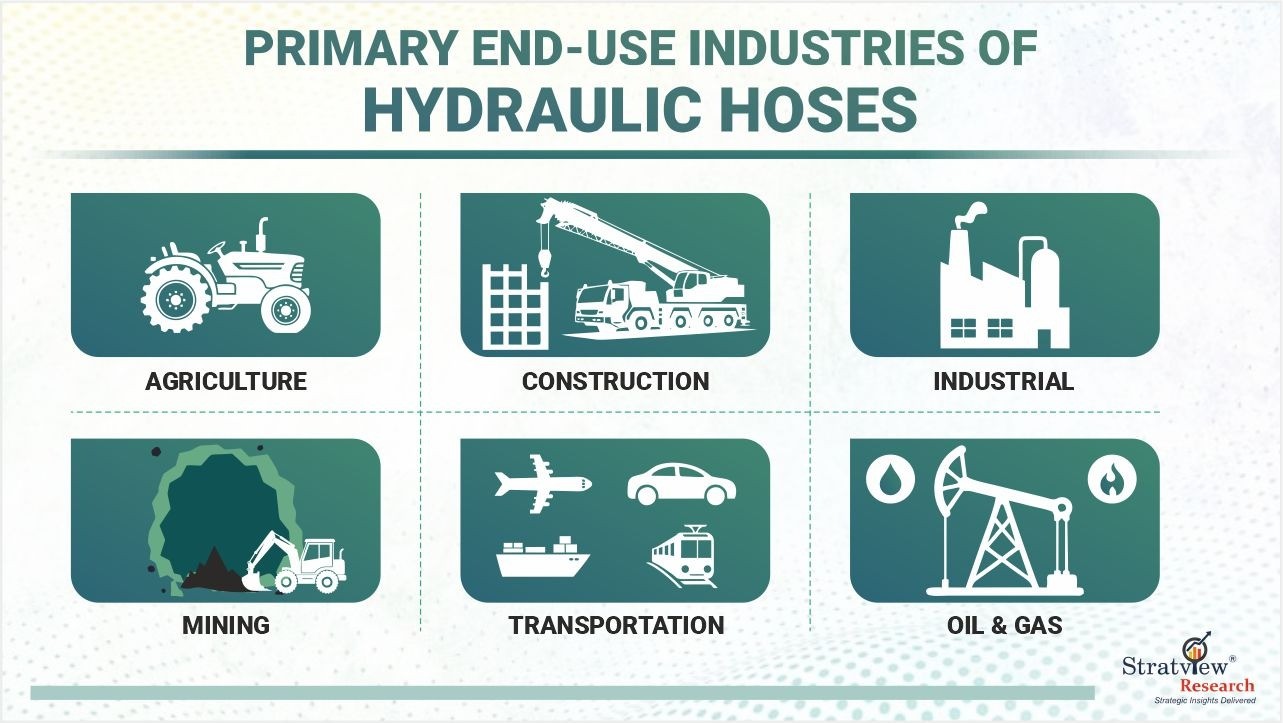
Image Courtesy of Stratview Research
Choosing the Right Hydraulic Hose
Selecting a hydraulic hose involves much more than matching the correct diameter. Engineers widely follow the STAMPED method to ensure the hose matches the application's requirements:
- S – Size
- T – Temperature
- A – Application
- M – Material (fluid being conveyed)
- P – Pressure
- E – End fittings
- D – Delivery requirements
Another critical factor is understanding the difference between working pressure and burst pressure.
Working pressure refers to the maximum pressure a hose can safely withstand during normal operation. Burst pressure represents the minimum pressure at which the hose is expected to rupture under controlled laboratory testing.
According to the SAE J517 standard, hydraulic hoses are typically designed with a minimum 4:1 burst-to-working pressure safety factor. For example, a hose rated for 2,000 PSI working pressure should have a minimum burst pressure of 8,000 PSI. However, the burst pressure is strictly a safety margin and should never be considered an allowable operating pressure.
Why Proper Selection Matters
Even the most robust hydraulic hose has a finite service life.
Premature failures are often caused by excessive pressure, tight bend radii, abrasion, incompatible hydraulic fluids, excessive temperatures, improper routing, or incorrect fittings. Fortunately, many of these failures can be prevented through proper hose selection, correct installation, routine inspections, and timely replacement.
As hydraulic systems continue to evolve with higher operating pressures and increasing automation, the importance of selecting the right hose has never been greater.
Hydraulic hoses may not be the most visible part of a machine, but they are undoubtedly among the most essential. Understanding how they work, how they're built, and how to choose the right one is the first step toward improving equipment reliability, operational safety, and long-term performance. Sometimes, the most critical components are the ones quietly doing their job behind the scenes.
Subscribe to our newsletter
Related Blogs:
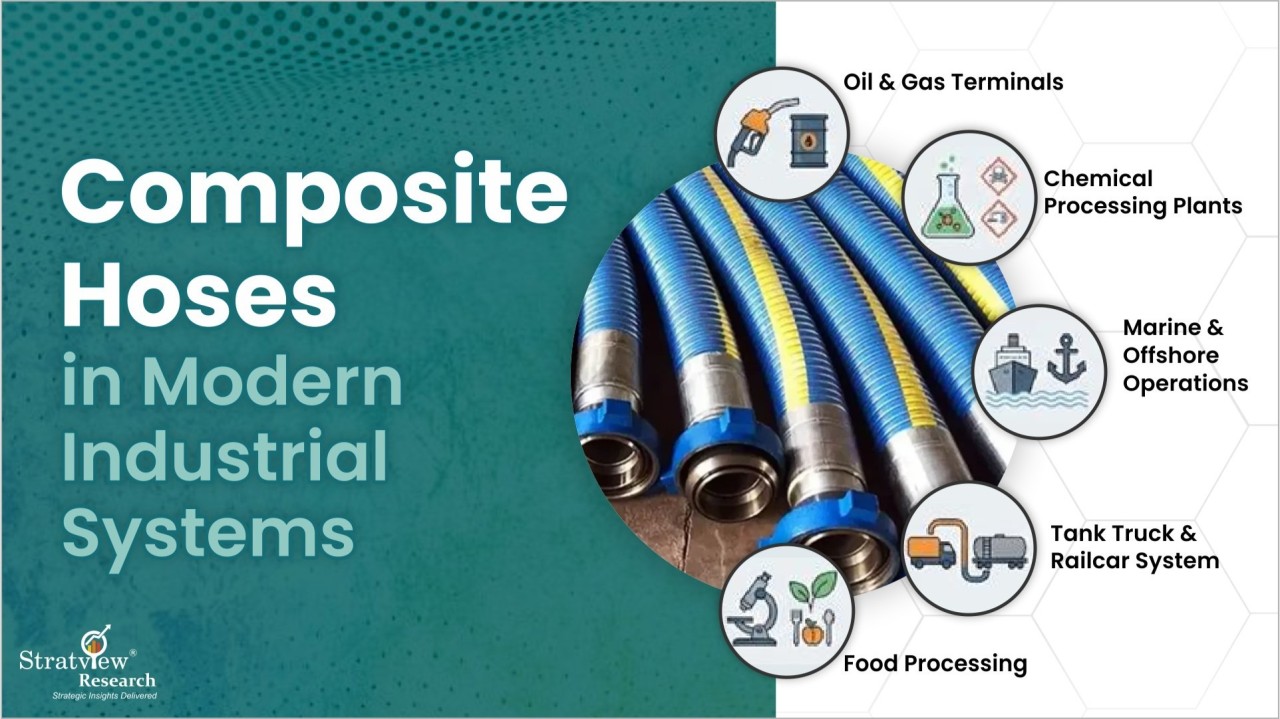
Composite Hoses in Modern Industrial Systems – From Internal Construction to Industrial Impact
Didn’t find what you were looking for?
Tell us about your requirements
(Our team usually responds within a few hours)