




404
+1-313-307-4176

Aircraft Thrust Reverser Market Analysis | 2025-2034

Aircraft Thrust Reverser Market Size, Share, Trend, Forecast, Competitive Analysis, and Growth Opportunity: 2025-2034
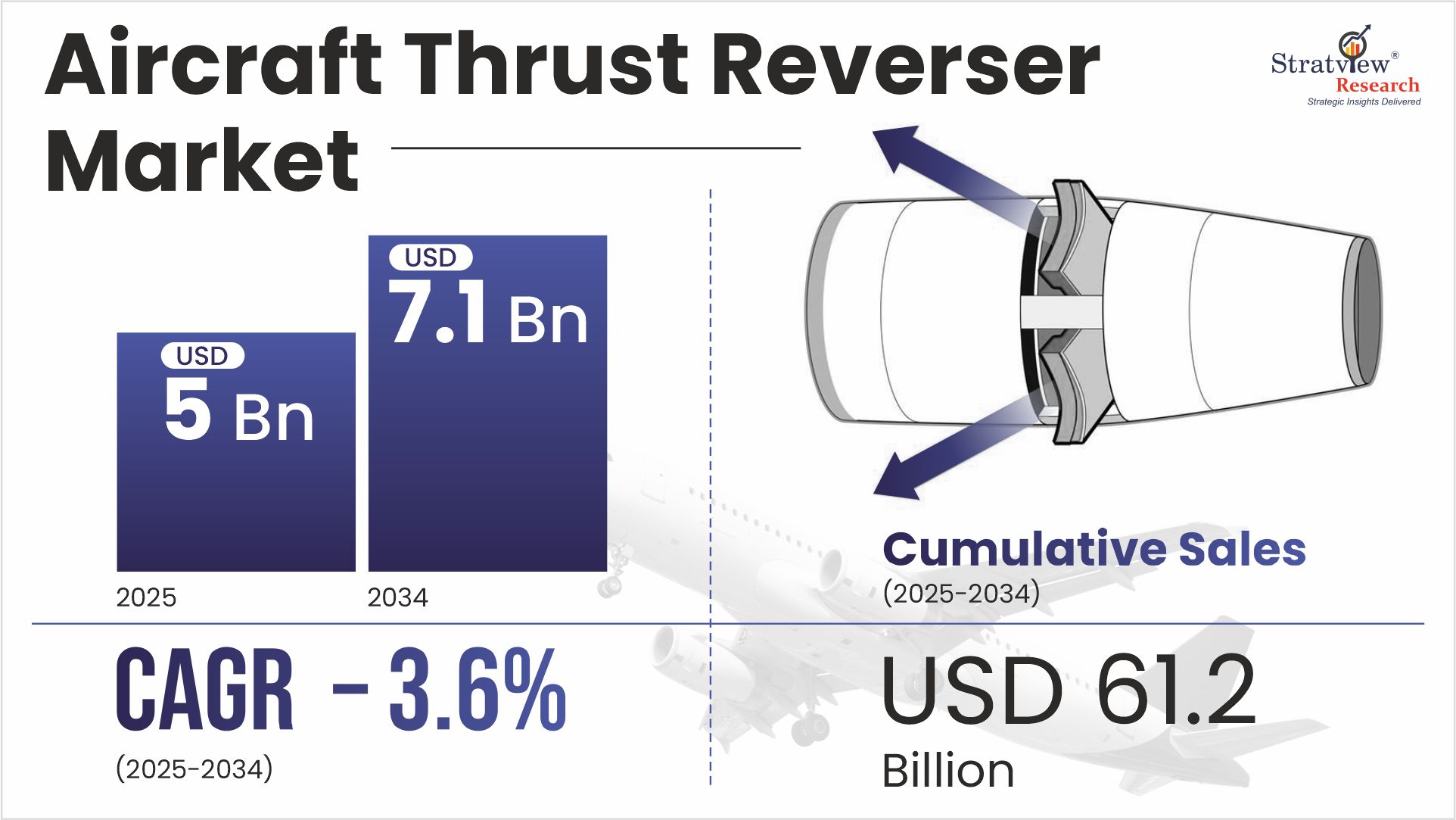
"Aircraft thrust reverser market size was USD 4.8 billion in 2024.”
The market is expected to reach USD 5.0 billion in 2025, witnessing an annual growth of 5.0%.
The market size will reach USD 7.1 billion in 2034, witnessing a market growth (CAGR) of 3.6% during the forecast period of 2025-2034.
The annual demand for aircraft thrust reverser was USD 4.8 billion in 2024 and is expected to reach USD 5.0 billion in 2025, up 5.0% than the value in 2024.
During the forecast period (2025-2034), the aircraft thrust reverser market is expected to grow at a CAGR of 3.6%. The annual demand will reach USD 7.1 billion in 2034.
During 2025-2034, the aircraft thrust reverser industry is expected to generate a cumulative sales opportunity of USD 61.2 billion.
Want to get a free sample? Register Here
North America is expected to continue being the largest market for aircraft thrust reversers over the forecast period.
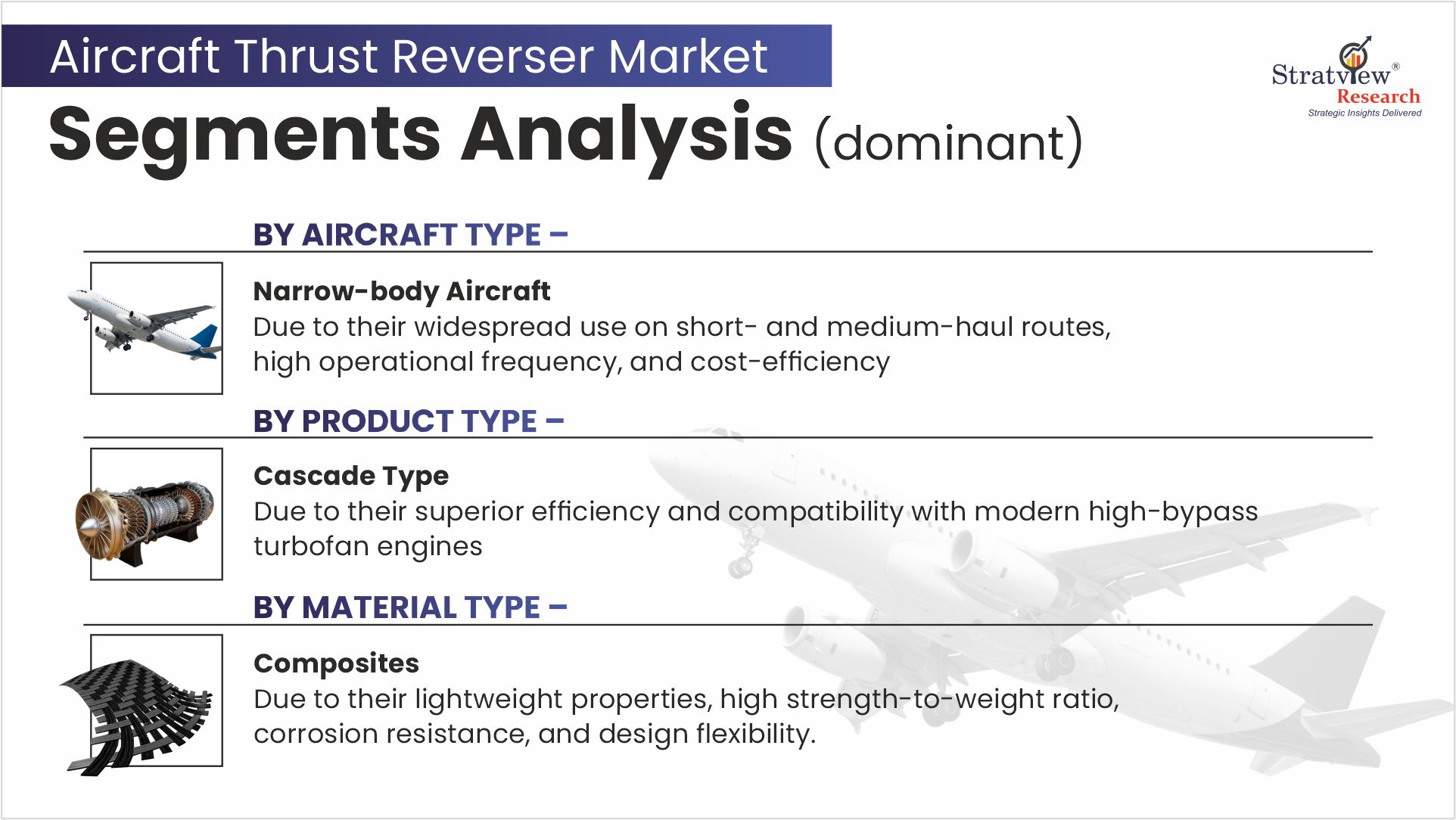
By aircraft type, narrow-body aircraft are projected to account for the largest share of the market over the forecast period.
By product type, cascade type is expected to remain the dominant as well as the fastest growing product during the forecast period.
By mechanism type, hydraulic thrust reversers are expected to maintain their strong presence in the market throughout the forecast period.
By process type, AFP/ATL processes are expected to achieve the fastest growth among manufacturing methods.
By material type, composites are forecasted to remain the primary material used in thrust reverser manufacturing throughout the forecast period.
Have a look at the sales opportunities presented by the aircraft thrust reverser market in terms of growth and market forecast.
|
Aircraft Thrust Reverser Market Data & Statistics |
|
||
|
Market Statistics |
Value (in USD Billion) |
Market Growth (%) |
|
|
Annual Market Size in 2024 |
USD 4.8 billion |
- |
|
|
Annual Market Size in 2025 |
USD 5.0 billion |
YoY Growth in 2025: 5.0% |
|
|
Annual Market Size in 2034 |
USD 7.1 billion |
CAGR 2025-2034: 3.6% |
|
|
Cumulative Sales Opportunity during 2025-2034 |
USD 61.2 billion |
- |
|
|
Top 10 Countries’ Market Share in 2024 |
USD 3.8 billion + |
> 80% |
|
|
Top 10 Company’s Market Share in 2024 |
USD 2.4 billion to USD 3.4 billion |
50% - 70% |
|
An aircraft thrust reverser is a critical engine system designed to redirect exhaust airflow forward instead of backward, generating reverse thrust to help slow the aircraft during landing. While it works alongside wheel brakes and spoilers rather than replacing them, it plays a vital role in improving landing safety, especially on wet, icy, or short runways. By assisting with rapid deceleration, aircraft thrust reversers also help reduce brake load, minimize tire wear, and enhance overall operational efficiency.
Growing Aircraft Nacelle Production Drives Demand for Aircraft Thrust Reversers
Rising aircraft deliveries are increasing demand for aircraft nacelles, which integrate thrust reversers to optimize airflow, engine performance, acoustic efficiency, and landing deceleration. As narrow-body fleets expand across high-frequency short- and medium-haul routes, the growing production of nacelle systems is directly supporting demand for advanced thrust reversers.
Safety-Driven Demand & Regulatory Emphasis
Operational safety continues to be a key factor influencing the growth of the aircraft thrust reverser market. These systems are critical for improving braking performance, especially on short, wet, or icy runways where stopping distances are limited.
According to the Aircraft Owners and Pilots Association (AOPA), immediate deployment of reverse thrust after touchdown can reduce landing distance by 25% or more while minimizing brake wear. In high-weight landing scenarios, thrust reversers work alongside braking systems to ensure safe deceleration.
With aviation regulators and airlines prioritizing runway safety and operational efficiency, the demand for reliable and high-performance thrust reverser systems continues to strengthen across both commercial and defense aviation sectors.
Rising Aircraft Deliveries & Surging Air Passenger Traffic
The steady rise in global air travel is directly accelerating demand across the aircraft thrust reverser market. Expanding middle-class populations and stronger connectivity in emerging economies are pushing airlines to scale up fleets, creating parallel demand for advanced thrust reverser systems.
According to Boeing’s Commercial Market Outlook, more than 43,000 new aircraft are expected by 2044, while Airports Council International projects global passenger traffic to surpass 12 billion annually by 2030. This sustained fleet expansion is reinforcing long-term growth opportunities for aircraft thrust reverser manufacturers.
High System Complexity and Maintenance Costs
The aircraft thrust reverser market faces notable challenges due to the inherent complexity of these systems, which integrate actuators, hydraulic or electric mechanisms, and cascade vane assemblies. This multi-component architecture increases maintenance intensity and inspection requirements, leading to higher lifecycle costs for operators.
Frequent checks and overhauls can also result in operational downtime, impacting aircraft availability. As airlines focus on cost efficiency, managing maintenance expenses while ensuring system reliability remains a key industry challenge.
Technological Innovations Expanding Market Opportunities
Continuous innovation in materials, aerodynamics, and actuation systems is opening new growth avenues in the aircraft thrust reverser market. The adoption of lightweight composites, advanced cascade designs, and electric actuation technologies is enhancing system efficiency, durability, and maintainability.
These advancements help reduce aircraft weight, improve fuel efficiency, and lower lifecycle costs, making next-generation thrust reversers increasingly attractive for OEMs and airlines focused on performance optimization and long-term operational savings.
Fleet Modernization and Lightweight Thrust Reverser Technologies
Fleet modernization programs are creating significant opportunities for the aircraft thrust reverser market forecast. Airlines are increasingly adopting lightweight composite thrust reversers and electrically actuated systems that improve fuel efficiency, reduce maintenance requirements, and lower lifecycle costs. These technologies are becoming an integral part of next-generation nacelle systems designed to support sustainability objectives.
Airbus recorded 1,000 gross commercial aircraft orders in 2025, reflecting continued airline investment in fleet expansion and modernization. As these aircraft enter production over the coming years, they will generate sustained OEM demand for advanced thrust reverser systems that improve landing performance, reduce maintenance requirements, and support fuel-efficient next-generation aircraft.
|
Segmentations |
List of Sub-Segments |
Segments with High Growth Opportunity |
|
Aircraft-Type Analysis |
Narrow-Body Aircraft, Wide-Body Aircraft, Regional Aircraft, Military Aircraft, and General Aviation |
Narrow-body aircraft are projected to account for the largest share of the market over the forecast period. |
|
Product Type Analysis |
Cascade Type, Pivot Four Door, and Bucket Type |
Cascade type is expected to remain the dominant as well as the fastest growing product during the forecast period. |
|
Mechanism-Type Analysis |
Hydraulic and Electric |
Hydraulic thrust reversers are expected to maintain their strong presence in the market throughout the forecast period. |
|
Process-Type Analysis |
Hand Layup, Resin Infusion, AFP/ATL, Machining/Forming, and Other Processes |
The AFP/ATL processes are expected to achieve the fastest growth among manufacturing methods. |
|
Material-Type Analysis |
Composites and Metals |
Composites are forecasted to remain the primary material used in thrust reverser manufacturing throughout the forecast period. |
|
Regional Analysis |
North America, Europe, Asia-Pacific, and Rest of the World |
North America is expected to continue being the largest market for aircraft thrust reversers over the forecast period. |
“Narrow-body aircraft are anticipated to hold the largest market share throughout the forecast period, whereas wide-body aircraft are expected to grow at the fastest pace.”
Narrow-body aircraft are expected to hold the largest share in the aircraft thrust reverser market due to their extensive deployment in short- and medium-haul routes, which dominate global air travel. Their high utilization rates, cost efficiency, and frequent fleet expansions generate consistent demand for thrust reverser systems.
In contrast, wide-body aircraft are projected to grow at the fastest pace, driven by rising long-haul passenger traffic and increasing airline investments in high-capacity aircraft. These aircraft require more advanced thrust reverser systems, further accelerating growth in this segment.
“Cascade type is projected to remain the most extensively used thrust reverser product, while also experiencing the highest growth rate over the forecast period.”
Cascade-type systems are expected to remain the most widely used and fastest-growing segment in the aircraft thrust reverser market due to their superior efficiency and compatibility with modern high-bypass turbofan engines. These systems redirect fan airflow through cascade vanes, enabling effective deceleration while maintaining aerodynamic performance and lower noise levels.
Their lightweight design and reliability make them ideal for next-generation aircraft, driving widespread adoption across major aircraft platforms, including the Boeing 737, Boeing 787, Airbus A320, and Airbus A350 families.
Want to get a free sample? Register here
“Composites are anticipated to remain the most preferred material, whereas Metals are expected to experience the highest growth rate.”
Composites continue to dominate the aircraft thrust reverser market due to their lightweight properties, high strength-to-weight ratio, corrosion resistance, and design flexibility. Their use significantly reduces overall aircraft weight, improving fuel efficiency and durability under harsh operating conditions. Increasing adoption across aircraft structures, including nacelles and fuselage components, further supports their demand.
Meanwhile, metals are emerging as the fastest-growing material segment, driven by the need to withstand high temperatures and mechanical stress. Materials such as titanium, aluminium, and stainless steel are widely used, supported by advancements in manufacturing technologies and growing performance requirements.
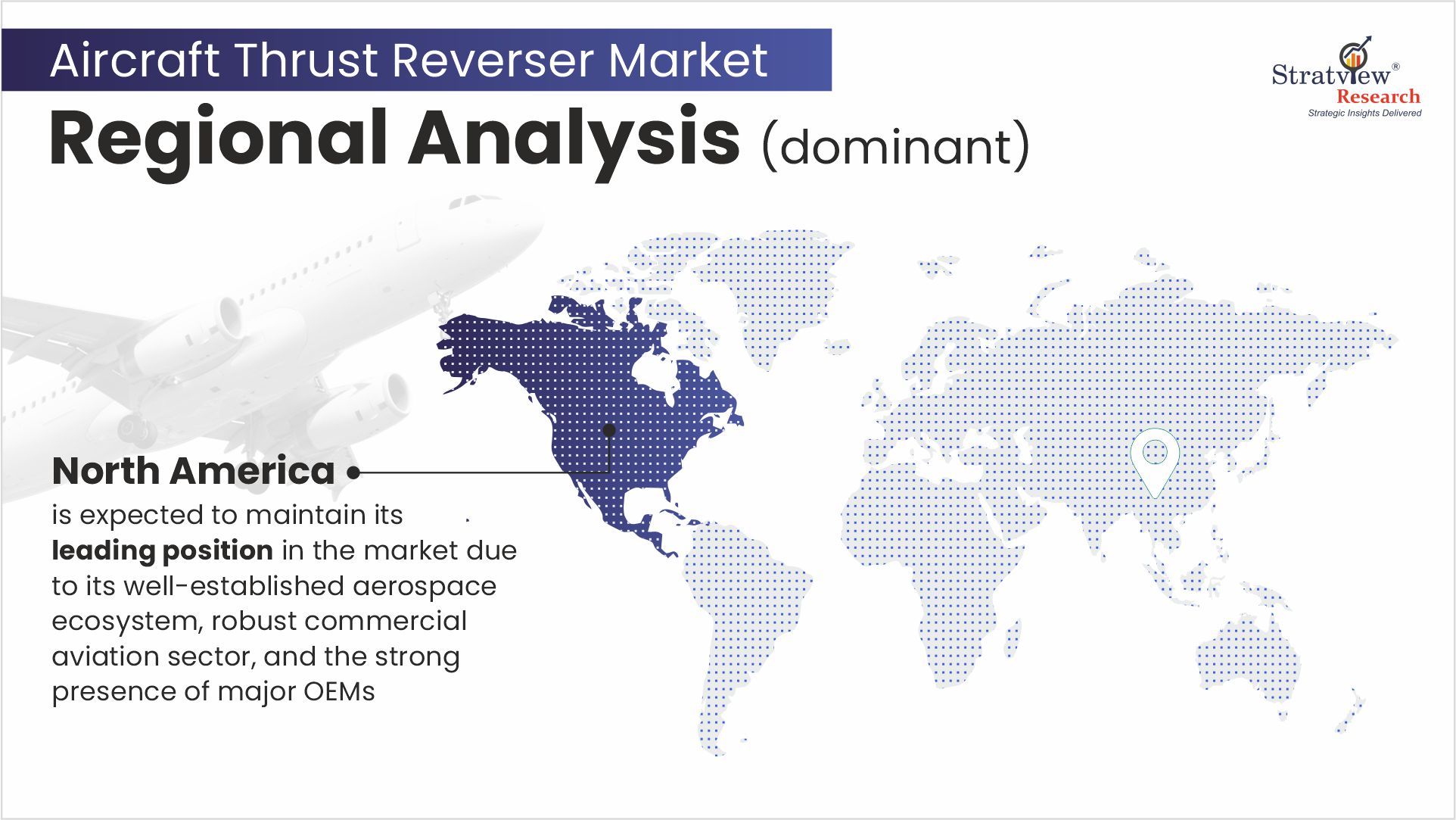
“North America is projected to maintain its leading position in the coming years, while Asia-Pacific is expected to witness the fastest growth.”
North America is expected to maintain its leading position in the aircraft thrust reverser market due to its well-established aerospace ecosystem, robust commercial aviation sector, and the strong presence of major OEMs such as Boeing, Collins Aerospace, and Spirit AeroSystems. The region benefits from high aircraft production rates, advanced MRO infrastructure, and sustained defense investments, particularly in the U.S.
In contrast, the Asia-Pacific region is projected to witness the fastest growth, driven by rising air passenger traffic, expanding low-cost carrier networks, and increasing aircraft procurement across countries like China and India. Rapid aviation infrastructure development and growing defense investments are further accelerating demand for aircraft thrust reverser systems in the region.
Want to get a free sample? Register here
The market is highly concentrated, with the top 3 players grabbing more than half of the market share. Most of the major players compete on some of the governing factors, including technological innovation, price, product offerings, regional presence, etc. The following are the key players in the aircraft thrust reverser market.
Note: The above list does not necessarily include all the top players in the market.
Are you the leading player in this market? We would love to include your name. Please write to us at [email protected]
In June 2025, Collins Aerospace expanded its aircraft electrification capabilities by launching a new engineering center in Wolverhampton, UK, and a new electric thrust reverser actuation systems elecTRAS™ production line in Colomiers, France. These electric thrust reverser systems reduce aircraft weight by 15–20%, improving fuel efficiency and maintenance. The technology is already deployed on the Airbus A350, supporting next-generation aircraft performance.
In April 2025, Safran Nacelles signed a NacelleLife™ service agreement with Republic Airways to support thrust reversers on over 200 Embraer 170/175 aircraft. The deal includes MRO services and advanced repair solutions to reduce maintenance costs and improve operational efficiency.
This report provides market intelligence most comprehensively. The report structure has been kept so that it offers maximum business value. It provides critical insights into market dynamics and will enable strategic decision-making for existing market players as well as those willing to enter the market.
The following are the key features of the report:
Market structure: Overview, industry life cycle analysis, supply chain analysis.
Market environment analysis: Growth drivers and constraints, Porter’s five forces analysis, SWOT analysis.
Market trend and forecast analysis.
Market segment trend and forecast.
Competitive landscape and dynamics: Market share, Service portfolio, New Product Launches, etc.
COVID-19 impact and its recovery curve.
Attractive market segments and associated growth opportunities.
Emerging trends.
Strategic growth opportunities for the existing and new players.
Key success factors.
|
Market Study Period |
2019-2034 |
|
Base Year |
2025 |
|
Forecast Period |
2025-2034 |
|
Trend Period |
2019-2024 |
|
Number of Tables & Figures |
>100 |
|
Number of Segments Analysed |
6 (Aircraft Type, Product Type, Mechanism Type, Process Type, By Material Type, and Region) |
|
Number of Regions Analysed |
4 (North America, Europe, Asia-Pacific, Rest of the World) |
|
Countries Analysed |
15 (The USA, Canada, Mexico, Germany, France, Italy, The UK, China, Japan, India, Brazil, Saudi Arabia, Rest of Europe, Rest of APAC, and Rest of the World) |
|
Free Customization Offered |
10% |
|
After Sales Support |
Unlimited |
|
Report Presentation |
Complimentary |
|
Market Dataset |
Complimentary |
|
Further Deep Dive & Consulting Services |
10% Discount |
The report provides detailed insights into the market dynamics to enable informed business decision-making and growth strategy formulation based on the opportunities present in the market.
The aircraft thrust reverser market is segmented into the following categories.
Aircraft Thrust Reverser Market, By Aircraft Type
Narrow-Body Aircraft
Wide-Body Aircraft
Regional Aircraft
Military Aircraft
General Aviation
Aircraft Thrust Reverser Market, By Product Type
Cascade Type
Pivot Four Door
Bucket Type
Aircraft Thrust Reverser Market, By Mechanism Type
Hydraulic
Electric
Aircraft Thrust Reverser Market, By Process Type
Hand Layup
Resin Infusion
AFP/ATL
Machining/Forming
Other Processes
Aircraft Thrust Reverser Market, By Material Type
Composites
Metals
Aircraft Thrust Reverser Market, By Region
North America (Country Analysis: The USA, Canada, and Mexico)
Europe (Country Analysis: Germany, France, The UK, Russia, and The Rest of Europe)
Asia-Pacific (Country Analysis: Japan, China, India, and The Rest of the Asia-Pacific)
Rest of the World (Country Analysis: Saudi Arabia, Brazil, and Others)
This strategic assessment report from Stratview Research provides a comprehensive analysis that reflects today’s aircraft thrust reverser market realities and future market possibilities for the forecast period.
The report segments and analyzes the market in the most detailed manner in order to provide a panoramic view of the market.
The vital data/information provided in the report can play a crucial role for market participants and investors in identifying the low-hanging fruit available in the market and formulating growth strategies to expedite their growth process.
This report offers high-quality insights and is the outcome of a detailed research methodology comprising extensive secondary research, rigorous primary interviews with industry stakeholders, and validation and triangulation with Stratview Research’s internal database and statistical tools.
More than 1,000 authenticated secondary sources, such as company annual reports, fact books, press releases, journals, investor presentations, white papers, patents, and articles, have been leveraged to gather the data.
We conducted more than 15 detailed primary interviews with market players across the value chain in all four regions and industry experts to obtain both qualitative and quantitative insights.
With this detailed report, Stratview Research offers one of the following free customization options to our respected clients:
Company Profiling
Detailed profiling of additional market players (up to three players)
SWOT analysis of key players (up to three players)
Competitive Benchmarking
Benchmarking of key players on the following parameters: Service portfolio, geographical reach, regional presence, and strategic alliances
Custom Research: Stratview Research offers custom research services across industries. In case of any custom research requirement related to market assessment, competitive benchmarking, sourcing and procurement, target screening, and others, please send your inquiry to [email protected]
The report is delivered digitally through our online portal. Buyers receive login credentials from our team to access the report and may update their credentials at any time after the initial login.
Delivery timelines depend on the status of the report:
For the most accurate delivery timeline, please contact us to confirm the current status of the report.
Yes. You may request a complimentary preview of the report through a video conference with our team.
Yes. The scope of the report can be fully customized to align with your specific research objectives and information requirements.
Please contact us at [email protected], and our team will be happy to discuss your requirements and propose a tailored solution.
Yes. Selected sections of the report can be purchased separately based on your requirements. Please contact us at [email protected] to discuss your needs.
Yes, AI can help gather publicly available information, but its outputs are only as reliable as the data it accesses. Stratview Research reports are built using validated data, extensive primary interviews with industry stakeholders, and the expertise of our experienced research team.
Additionally, many critical insights, including market dynamics, competitive intelligence, and industry-specific trends, are not publicly available and therefore cannot be captured through AI alone.
The aircraft thrust reverser market is estimated to grow at a CAGR of 3.6% by 2034, driven by the rising demand for new aircraft deliveries, increasing focus on fuel efficiency and noise reduction, growing air passenger traffic, and advancements in materials and manufacturing technologies that support lighter, more efficient aircraft thrust reverser systems.
Collins Aerospace, Safran Group, Spirit Aerosystems, Melrose Industries (GKN Aerospace), Leonardo S.p.A, and Nordam are the leading players in the aircraft thrust reverser market.
North America is estimated to remain dominant in the aircraft thrust reverser market in the foreseeable future due to the presence of a large number of raw material suppliers, tier players, OEMS, and aircraft thrust reverser manufacturers, making the region a hub of the aircraft industry.
Asia-Pacific is estimated to remain the fastest-growing market for aircraft thrust reverser in the foreseeable future driven by the increasing air travel, affordable airfares, rising defence budgets and investments in aviation infrastructure in the region.
Composites are likely to remain the most dominant material type in the market over the next few years, due to their advantages like corrosion resistance, lightweight, strength and durability.
The forecasted value for the market is US$ 7.1 billion in 2034.


WE ACCEPT