




404
+1-313-307-4176

Electric Vehicle Fluids Market Analysis | 2024-2032

Electric Vehicle Fluids Market Size, Share, Trends, Dynamics, Forecast, & Growth Analysis: 2024-2032
Electric Vehicle Fluids Market is segmented by Product Type (Engine Oil, Coolants, Transmission Fluids, and Greases), by Vehicle Type (On-Highway Electric Vehicles and Off-Highway Electric Vehicles), by Propulsion Type (Battery Electric Vehicles and Hybrid Electric Vehicles), by Fill Type (First Fill and Service Fill), and by Region (North America [The USA, Canada, and Mexico], Europe [Germany, France, The UK, Russia, and Rest of Europe], Asia-Pacific [China, Japan, India, and Rest of Asia-Pacific], and Rest of the World [Brazil, Saudi Arabia, and Others]).
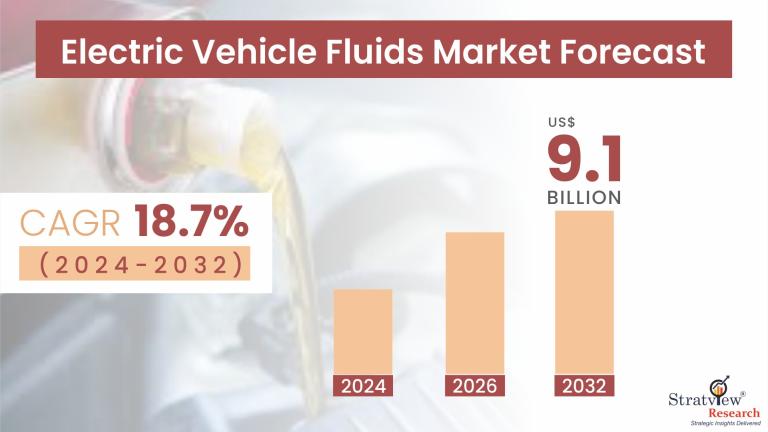
The electric vehicle fluids market was estimated at USD 1.2 billion in 2023 and is likely to grow at a CAGR of 18.7% during 2024-2032 to reach USD 9.1 billion in 2032.
Want to get a free sample? Register Now
Electric vehicle fluids refer to the various types of fluids used in electric vehicles (EVs) to ensure their proper functioning. Unlike traditional internal combustion engine vehicles, which rely heavily on fluids such as gasoline, oil, and coolant, EVs have a different set of fluid requirements. One crucial fluid in an electric vehicle is the coolant used to regulate the temperature of the battery pack and electric motor. Maintaining optimal temperature is vital for battery health and overall vehicle performance. Additionally, some electric vehicles may require other cooling fluids for components such as power electronics. Another essential fluid is brake fluid, which is necessary for the proper functioning of the braking system. Although EVs often feature regenerative braking, which helps recharge the battery while slowing down the vehicle, they still require hydraulic braking systems and thus need brake fluid.
Rapid Growth in Global EV Adoption Boosting Demand for Specialized Fluids:
The accelerating adoption of electric vehicles worldwide is a key factor supporting electric vehicle fluids market growth, as demand rises for specialized fluids used in battery cooling systems, e-drivetrains, power electronics, and thermal management applications. As EV manufacturers introduce vehicles with larger battery packs and faster charging capabilities, advanced fluid technologies are becoming increasingly essential for maintaining performance, safety, energy efficiency, and component longevity.
According to the International Energy Agency's (IEA) Global EV Outlook 2026, electric vehicles accounted for 25% of all new cars sold globally in 2025, with worldwide EV sales exceeding 20 million units. The growing production and deployment of electric vehicles are increasing demand for battery coolants, e-transmission fluids, and specialized greases required for efficient vehicle operation.
The IEA reported that the global electric car fleet reached approximately 80 million vehicles in 2025, representing a substantial increase from previous years. The expanding installed base of EVs is increasing requirements for thermal management fluids throughout vehicle lifecycles, supporting demand for advanced cooling and lubrication solutions that enhance battery durability and powertrain efficiency.
Increasing Focus on Battery Thermal Management
The growing need to improve battery performance, safety, and charging efficiency is increasing the adoption of advanced thermal management solutions in electric vehicles. As battery energy densities rise and fast-charging technologies become more widespread, automakers are increasingly utilizing specialized coolants and heat-transfer fluids to maintain optimal operating temperatures and prevent performance degradation.
According to the U.S. Department of Energy (DOE), effective battery thermal management can improve battery lifespan by up to 20% while reducing performance degradation under extreme temperature conditions. This is driving demand for advanced dielectric coolants and thermal fluids that help maintain battery health and operational reliability.
Expansion of Fast-Charging Infrastructure
The rapid deployment of public charging infrastructure is increasing thermal management requirements in electric vehicles, particularly as high-power and ultra-fast charging technologies become more widespread. Higher charging speeds generate greater heat within batteries and power electronics, driving demand for advanced cooling fluids that improve safety, charging efficiency, and battery longevity.
According to the International Energy Agency's (IEA) Global EV Outlook 2025, more than 1.3 million public charging points were added worldwide in 2024, representing an increase of over 30% compared with the previous year. The expanding charging network is accelerating the adoption of fast-charging technologies, increasing demand for advanced thermal management and cooling fluids capable of handling higher operating temperatures and charging loads.
Lack of Standardization Across EV Platforms
The absence of universal fluid specifications across electric vehicle platforms is creating formulation, testing, and compatibility challenges for fluid manufacturers. Variations in battery chemistries, thermal management systems, e-axle architectures, and power electronics often require OEM-specific fluid formulations, increasing development complexity and limiting economies of scale across the industry.
According to the European Automobile Manufacturers' Association (ACEA), battery-electric vehicles accounted for 19.4% of EU passenger car registrations in Q1 2026, up from 15.2% a year earlier, while hybrid-electric vehicles captured 38.6% of the market. The growing diversity of EV platforms and battery technologies is increasing formulation and validation challenges for fluid manufacturers seeking to meet varying OEM requirements.
High Development and Validation Costs
The development of electric vehicle fluids requires extensive testing to ensure dielectric strength, thermal conductivity, oxidation stability, material compatibility, and compliance with OEM safety standards. These stringent performance requirements increase R&D expenditures and extend product qualification timelines, creating barriers for fluid manufacturers seeking to commercialize new formulations.
According to the U.S. National Renewable Energy Laboratory (NREL), advanced battery thermal management systems can account for approximately 5–10% of total EV battery system costs. The complexity of designing fluids that meet increasingly demanding thermal and electrical performance requirements is raising development, testing, and certification costs for manufacturers, thereby slowing product commercialization and market entry.
Uncertain Regulatory and Technology Evolution
The rapid pace of innovation in battery technologies, thermal management systems, and electric drivetrain architectures is creating uncertainty for fluid manufacturers regarding future product requirements and performance standards. Frequent technological advancements can shorten product development cycles and increase the risk of formulation obsolescence, complicating long-term investment and commercialization strategies.
According to the International Energy Agency (IEA), more than 40 new battery manufacturing projects were announced globally during 2024–2025, reflecting the industry's ongoing transition toward next-generation battery technologies and production methods. The evolving technology landscape is creating uncertainty around future fluid specifications, requiring manufacturers to continuously adapt formulations to meet changing battery chemistries, thermal management requirements, and OEM performance standards.
Development of Immersion Cooling Fluids
The emergence of immersion cooling technologies is creating new growth avenues for electric vehicle fluid manufacturers. Unlike conventional indirect cooling systems, immersion cooling directly exposes battery cells and electronic components to specialized dielectric fluids, enabling more efficient heat dissipation and supporting next-generation high-performance EV batteries.
According to the U.S. Department of Energy (DOE), immersion cooling can improve heat-transfer efficiency by 30–50% compared with traditional cooling approaches in high-power battery systems. The superior thermal performance of immersion cooling is increasing interest in advanced dielectric fluids, creating opportunities for manufacturers to develop specialized formulations that enhance battery safety, fast-charging capabilities, and overall vehicle performance.
Growth of Electric Commercial Vehicles
The expansion of electric buses, trucks, delivery fleets, and two/three-wheelers is significantly increasing demand for high-performance EV fluids, as commercial electric vehicles operate under higher loads, longer duty cycles, and more intensive thermal conditions compared with passenger EVs. This is driving greater consumption of advanced coolants, dielectric fluids, and drivetrain lubrication solutions designed for durability and efficient heat management.
The IEA also reported that global electric bus sales grew by about 30% in 2024, surpassing 70,000 units, while the two- and three-wheeler segment expanded by nearly 15%. In parallel, electric truck deployment continued to accelerate in key markets, further increasing the need for high-volume, heavy-duty EV fluid solutions capable of supporting larger battery packs and more demanding operating cycles.
Expansion in Emerging Markets
The rapid expansion of electric vehicle adoption in emerging economies is opening new growth avenues for EV fluid manufacturers. Government incentives, local manufacturing programs, and electrification policies across Asia-Pacific, Latin America, and the Middle East are accelerating EV penetration, increasing demand for battery coolants, dielectric fluids, and thermal management solutions tailored to diverse operating conditions.
According to India’s Ministry of Road Transport and Highways, cumulative electric vehicle registrations surpassed 5 million units by early 2025, supported by national initiatives promoting EV adoption and domestic manufacturing. The rising EV base in emerging markets is expanding demand for cost-effective and high-performance EV fluids, particularly for thermal management and drivetrain applications under high-temperature and variable operating environments.
|
Segmentations |
List of Sub-Segments |
Segments with High Growth Opportunity |
|
Product-Type Analysis |
Engine Oil, Coolants, Transmission Fluids, and Greases |
Coolants are expected to be the demand generator in the coming years. |
|
Vehicle-Type Analysis |
On-highway Electric Vehicles and Off-highway Electric Vehicles |
On-highway electric vehicles is anticipated to contribute the larger share of the Electric Vehicle Fluids. |
|
Propulsion-Type Analysis |
Battery electric vehicles and Hybrid electric vehicles |
Hybrid electric vehicles dominate the propulsion in the market. |
|
Fill-Type Analysis |
First fill and Service fill
|
The First fill segment is anticipated to capture the larger segment in the market. |
|
Region Analysis |
North America, Europe, Asia-Pacific, and Rest of the World |
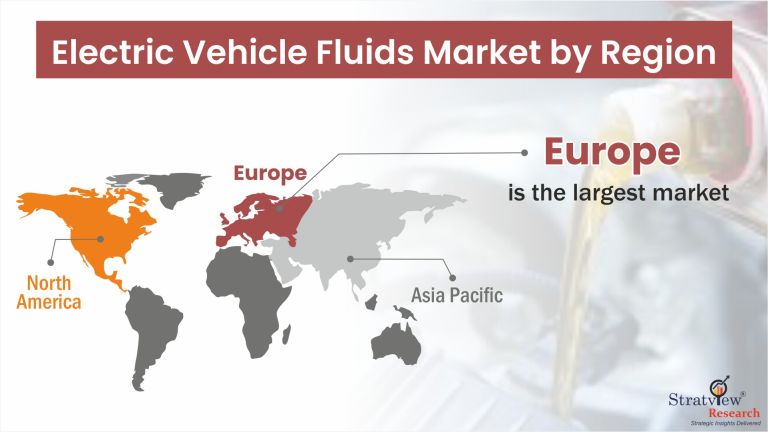
Europe is expected to maintain its reign over the forecast period, whereas Asia-Pacific is likely to grow at the fastest rate. |
“Coolants segment accounted for the largest market share.”
The electric vehicle fluids market is segmented into engine oil, coolants, transmission fluids, and greases. Coolants are expected to remain the dominant product type in the market during the forecast period. Electric vehicles heavily rely on batteries for power, and effective thermal management is crucial for their performance and longevity. Coolants play a vital role in maintaining optimal battery temperatures, ensuring efficient operation, and prolonging battery life. Electric motors also generate heat during operation, and proper cooling is essential to prevent overheating and maintain performance. Coolants are utilized to dissipate heat from electric motors, thereby preserving their efficiency and reliability. Increasing regulations regarding emissions and vehicle efficiency drive the adoption of electric vehicles. Coolants aid in meeting these regulatory standards by facilitating the efficient operation of electric vehicle components, contributing to overall vehicle performance and compliance.
“On-highway electric vehicles segment accounted for the largest market share.”
The market is segmented into battery electric vehicles and hybrid electric vehicles. On-highway electric vehicles are expected to remain the dominant vehicle type in the market during the forecast period. On-highway electric vehicles, mainly electric passenger cars, are rapidly gaining popularity globally due to factors like government incentives, environmental awareness, and technological advancements. As the electric car market expands, the demand for electric vehicle fluids such as coolant, lubricants, and brake fluids will rise, solidifying the dominance of on-highway electric vehicles in the electric vehicle fluids market. Infrastructure development is key for electric vehicle adoption. Heavy investments in charging infrastructure by governments and private sectors, especially in urban and highway areas, encourage consumers to choose electric vehicles. This boosts demand for electric vehicle fluids to support maintenance and operation.
“Hybrid Electric segment accounted for the largest market share.”
The market is segmented into on-highway electric vehicles and off-highway electric vehicles. Hybrid Electric is expected to remain the dominant propulsion in the market during the forecast period. Hybrid electric vehicles (HEVs) serve as a transitional technology between traditional internal combustion engine vehicles and fully electric vehicles. During this transitional period, HEVs are expected to remain prevalent as consumers and manufacturers gradually shift towards full electrification. Consequently, fluids tailored for HEVs, such as coolant for internal combustion engines and electric components, will continue to be in demand. HEVs offer versatility by combining both internal combustion engines and electric propulsion systems. This versatility appeals to consumers who may have concerns about range anxiety or limited charging infrastructure associated with fully electric vehicles. Fluids designed for HEVs must cater to the unique requirements of both combustion engines and electric components, making them essential in this market segment.
"The First Fill segment accounted for the largest market share.”
The market is segmented into first fill and service fill. First Fill is expected to remain the dominant fill type in the market during the forecast period. Automotive manufacturers often fill electric vehicles (EVs) with specific fluids during production to meet their performance and warranty requirements. First fill fluids are carefully chosen to ensure optimal performance, compatibility, and longevity of EV components. As long as manufacturers continue to prioritize first fill fluids, they are expected to remain dominant in the EV fluids market. Consumers typically trust the fluids recommended by the vehicle manufacturer. First fill fluids are perceived as reliable and are associated with the original equipment manufacturer (OEM) specifications. This trust in OEM-recommended fluids drives demand for first fill products, as consumers prioritize maintaining their vehicle's performance and warranty coverage. Electric vehicle systems are complex and require specialized fluids to ensure proper functioning. First fill fluids are specifically formulated to meet the unique demands of EV components, such as battery cooling, electric motor lubrication, and brake system requirements. As EV technology continues to evolve, the demand for first fill fluids tailored to these systems is expected to remain high.
“Europe is expected to remain the largest market for electric vehicle fluids.”
In terms of region, Europe is expected to remain the largest market for electric vehicle fluids during the forecast period. Europe has been at the forefront of implementing stringent emissions regulations and promoting electric vehicle adoption through various incentives and subsidies. These policies drive the demand for electric vehicles, consequently increasing the demand for associated fluids. Government support creates a conducive environment for the growth of the electric vehicle fluids market in Europe. Europe has been investing significantly in electric vehicle charging infrastructure, addressing one of the key concerns for EV adoption. The availability of charging stations across the region encourages consumers to consider electric vehicles, thereby bolstering the market for electric vehicle fluids. With a robust charging infrastructure in place, the demand for electric vehicles and their associated fluids is expected to remain high in Europe.
European consumers and policymakers prioritize environmental sustainability, driving the adoption of electric vehicles as a cleaner alternative to traditional internal combustion engine vehicles. Electric vehicle fluids play a crucial role in maintaining the environmental benefits of EVs by ensuring their efficient and sustainable operation. This heightened environmental awareness further supports the dominance of Europe in the electric vehicle fluids market.
Know the high-growth countries in this report. Register Here
Here is the list of the key players (based on dominance)
Note: The above list does not necessarily include all the top players in the market.
Are you the leading player in this market? We would love to include your name. Write to us at [email protected]
Recent Developments
In June 2026, Shell and BMW M Motorsport renewed their technical partnership with an expanded research and development focus on sustainable fluid technologies for motorsport and passenger vehicles. The collaboration supports the development of advanced lubricants and thermal management fluids for electrified and high-performance powertrains.
In March 2026, Kia Corporation and TotalEnergies Lubrifiants renewed their global partnership for a fourth term, extending a 15-year collaboration to co-develop and distribute lubricants and functional fluids for increasingly electrified and hybrid vehicle platforms.
In November 2025, Shell and HORIBA MIRA demonstrated that Shell EV-Plus Thermal Fluid could cool the battery, electric motor, and power electronics through a single-fluid, single-circuit thermal management system. The ultra-low-viscosity fluid performed successfully under simulated Arctic and Saharan conditions while reducing system complexity, weight, and components.
In September 2025, Shell and RML Group demonstrated a 34-kWh battery pack using Shell EV-Plus Thermal Fluid that charged from 10% to 80% in under 10 minutes. The system achieved a potential range addition of 24 kilometers per charging minute, compared with approximately 5 kilometers for many conventional battery electric vehicles.
This strategic assessment report from Stratview Research provides a comprehensive analysis that reflects today’s electric vehicle fluids market realities and future market possibilities for the forecast period. The report segments and analyzes the market in the most detailed manner in order to provide a panoramic view of the market. The vital data/information provided in the report can play a crucial role for market participants as well as investors in the identification of the low-hanging fruits available in the market as well as to formulate growth strategies to expedite their growth process.
This report offers high-quality insights and is the outcome of a detailed research methodology comprising extensive secondary research, rigorous primary interviews with industry stakeholders, and validation and triangulation with Stratview Research’s internal database and statistical tools. More than 1,000 authenticated secondary sources, such as company annual reports, fact books, press releases, journals, investor presentations, white papers, patents, and articles, have been leveraged to gather the data. We conducted more than 15 detailed primary interviews with market players across the value chain in all four regions and industry experts to obtain both qualitative and quantitative insights.
This report provides market intelligence in the most comprehensive way. The report structure has been kept such that it offers maximum business value. It provides critical insights into market dynamics and will enable strategic decision-making for existing market players as well as those willing to enter the market. The following are the key features of the report:
This report studies the market, covering a period of 12 years of trends and forecasts. The report provides detailed insights into the market dynamics to enable informed business decision-making and growth strategy formulation based on the opportunities present in the market.
The electric vehicle fluids market is segmented into the following categories:
By Product Type
By Vehicle Type
By Propulsion Type
By Fill Type
By Region
With this detailed report, Stratview Research offers one of the following free customization options to our respectable clients:
Company Profiling
Detailed profiling of additional market players (up to three players)
SWOT analysis of key players (up to three players)
Competitive Benchmarking
Benchmarking of key players on the following parameters: Service portfolio, geographical reach, regional presence, and strategic alliances.
Custom Research: Stratview Research offers custom research services across sectors. In case of any custom research requirement related to market assessment, competitive benchmarking, sourcing and procurement, target screening, and others, please send your inquiry to [email protected].
The report is delivered digitally through our online portal. Buyers receive login credentials from our team to access the report and may update their credentials at any time after the initial login.
Delivery timelines depend on the status of the report:
For the most accurate delivery timeline, please contact us to confirm the current status of the report.
Yes. You may request a complimentary preview of the report through a video conference with our team.
Yes. The scope of the report can be fully customized to align with your specific research objectives and information requirements.
Please contact us at [email protected], and our team will be happy to discuss your requirements and propose a tailored solution.
Yes. Selected sections of the report can be purchased separately based on your requirements. Please contact us at [email protected] to discuss your needs.
Yes, AI can help gather publicly available information, but its outputs are only as reliable as the data it accesses. Stratview Research reports are built using validated data, extensive primary interviews with industry stakeholders, and the expertise of our experienced research team.
Additionally, many critical insights, including market dynamics, competitive intelligence, and industry-specific trends, are not publicly available and therefore cannot be captured through AI alone.
Electric vehicle fluids refer to specialized liquids utilized in electric vehicles to regulate temperature, ensure proper functioning of components like batteries and motors, and maintain overall vehicle performance and efficiency. These fluids include coolants for thermal management, lubricants for electric motors, and other essential fluids tailored to the unique needs of electric propulsion systems.
The electric vehicle fluids market is estimated to reach USD 9.1 billion in 2032.
The electric vehicle fluids market is estimated to grow at a CAGR of 18.7% by 2032, driven by thermal management, performance, sustainability, regulatory compliance, and market demand.
Drivers of electric vehicle fluids include the necessity for thermal management to maintain battery and motor performance, compliance with environmental regulations for eco-friendly formulations, and market demand stemming from the increasing adoption of electric vehicles, prompting innovation and development in fluid technology.
Europe is anticipated to maintain dominance in the electric vehicle fluids market due to stringent environmental regulations encouraging EV adoption, robust infrastructure supporting electric mobility, and substantial government incentives promoting sustainable transportation initiatives.
Royal Dutch Shell plc, ExxonMobil Corporation, BP plc., TotalEnergies SE, and FUCHS Petrolub AG are the leading players in the electric vehicle fluids market.
Asia-Pacific is poised to sustain its position as the fastest-growing region in the electric vehicle fluids market owing to rapid urbanization, escalating pollution concerns driving EV adoption, and substantial investments in electric vehicle manufacturing and infrastructure by key economies like China, Japan, and South Korea.
Coolants are vital for battery and motor thermal management. Increased EV adoption demands efficient cooling. Regulatory standards necessitate effective thermal control. Technological advancements enhance coolant performance and efficiency. The growing market for electric vehicles sustains demand.


WE ACCEPT