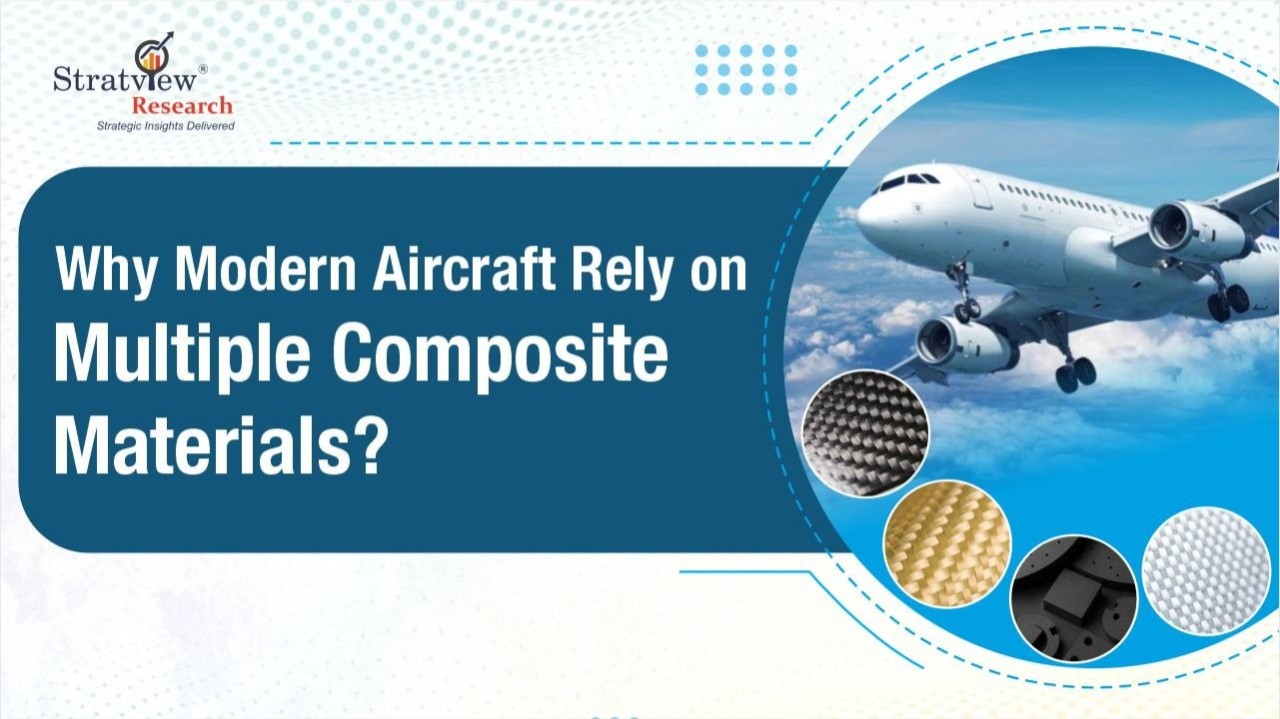
Modern aircraft design involves a set of competing constraints: structural performance, weight, durability, cost, and repairability. Composite materials address several of these simultaneously, which is why their use has expanded steadily across commercial and military platforms over the past three decades.
Platforms such as the Boeing B787 and Airbus A350 XWB reflect this approach. Around 50% of their airframe structural weight is composite, but more relevant than the percentage is how that composite share is distributed across different material systems.
Carbon Fiber Reinforced Polymers Dominate Primary Structure
Within the composite mix, Carbon Fiber Reinforced Polymer (CFRP) represents the dominant material system by structural weight. Platforms such as the Boeing 787 Dreamliner and Airbus A350 rely extensively on CFRP for their primary load-bearing structures.
Its high specific strength and stiffness make it the preferred material for fuselage sections, wing skins, spars, and empennage assemblies, where structural loads are high and weight reduction directly improves payload and range efficiency. Most aerospace-grade systems use epoxy resin matrices, which bind the fiber architecture, enable load transfer between plies, and define operating temperature and environmental limits.
Compared with equivalent aluminium structures, these components typically achieve weight savings of 15–25%. Aircraft-level fuel burn improvements of 20–25% are often cited for platforms such as the 787, although these gains result from a combination of structural weight reduction, aerodynamic improvements, and more efficient engines rather than materials alone.
Despite these advantages, the material is not suitable for every application. Higher material and processing costs, sensitivity to impact damage, and the complexity of inspection and repair limit its use to applications where its performance advantages justify the trade-offs.
Glass Fiber Supports Functional and Electromagnetic Requirements
Glass Fiber Reinforced Polymer (GFRP) occupies a smaller but functionally important share of the composite mix. Its applications are concentrated in secondary structures and components where electromagnetic transparency, corrosion resistance, or cost efficiency take precedence over structural stiffness.
Radomes are a typical example. Radar systems require materials that do not interfere with electromagnetic signals, a condition CFRP cannot meet due to its electrical conductivity. GFRP satisfies this requirement while providing sufficient structural performance. It is also used in antenna fairings and interior components where cost and processing advantages are relevant.
Aramid Fiber Is Used Where Toughness Is Critical
Aramid fiber composites, commonly known by trade names such as Kevlar, are selected in applications where impact resistance and energy absorption are more important than stiffness.
Typical applications include cockpit doors, protective panels, and localized reinforcement areas. These materials offer high toughness but are sensitive to ultraviolet exposure, absorb more moisture than carbon or glass systems, and can be difficult to repair. As a result, their use is limited to areas where these specific properties are required.
Ceramic Matrix Composites Enable High-Temperature Engine Performance
Ceramic Matrix Composites (CMCs) are used in high-temperature sections of aircraft engines, including turbine components and combustor liners.
They can operate at temperatures beyond the limits of conventional metal alloys, allowing higher turbine inlet temperatures and improved thermodynamic efficiency. This contributes to lower fuel consumption in modern engines.
However, CMC adoption is constrained by high manufacturing costs, complex processing requirements, and different damage behavior compared to metals. Their use is expanding gradually as manufacturing methods and cost structures improve.
Metal Matrix Composites and Boron Fiber Remain Niche
Metal Matrix Composites (MMCs) serve specialized applications where strength, wear resistance, and thermal stability are required, such as brake systems and selected engine components.
Boron fiber composites, once considered a high-stiffness alternative to carbon fiber, are now largely limited to legacy and niche applications. Advances in CFRP manufacturing have reduced their use in most modern aircraft structures.
Challenges and Future Direction
While composites offer clear advantages, challenges such as high production costs, complex manufacturing processes, and repair limitations remain. These factors continue to influence where and how different composite systems are applied across an aircraft.
Composites are now a core part of modern aircraft design, but their value lies in how they are applied, not just how much is used. As manufacturing methods improve and cost structures evolve, their role is likely to expand, though alongside metals rather than fully replacing them.
Subscribe to our newsletter
Related Blogs:

Defense Composites Set to Surge – Here Are the Top 5 Companies Driving It

This Week’s Top Aircraft MRO Developments
Didn’t find what you were looking for?
Tell us about your requirements
(Our team usually responds within a few hours)