Commercial drones have become a routine part of operations across industries that depend on timely, accurate field data. They inspect transmission lines, survey construction sites, monitor crops, map mines, and support emergency response teams, often taking on work that is slower, more expensive, or riskier for ground crews. As adoption grows, buyers are looking beyond flight performance. Reliability, software integration, sensor compatibility, and seamless integration into existing workflows have become just as important.
According to Stratview Research, the commercial drone market is projected to reach USD 17.7 billion by 2032, supported by rising demand from infrastructure, energy, agriculture, construction, mining, and public safety. While aircraft performance continues to improve, recent advances have been just as evident in software, autonomous flight, remote operations, and payload integration.
The companies featured below represent different approaches to meeting those evolving requirements, each contributing to the market in its own way.
DJI Technology Co., Ltd.
Setting the Benchmark for Enterprise Drone Operations
Few companies have influenced the commercial drone industry as extensively as DJI. While the company first gained recognition in the consumer market, it has steadily expanded its enterprise business with platforms designed for surveying, infrastructure inspection, public safety, agriculture, and utility maintenance. Alongside its aircraft, DJI offers specialized payloads, mapping and fleet management software, and remote docking systems that help organizations manage drone operations at scale.
The launch of the Matrice 400 in 2025 added another option for demanding industrial operations. The aircraft offers up to 59 minutes of flight time, carries payloads of up to 6 kg, and supports LiDAR, thermal cameras, and other specialized sensors. DJI has also continued expanding DJI Dock, enabling routine inspection missions to be scheduled and carried out remotely, reducing the need for personnel to be on site during regular inspections.
Skydio Inc.
Advancing autonomous flight for enterprise users
Skydio is best known for its autonomous flight technology, particularly in environments where manual flying becomes difficult. Its drones are widely used to inspect bridges, power lines, industrial facilities, transportation networks, and telecommunications infrastructure, where navigating around complex structures is often as important as capturing the data itself.
Computer vision and onboard intelligence allow its aircraft to move safely through demanding environments with minimal pilot input. The company recently expanded the Skydio X10D platform with support for third-party payloads, allowing inspection teams to integrate specialized sensors without changing aircraft platforms and adapt missions to different operational requirements.
Parrot Drone SAS
Developing secure professional drone solutions
Parrot has carved out a distinct place in the commercial drone market by focusing on professional users in infrastructure inspection, mapping, environmental monitoring, and public safety, particularly where secure operations and greater control over flight data are priorities.
That focus is evident in the ANAFI UKR, introduced in 2025 for operations where satellite signals may be weak or unavailable. The drone combines onboard artificial intelligence with autonomous navigation and offline mission planning, allowing it to continue operating in demanding conditions. Parrot also introduced a 5G-enabled version of the platform, providing an additional connectivity option for large industrial sites.
Yuneec International
Built for Industrial Work, Not Fast Iteration
Yuneec has maintained a steady presence in the professional drone segment by focusing on industrial users that prioritize reliability and operational stability over frequent product cycles. Its platforms are used in infrastructure inspection, surveying, utilities, and public safety, where dependable field performance is often more valuable than rapid feature expansion.
The H850 RTK combines RTK positioning with support for multiple payloads, including thermal imaging systems. Software updates released through 2025 and 2026 have focused on improving day-to-day deployment and inspection workflows for enterprise users.
AeroVironment, Inc.
Applying decades of unmanned aircraft expertise
AeroVironment brings long-standing experience in unmanned aircraft systems, autonomous flight, and mission software development. While the company is widely associated with defense applications, many of its underlying technologies also support infrastructure monitoring, environmental assessment, and other complex operational environments where reliability and endurance are critical.
Recent investments in mission management software and multi-platform autonomy have expanded the company's ability to coordinate unmanned operations across different environments, supporting organizations that manage increasingly complex aerial missions.
What These Five Companies Tell Us About the Market
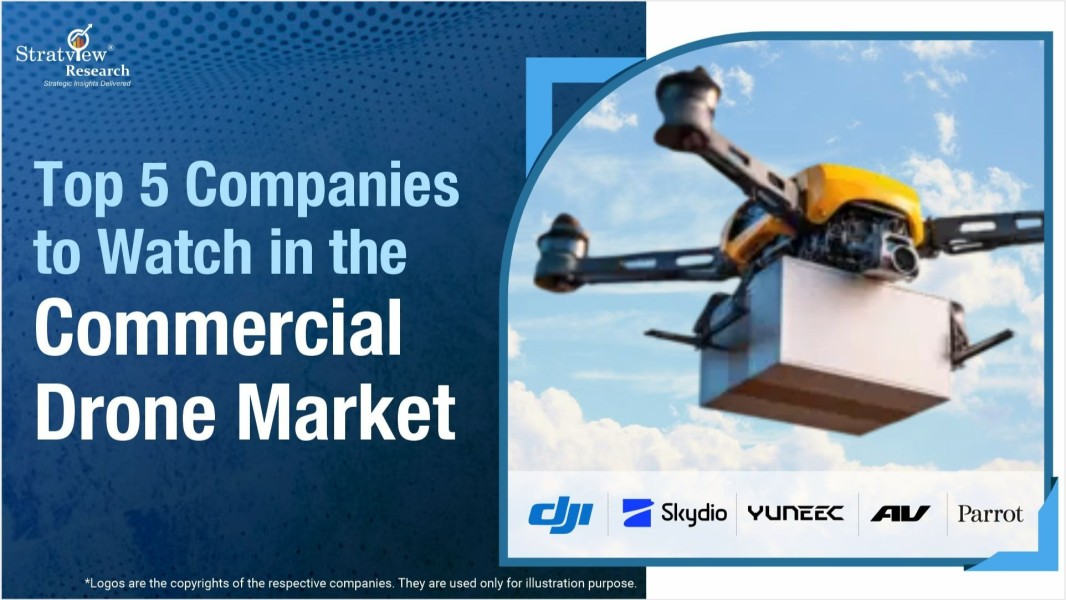
The companies featured here have taken different paths. DJI has expanded its enterprise portfolio, Skydio continues to advance autonomous flight, Parrot emphasizes secure operations, Yuneec remains focused on industrial users, and AeroVironment builds on decades of unmanned systems experience.
If look them together, they offer a useful perspective on where the commercial drone market is headed. Enterprise buyers are placing greater emphasis on software maturity, autonomous capabilities, payload flexibility, and platforms that integrate smoothly into existing operational workflows. Those priorities are influencing product development as much as advances in the aircraft themselves.