A 2026 U.S. demonstration brought digital engineering, additive manufacturing, mobile production, and domestic component assembly together in a rapid-development workflow for small unmanned aircraft.
An 8-hour, 41-minute flight would be enough to make this UAV demonstration noteworthy. The development timeline makes it even more interesting.
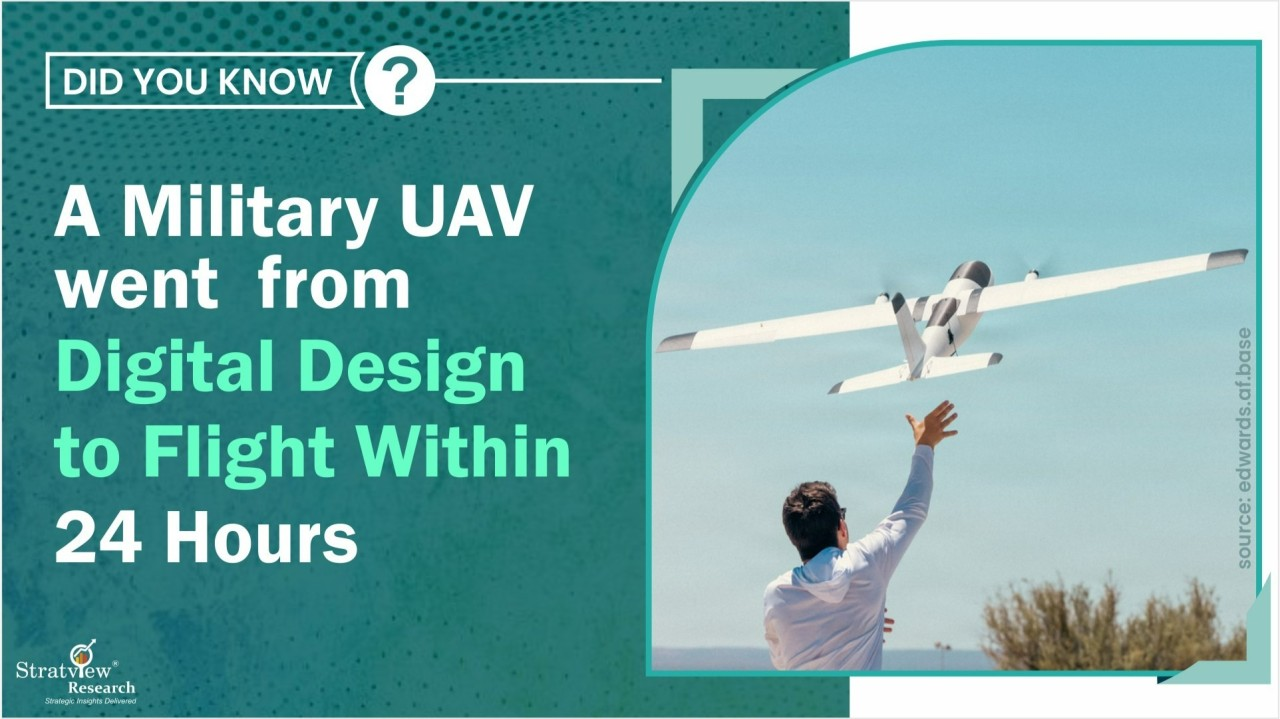
During the U.S. Air Force’s Game of Drones 26-2 event, a battery-powered Group 1 small unmanned aircraft system (sUAS) was designed in less than 10 minutes, fabricated within 24 hours, assembled, and flown. It subsequently completed a flight of 8 hours, 41 minutes, and 43 seconds, covering approximately 300 miles. The performance data was submitted for Guinness World Records verification, which remains pending.
Several stages that normally take place separately, including design, fabrication, assembly, and flight validation, were compressed into a much shorter development cycle.
Turning a Mission into an Aircraft
The process started with the aircraft design. The aircraft was generated using Prometheus, Titan Dynamics’ mission-driven UAS design software. The system translates mission parameters into aircraft configurations, with the demonstration generating the aircraft design in less than 10 minutes. By linking the mission requirement directly to the aircraft configuration, Prometheus cuts the time needed to turn an operational requirement into a manufacturable design.
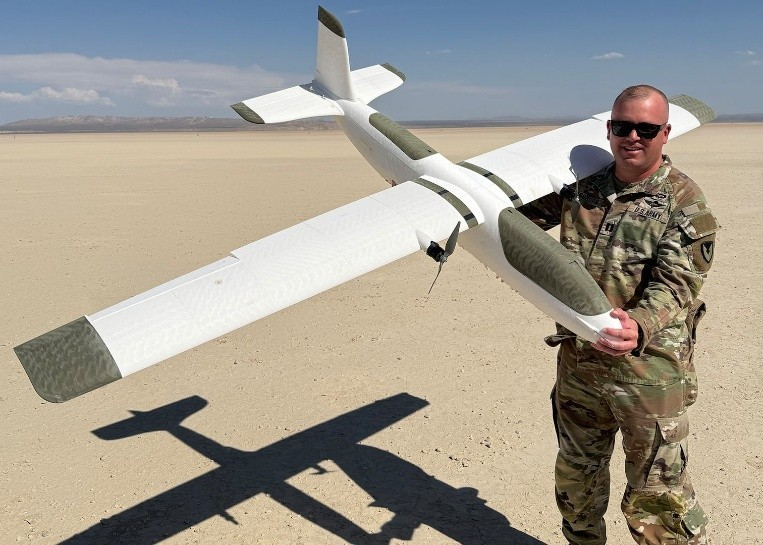
Image Courtesy of DCMA
The design was then translated into hardware using commercial 3D printers inside a mobile, containerized production facility. The battery and propulsion system were integrated before final assembly by a small team. Additive manufacturing also removes a conventional production step, allowing digital designs to be converted into physical components without developing dedicated tooling or setting up a conventional production line for every design iteration. For small UAVs, that can make design changes easier to implement when configurations need to be adjusted for specific mission requirements.
In this demonstration, the printers were not part of a fixed production facility. They were housed inside a mobile manufacturing system.
When the Factory Becomes Mobile
Vulcan changes the role of the factory itself. Titan Dynamics describes its Vulcan system as a mobile UAS factory designed to support production at the point of need. Production capacity can therefore move closer to where the aircraft is required, reducing reliance on centralized manufacturing infrastructure.
That opens the possibility of a more distributed production model in which digital files, rather than finished aircraft, become the primary link between design and manufacturing.
The Supply Chain Had to Keep Pace
Rapid airframe fabrication alone does not create a rapidly deployable aircraft. Two brushless DC motors assembled at Tobyhanna Army Depot powered the UAV during the flight. Their inclusion adds a domestic manufacturing dimension to the demonstration and highlights an important constraint: the speed of the overall development cycle also depends on having the components needed to complete the aircraft.
The Flight Closed the Loop
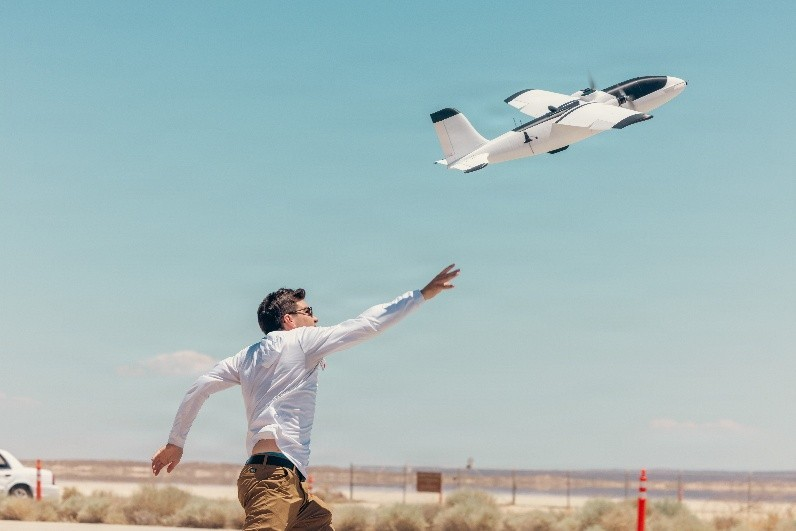
Image Courtesy of U.S. ARMY
After the 24-hour build, the UAV completed an 8-hour, 41-minute, 43-second flight and covered approximately 300 miles, surpassing the previous endurance record by 50 minutes according to the U.S. Army. The flight gave the team a direct opportunity to evaluate the aircraft after its rapid development and generate performance data that could inform future design iterations.
Speed Is Not the Same as Scale
The demonstration should not be interpreted as proof of high-volume production capability. Producing one aircraft within a highly compressed cycle and producing hundreds or thousands at comparable speed are different manufacturing challenges. The longer-term opportunity will depend on whether this digital and distributed manufacturing architecture can deliver repeatable production, consistent quality, reliable components, and cost-effective scaling.
For now, the demonstration shows that the design-to-flight cycle can be compressed dramatically. It does not establish that the same approach can replace conventional high-volume aerospace production.
That distinction also puts the role of additive manufacturing into perspective. 3D printing is only one part of the model. The bigger change is the tighter connection between digital design, manufacturing, component assembly, and flight testing.
Mission requirements can inform a digital aircraft configuration. That design can then move directly into additive fabrication, while the production setup can be deployed where it is needed. Domestic component assembly supports the build, bringing several parts of the development process into a much tighter operating cycle.
For the small-UAV sector, this points toward a manufacturing model where the speed of iteration becomes part of platform capability.
The 2026 demonstration does not establish that this model is ready for large-scale production. It does show that a small UAV can move through design, manufacturing, and flight in a fraction of the time associated with a conventional development cycle.