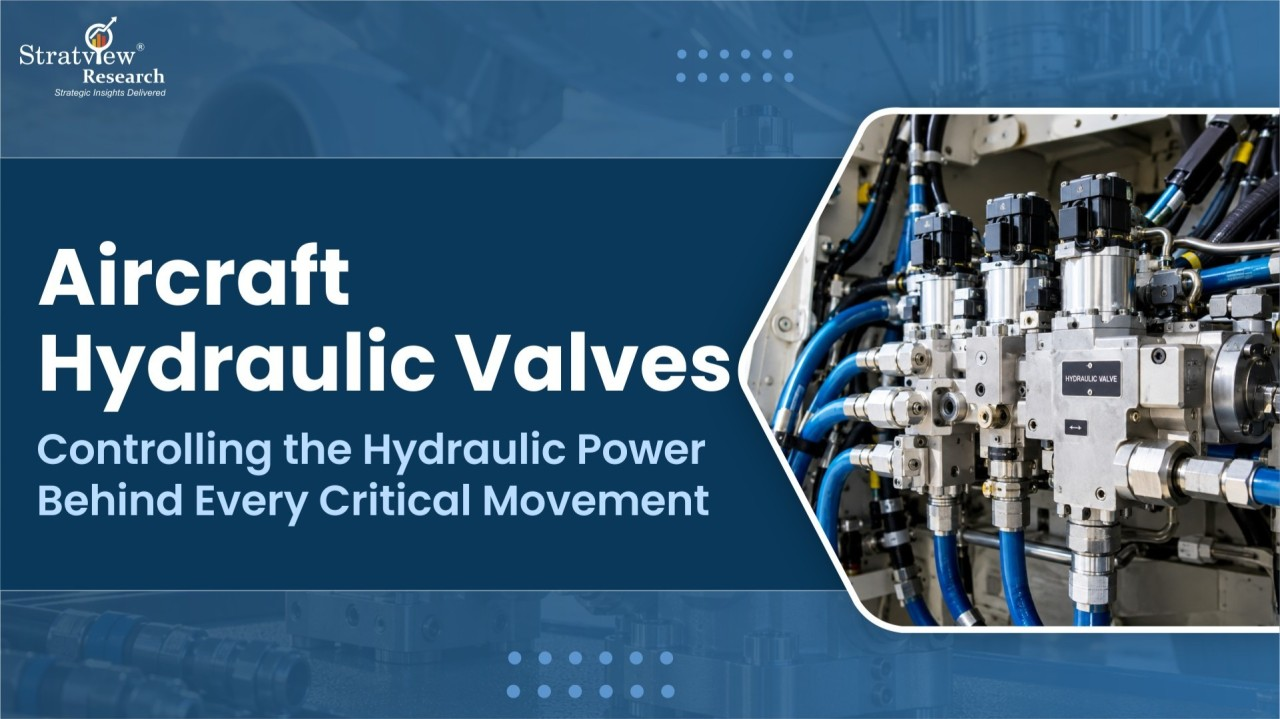
When an aircraft takes off, thousands of components work together in perfect coordination. While hydraulic pumps generate the pressure that powers critical systems, hydraulic valves determine where that power goes, when it flows, and how precisely it is delivered.
From extending landing gear to moving flight control surfaces, hydraulic valves control nearly every hydraulic function onboard. Often overlooked, they serve as the decision-makers of an aircraft's hydraulic network, ensuring every movement happens with speed, precision, and absolute reliability.
Where Hydraulic Valves Work Across an Aircraft?
Hydraulic valves are used across engines, landing gear, wheels, brakes, and flight control systems, with each application placing different demands on valve performance.
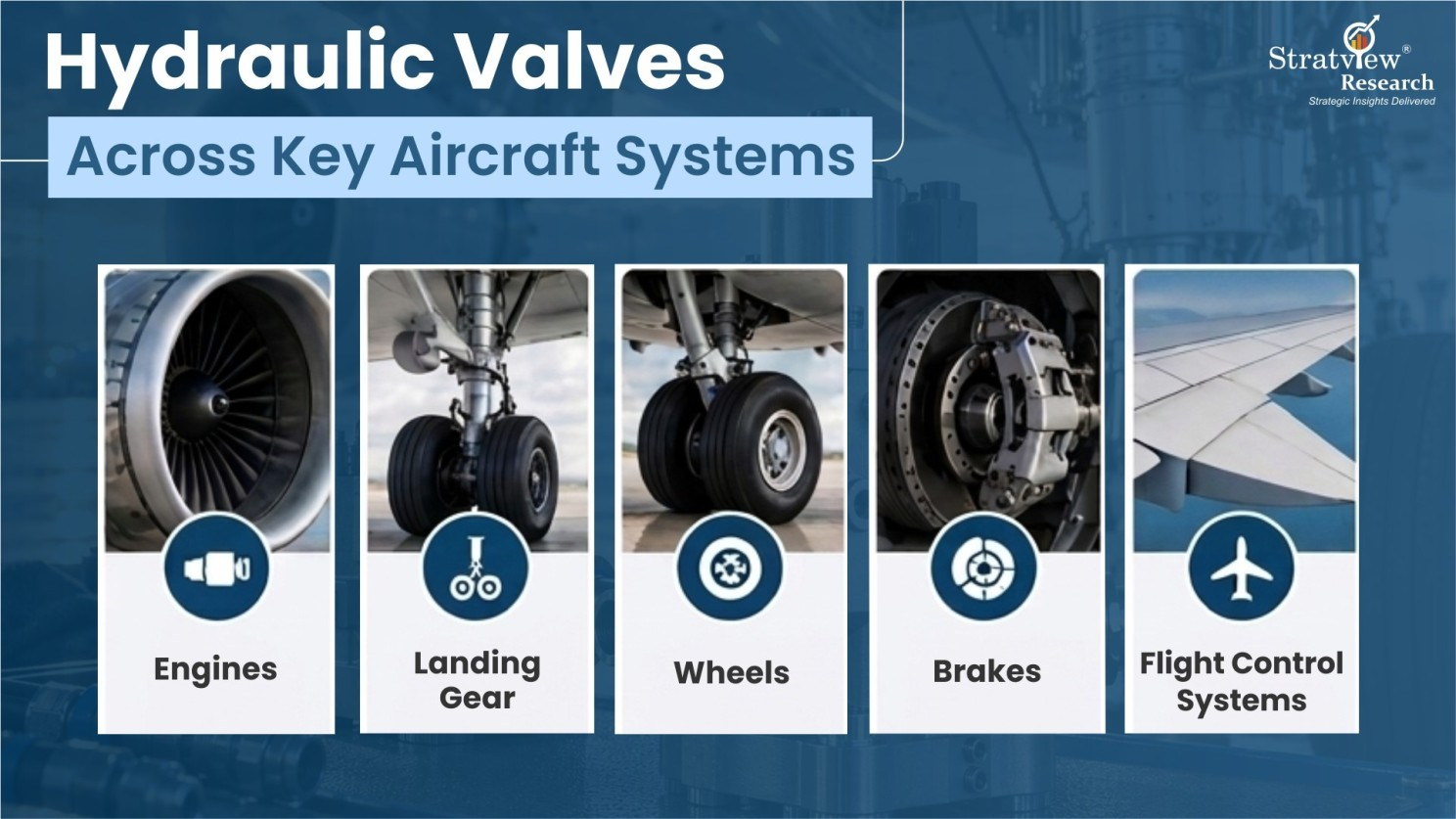
Image Courtesy of Stratview Research
Flight controls, including ailerons, rudders, flaps, and spoilers, operate under hydraulic pressures of 3,000 to 5,000 psi and require continuous, high-speed, proportional control to maintain aircraft stability. Unlike landing gear or engine systems that primarily function in simple "extend/retract" or "on/off" modes, flight controls rely on multiple independent hydraulic circuits and a significantly higher number of valves.
This explains why flight control systems alone accounted for around 60% of hydraulic valve demand in 2025, making them the industry's largest application segment. Landing gear represented roughly half that value, while engine applications accounted for a comparatively smaller share.
Why Titanium Has Become the Material of Choice?
Choosing the right material for hydraulic valves depends on factors such as weight, strength, and durability. Stainless steel, aluminium, and titanium are widely used, while composites are being explored. However, metals remain the preferred choice for high-pressure hydraulic systems because they offer greater reliability.
Among them, titanium has steadily emerged as the preferred material. Despite being heavier than aluminium, it delivers an exceptional strength-to-weight ratio and outstanding corrosion resistance, allowing manufacturers to reduce weight without sacrificing durability. Today, around half of all aircraft hydraulic valves are manufactured from titanium, and its adoption continues to grow as OEMs pursue lighter aircraft.
Major manufacturers such as Boeing and Airbus specify titanium alloys like Ti-6Al-4V for flight-control and engine valves. A notable example comes from the Airbus A380, where a 3D-printed titanium hydraulic valve block achieved the same performance as a conventionally forged component while reducing both weight and part complexity, demonstrating how additive manufacturing is expanding titanium's role in aerospace.
Commercial Aviation Drives the Largest Demand?
Hydraulic valves are used across commercial aircraft, military platforms, helicopters, and general aviation. However, commercial aviation remains the clear demand leader.
Large commercial aircraft typically incorporate 2–4 hydraulic systems, 10–15 hydraulic pumps, and 20–25 actuators, all requiring numerous valves to regulate hydraulic flow. Beyond system complexity, fleet size further strengthens demand.
According to IATA, the global commercial fleet reached 35,550 aircraft as of 2025, including 30,300 active aircraft and 5,250 in storage. Looking ahead, Airbus and Boeing forecast more than 42,000 new commercial aircraft deliveries by around 2044, while Embraer projects approximately 10,500 additional aircraft over the same period.
Aircraft utilization adds another dimension. Commercial aircraft typically operate 10–12 hours per day, accumulating 3,000–4,000 flight hours annually. The higher the flight hours, the more frequently hydraulic valves operate, increasing maintenance, overhaul, and replacement demand throughout the aircraft's lifecycle.
Smarter Valves for a More-Electric Future
Aircraft hydraulic systems are also evolving. As the industry embraces More-Electric Aircraft (MEA) architectures, electro-hydraulic and electro-hydrostatic actuation systems are becoming increasingly common, requiring valves with faster response times, lower weight, and tighter electronic integration.
Programs such as the Airbus A380 and F-35 already demonstrate this transition. At the same time, suppliers including Parker Aerospace and Moog are introducing sensor-enabled, digitally monitored, and additively manufactured hydraulic valves that support predictive maintenance, reduce downtime, and improve operational efficiency.
A Market Built for Long-Term Growth
Despite occasional headwinds from geopolitical tensions, supply-chain challenges, and trade restrictions, the long-term outlook for aircraft hydraulic valves remains firmly positive. As long as aircraft continue to rely on hydraulic power for critical flight functions, these valves will remain an essential part of every aircraft.
Global demand for aircraft hydraulic valves stood at around USD 2 billion in 2024 and is projected to reach approximately USD 3.3 billion by 2034, supported by rising aircraft production, fleet expansion, and continued demand for advanced hydraulic systems across commercial and military aviation.
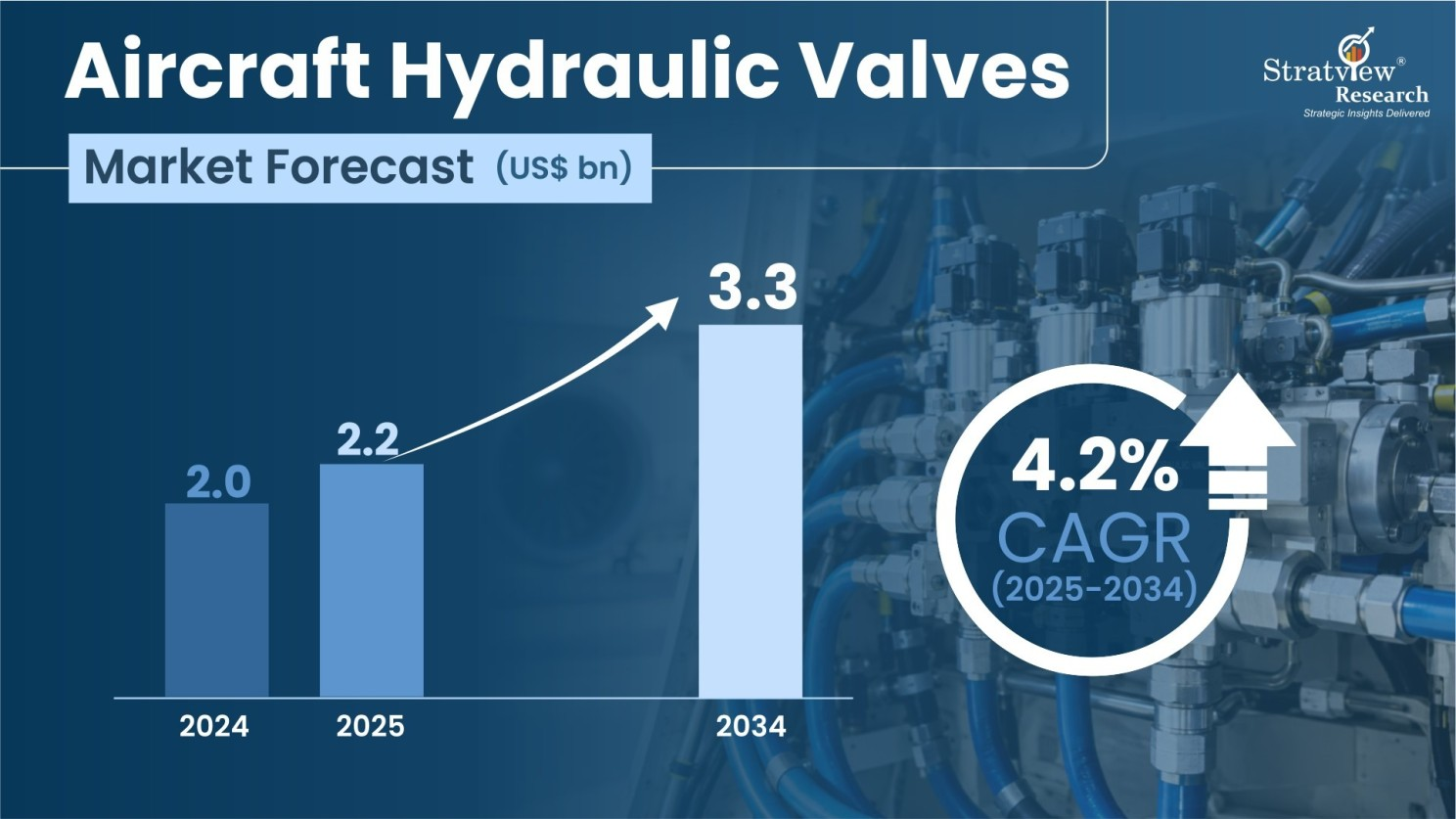
Image Courtesy of Stratview Research
As aircraft become more advanced, hydraulic valves will continue to adapt to changing design and performance requirements. With innovations in materials, manufacturing, and digital technologies, these critical components are set to play an even greater role in making future aircraft safer, lighter, and more efficient.
TAGS: Aircraft Nacelle Components
Subscribe to our newsletter
Related Blogs:
How Much Do You Really Know About Hydraulic Hoses?
Didn’t find what you were looking for?
Tell us about your requirements
(Our team usually responds within a few hours)