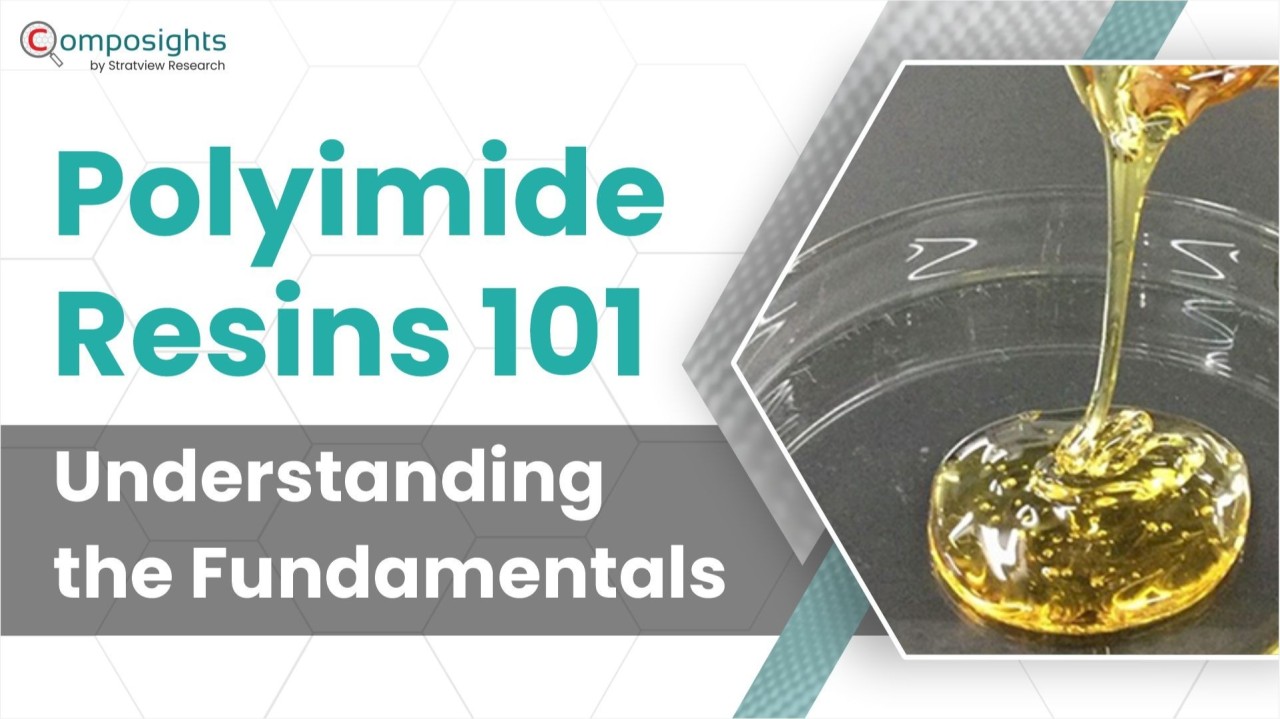
Since the first commercially viable polyimide resin was introduced by DuPont in the early 1960s, these high-performance materials have become integral to some of the world's most advanced technologies. Their ability to maintain performance under extreme temperatures, harsh operating environments, and prolonged service conditions has made them a preferred choice across aerospace, electronics, automotive, and semiconductor industries.
But what exactly are polyimide resins, and why are they so widely used? Let's explore the chemistry, performance characteristics, and applications behind these remarkable polymers.
So, What Exactly Are Polyimide Resins?
Polyimide (PI) resins are a class of high-performance polymers defined by the presence of imide functional groups, a cyclic structure where two carbonyl groups are bonded to a nitrogen atom (CO–N–CO), within their molecular backbone. Typically synthesized through the condensation of aromatic diamines and tetracarboxylic dianhydrides, these materials possess a rigid, aromatic structure that ensures exceptional thermal, mechanical, and electrical stability in the most demanding engineering environments.
Types of Polyimide Resins
Polyimide resins come in two primary types, each tailored to different needs:
Thermosetting polyimides cure permanently under heat, forming rigid, dimensionally stable structures. These are the go-to choice for films, coatings, and high-temperature composites.
Thermoplastic polyimides can be softened and remolded with heat, making them ideal for precision mechanical parts and industrial components where complex geometries are needed.
How Polyimide Resins Are Made
Polyimide resins can be synthesized through multiple routes, but here we focus on the widely used two-step process via polyamic acid.
Step 1: Polyamic Acid Formation (Two-Step Approach) Aromatic diamines (e.g., ODA) react with tetracarboxylic dianhydrides (e.g., PMDA) in polar solvents at room temperature. This ring-opening reaction produces high-molecular-weight polyamic acid with excellent processability.
Step 2: Imidization
-
Imidization of polyamic acid (PAA) can be carried out thermally, where the material is heated in controlled stages, typically above 250 °C, to remove water and drive the cyclodehydration reaction.
-
Alternatively, imidization can be achieved chemically, using dehydrating and acylating agents that promote ring closure at lower temperatures.
-
Both methods ultimately convert PAA into a fully imidized polymer, forming stable imide rings that yield a rigid, highly heat-resistant, and chemically stable polyimide resin capable of performing under extreme operating conditions.
What Makes Them Exceptional
The property profile of polyimide resins:
- Stable from −269°C to +400°C, with decomposition starting only above 500°C
- Glass transition temperatures between 370–400°C
- Tensile strengths exceeding 100 MPa depending on formulation
- Outstanding electrical insulation across wide temperature ranges
- Excellent resistance to solvents, acids, and alkalis
- Naturally self-extinguishing with low smoke generation
Owing to these properties, polyimide resins are deployed in a wide range of high-end engineering applications.
Polyimide resins serve as matrix materials in fiber-reinforced composites, creating rigid, high-strength structures used in automotive and aerospace applications and high-performance sporting goods. In aerospace, polyimide infusion resins produce lightweight, high-strength components capable of withstanding extreme environments. Automotive systems use them for engine components and exhaust structures that must endure high heat and corrosive gases.
In electronics and semiconductors, polyimides are essential for flexible printed circuit boards, semiconductor insulation, and motor windings, offering stable electrical performance and thermal reliability.
These versatile applications highlight why polyimide resins remain a critical material across industries demanding high performance and reliability.
The Road Ahead
As engineering challenges become more complex, the demand for materials that can withstand extreme temperatures, aggressive chemicals, and prolonged mechanical stress continues to grow. Polyimide resins have proven their value across a wide range of high-performance applications, offering a unique balance of thermal stability, strength, electrical insulation, and durability. With the global polyimide resin market projected to cross USD 900 million by 2031, growing at a CAGR of 5.0%, these advanced polymers are expected to remain a material of choice for industries seeking higher performance, greater reliability, and long-term operational efficiency.