Composite manufacturing capacity is becoming an increasingly important part of production planning as aerospace and automotive programs move toward higher output and more integrated manufacturing processes.
August and September 2026 brought several facility investments tied to composite-intensive production. While the projects differ in scale, technology, and end use, they share a common focus: building the manufacturing infrastructure needed to produce advanced composite structures at greater scale.
Airbus Adds Composite Processing Capacity for the A220 Ramp-Up
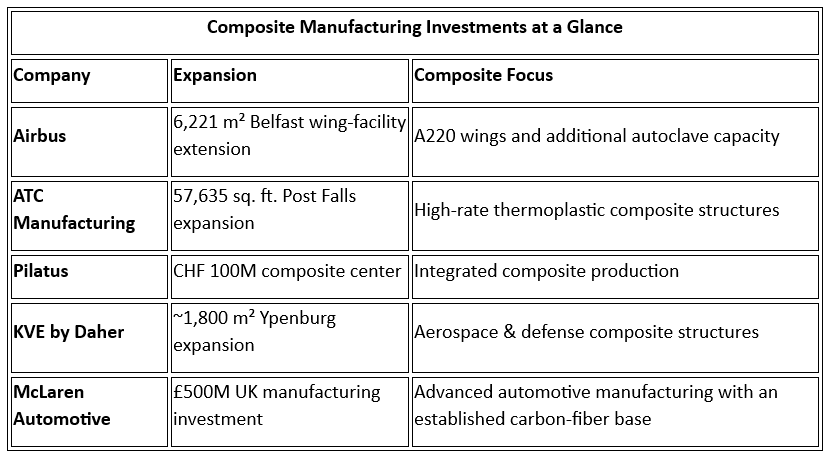
Airbus began construction on a 6,221-square-meter extension of its Belfast wing facility on August 19, 2026. The extension will include a third autoclave, specialized wing tooling, and additional cranage, with completion planned for the first half of 2028.
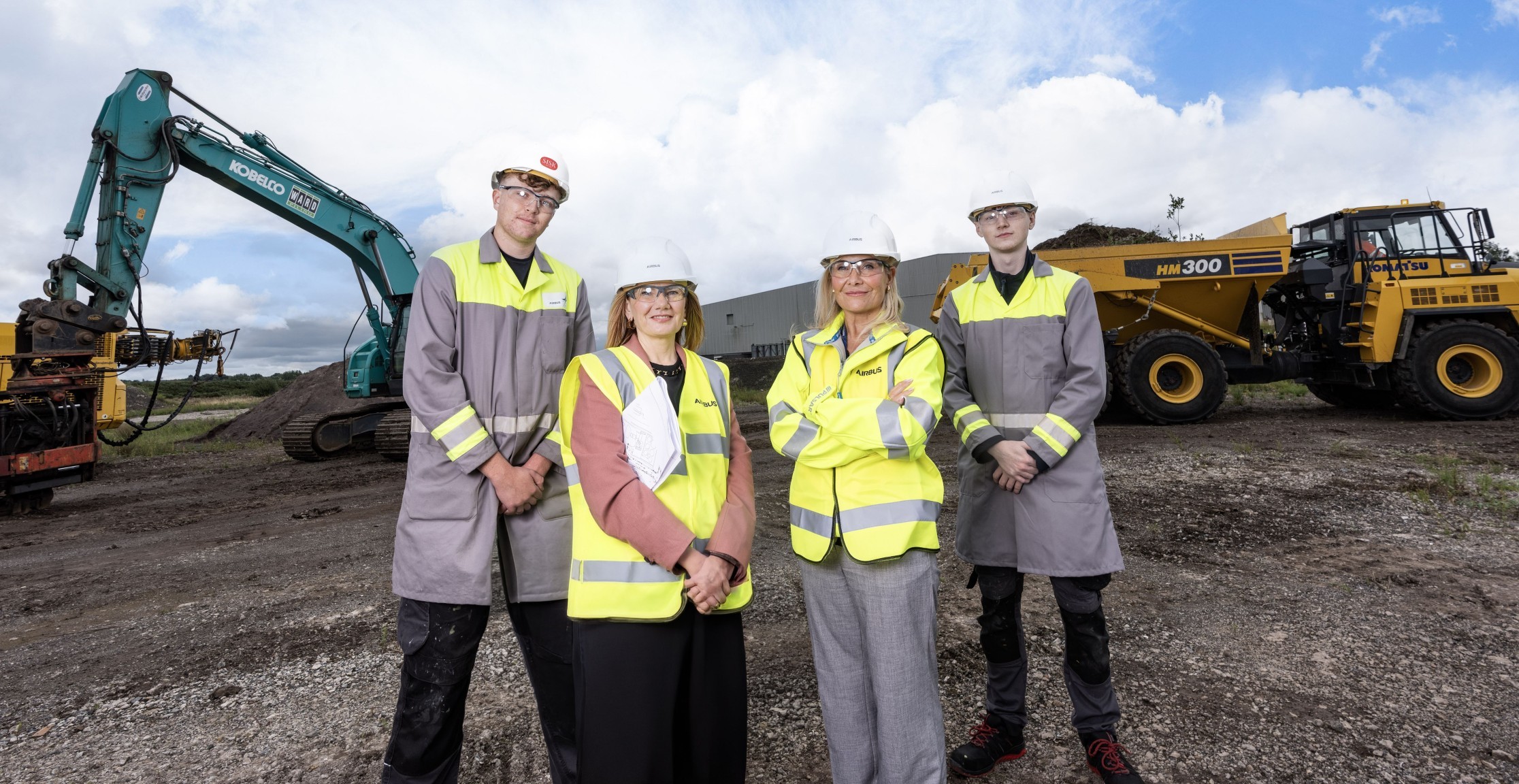 Image Courtesy of Airbus
The investment is closely tied to the A220 production ramp-up. Belfast is the exclusive global manufacturer of A220 wings, and Airbus is targeting production of 13 A220 aircraft per month by 2028. Adding another autoclave alongside dedicated tooling addresses the specialized processing requirements associated with higher wing output.
The Belfast operation also uses Airbus' patented Resin Transfer Infusion (RTI) process for A220 wing manufacture. Airbus states that the resulting structure is approximately 10% lighter than traditional aluminum equivalents. The extension therefore strengthens the processing infrastructure behind a composite-intensive aircraft component as the program moves toward higher production rates.
ATC Manufacturing Builds Around High-Rate Thermoplastic Production
On August 27, 2026, ATC Manufacturing broke ground on a 57,635-square-foot expansion at its Post Falls, Idaho facility. The project follows a recent Air Force Research Laboratory contract focused on large-scale, high-rate thermoplastic composite aircraft structures and is expected to be completed in late summer 2027.
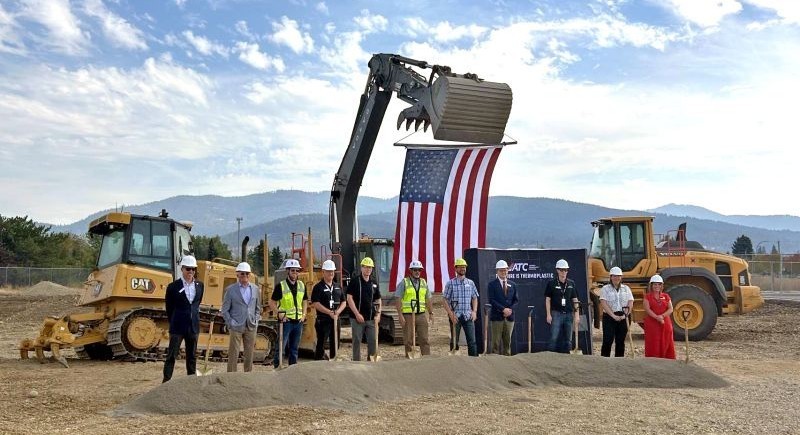
Image Courtesy of ATC Manufacturing
The defining feature of this investment is its focus on production rate and structural scale. ATC already manufactures thermoplastic composite parts, while the additional space is intended to support larger structures and higher-rate production requirements across commercial and defense programs.
That makes the project relevant to the industrialization of thermoplastic composites. Moving larger structures into higher-rate production requires repeatable manufacturing processes, consistent process control, and sufficient production throughput. The expansion is designed around those requirements, giving ATC additional room to support programs as they progress beyond lower-volume production.
Pilatus Consolidates Composite Manufacturing Under One Roof
Pilatus officially opened its new Schwarzhorn advanced composite center in Switzerland on August 14, 2026. The CHF 100 million facility brings composite development and production activities together under one roof and is designed to accommodate around 300 employees.
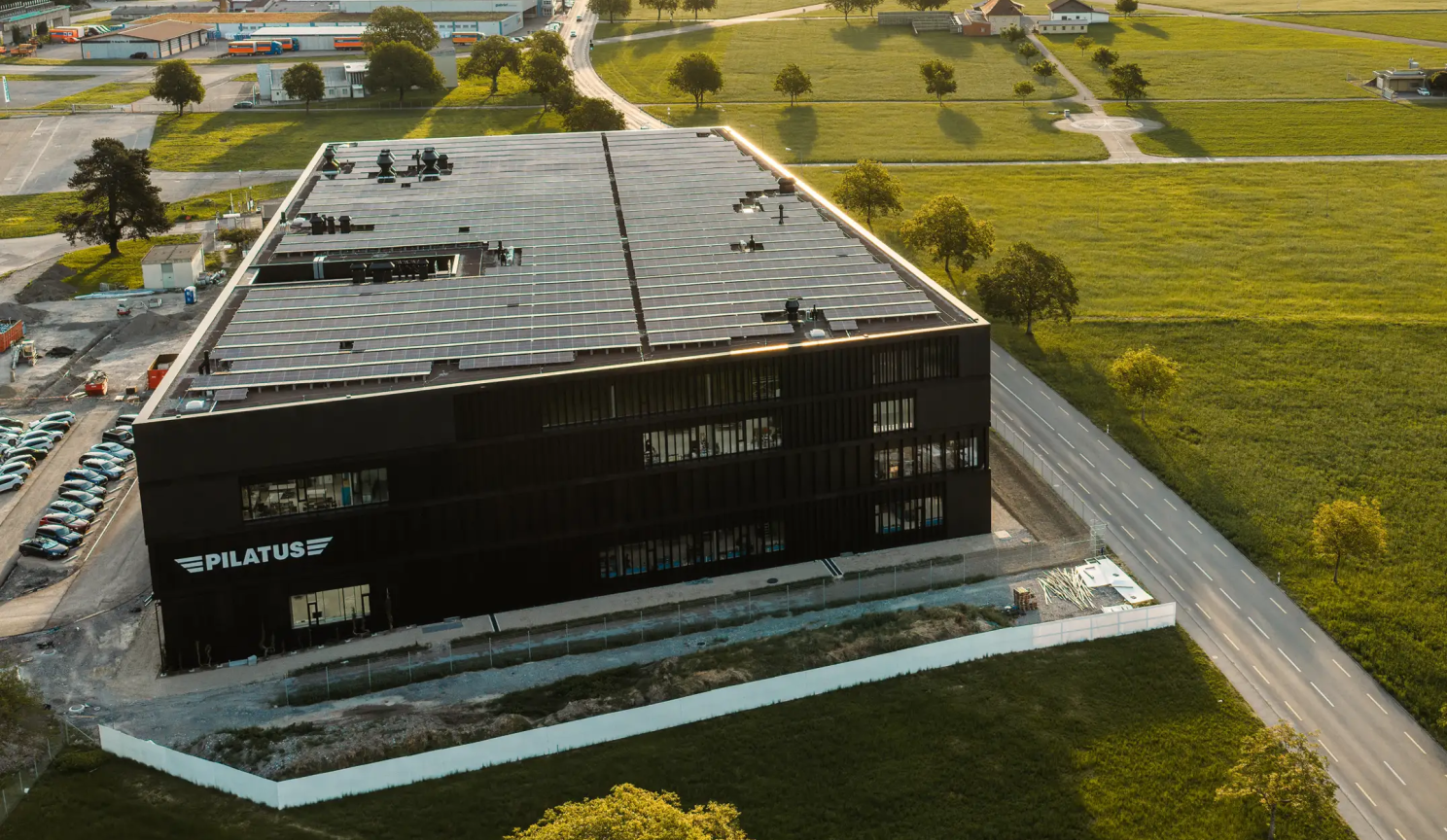
Image Courtesy of Pilatus
The center combines multiple stages of the manufacturing workflow, including raw-material receipt and storage, component manufacturing, detail assembly, surface treatment, storage, and kit preparation. Pilatus is also incorporating technologies related to future manufacturing, inspection, and automation.
The significance lies in this level of integration. The PC-24 already uses composites in primary structural components, including load-bearing control surfaces, and Pilatus has indicated plans to expand composite use. Bringing more activities into a single dedicated center gives the company an integrated manufacturing base for supporting that development while maintaining greater continuity between production stages.
KVE Expands Dedicated Composite Capacity for Aerospace and Defense
KVE by Daher inaugurated an expansion of its Ypenburg production facility in The Hague on September 10, 2026, adding nearly 1,800 square meters to its existing footprint. The expanded site includes a dedicated production line for blades, wing structures, and advanced composite components.
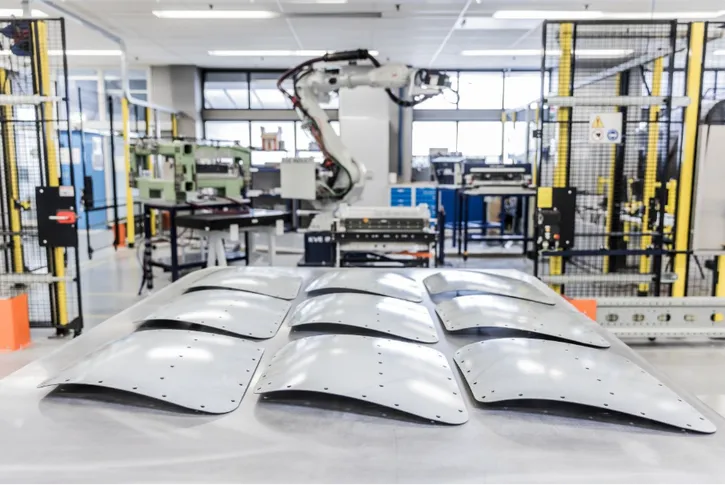
Image Courtesy of Daher
The development offers a supplier-side view of composite manufacturing growth. KVE specializes in the design, manufacture, and repair of high-value composite structures, primarily for aerospace and defense customers. Its production requirements are therefore closely connected to the output needs of the programs it supports.
The additional production area is intended to support increasing customer production rates. Dedicated capacity at this level allows a specialist supplier to accommodate higher volumes of composite structures while maintaining production around specific aerospace and defense requirements.
McLaren Expands UK Manufacturing Around an Existing Carbon-Fiber Base
McLaren Automotive announced around £500 million of UK investment on September 16, 2026, including expansion of its research, development, and production operations in South Yorkshire and a new vehicle production facility in the UK. The investment is expected to support around 1,000 new UK jobs by 2032.
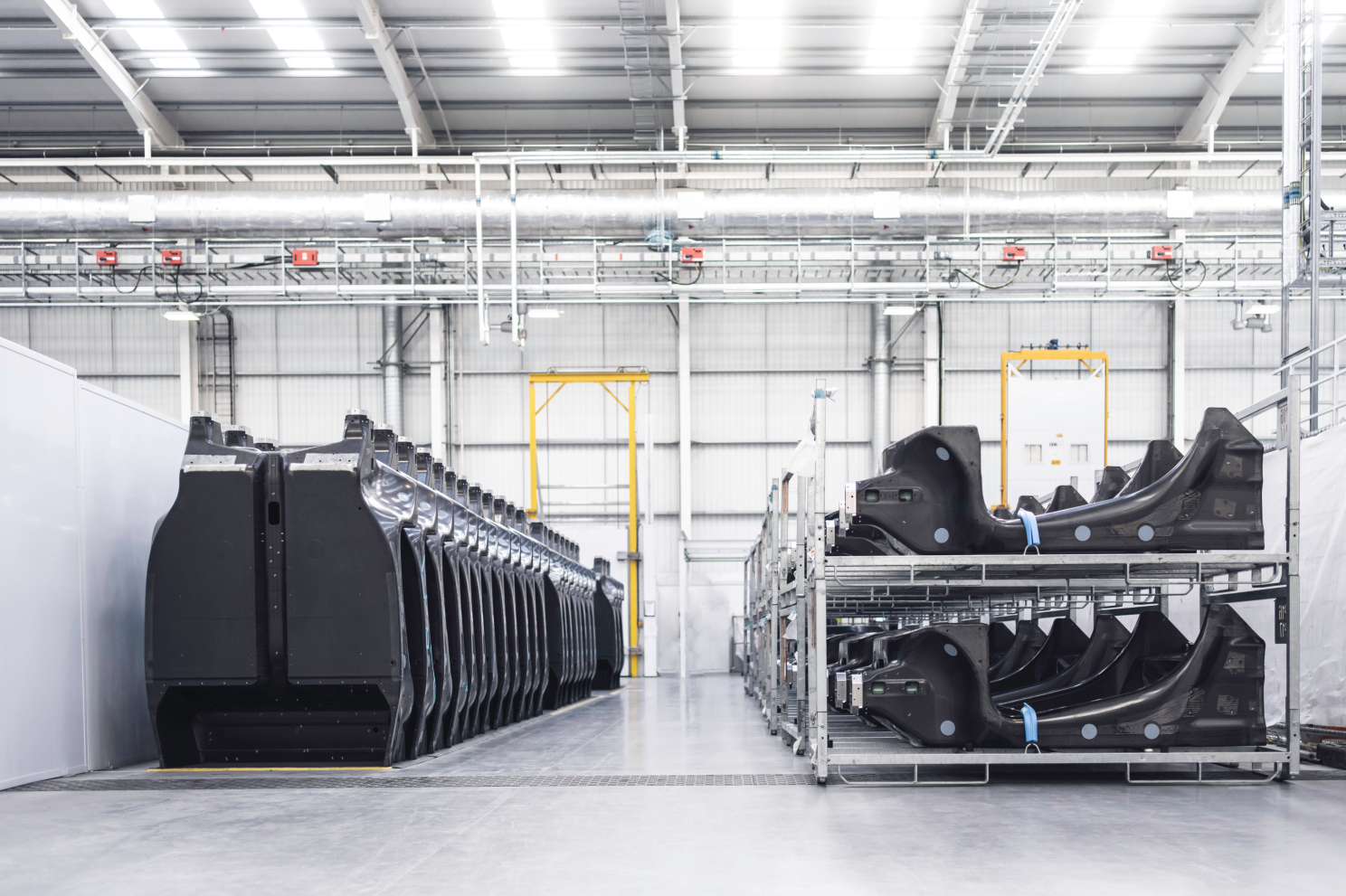
Image Courtesy of McLaren
The investment is broader than composites, covering research and engineering, vehicle manufacturing, future in-house engine production, and the development of a performance SUV.
Composites remain part of McLaren's established manufacturing base. Its South Yorkshire operations include a purpose-built facility for producing advanced carbon-fiber lightweight chassis. The 2026 investment therefore places an existing carbon-fiber capability within a wider expansion of advanced automotive production rather than representing a standalone composites facility project.
What These Investments Indicate for Composite Manufacturing
Across these developments, the emphasis is moving beyond material selection toward the industrial infrastructure required to manufacture composite structures consistently at scale.
Each investment tackles a different manufacturing need, whether it is adding composite processing equipment, increasing thermoplastic production, bringing more operations under one roof, or creating dedicated capacity for aerospace and automotive programs. What they have in common is a practical focus on making composite production easier to scale, with greater capacity and more consistent manufacturing as programs move into sustained production.