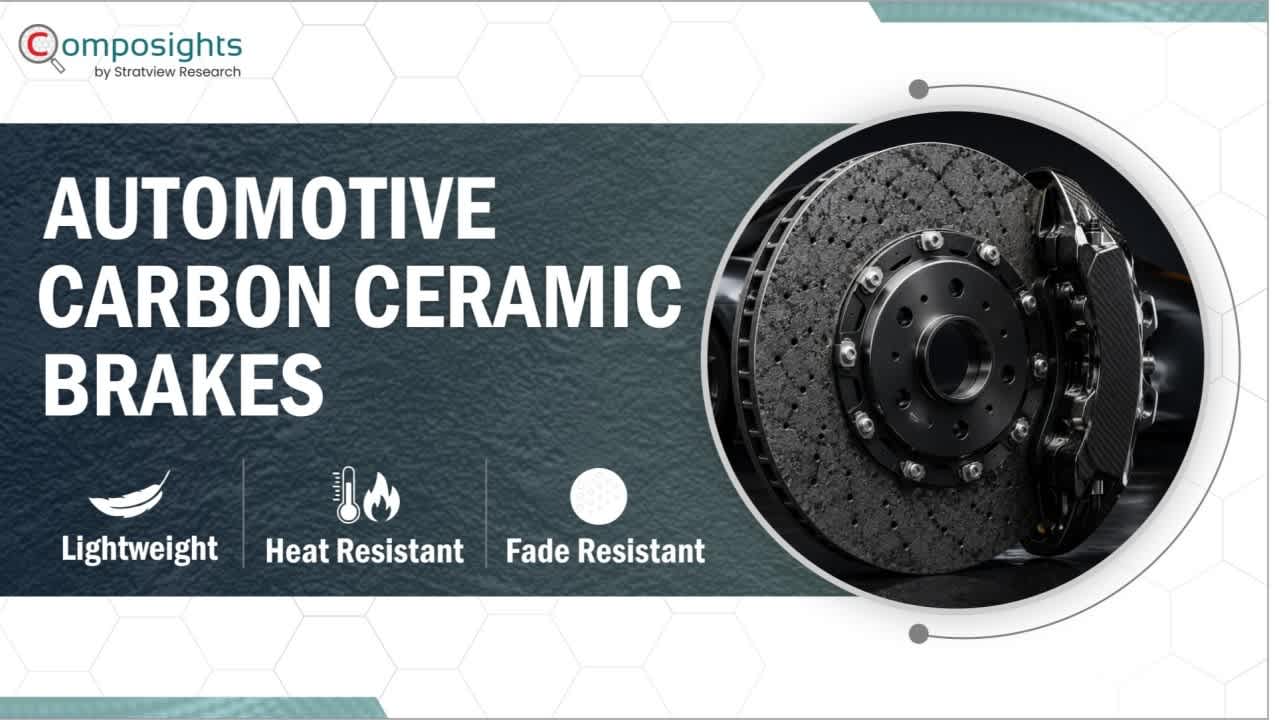
Braking becomes a harder engineering problem as vehicles get heavier, faster, and more performance-oriented. The system has to absorb greater thermal loads while adding as little weight as possible at the wheel end. The challenge is particularly relevant to premium electric vehicles, where higher vehicle mass makes weight at the wheel end more consequential.
Automotive carbon ceramic brakes address this trade-off through a carbon-fiber-reinforced ceramic structure, typically based on silicon carbide. Compared with conventional cast-iron discs, the material offers lower weight, high-temperature stability, long service life, and strong resistance to brake fade. These properties explain why carbon ceramic brakes remain concentrated in high-performance and luxury vehicles, while also making them relevant to newer premium vehicle platforms.
A High-Performance Braking Solution
The difference becomes most apparent during repeated high-temperature braking. Carbon ceramic discs can perform effectively at around 600–750°C and withstand initial temperature peaks approaching 1,000°C, helping maintain more consistent braking performance during repeated high-speed deceleration and aggressive driving.
They also deliver a significant advantage at the wheel end. Carbon ceramic discs can weigh around 50% less than comparable cast-iron discs, reducing unsprung and rotating mass. That saving has a direct effect on vehicle dynamics because mass at the wheel end influences handling, steering response, and suspension behavior. Industry estimates put the saving at approximately 5–6 kg per disc, or 20–25 kg across a vehicle.
The weight saving also comes with a durability benefit. Carbon ceramic brake discs can deliver 3-5x the service life of conventional cast-iron discs, depending on vehicle use and operating conditions, while offering strong resistance to wear, corrosion, and brake fade.
That combination of performance and longevity comes at a price. Carbon ceramic discs require complex manufacturing and specialized processing, making them considerably more expensive than conventional cast-iron systems. For that reason, their adoption remains concentrated in vehicles where the performance benefits can justify the premium.
Why Short Fibers Are the Preferred State
The same balance between performance and practicality can be seen in the material architecture. Short-fiber carbon ceramic discs account for more than 90% of demand, making them the dominant fiber configuration in automotive applications.
Short or chopped carbon fibers can be distributed relatively uniformly through the ceramic structure, supporting consistent properties across complex disc geometries. Their established processing routes also make them more practical for automotive production, where repeatability and manufacturing consistency matter alongside material performance.
Performance alone does not determine material selection. For automotive applications, material selection also has to balance repeatability, manufacturability, and production scale. The dominance of short-fiber architectures reflects that balance.
Global Demand
This combination of performance benefits and manufacturing practicality helps explain where the market stands today. The global automotive carbon ceramic brake market is estimated at approximately €299 million in 2025 and is projected to reach €426 million by 2030, registering a 7.3% CAGR during the forecast period.
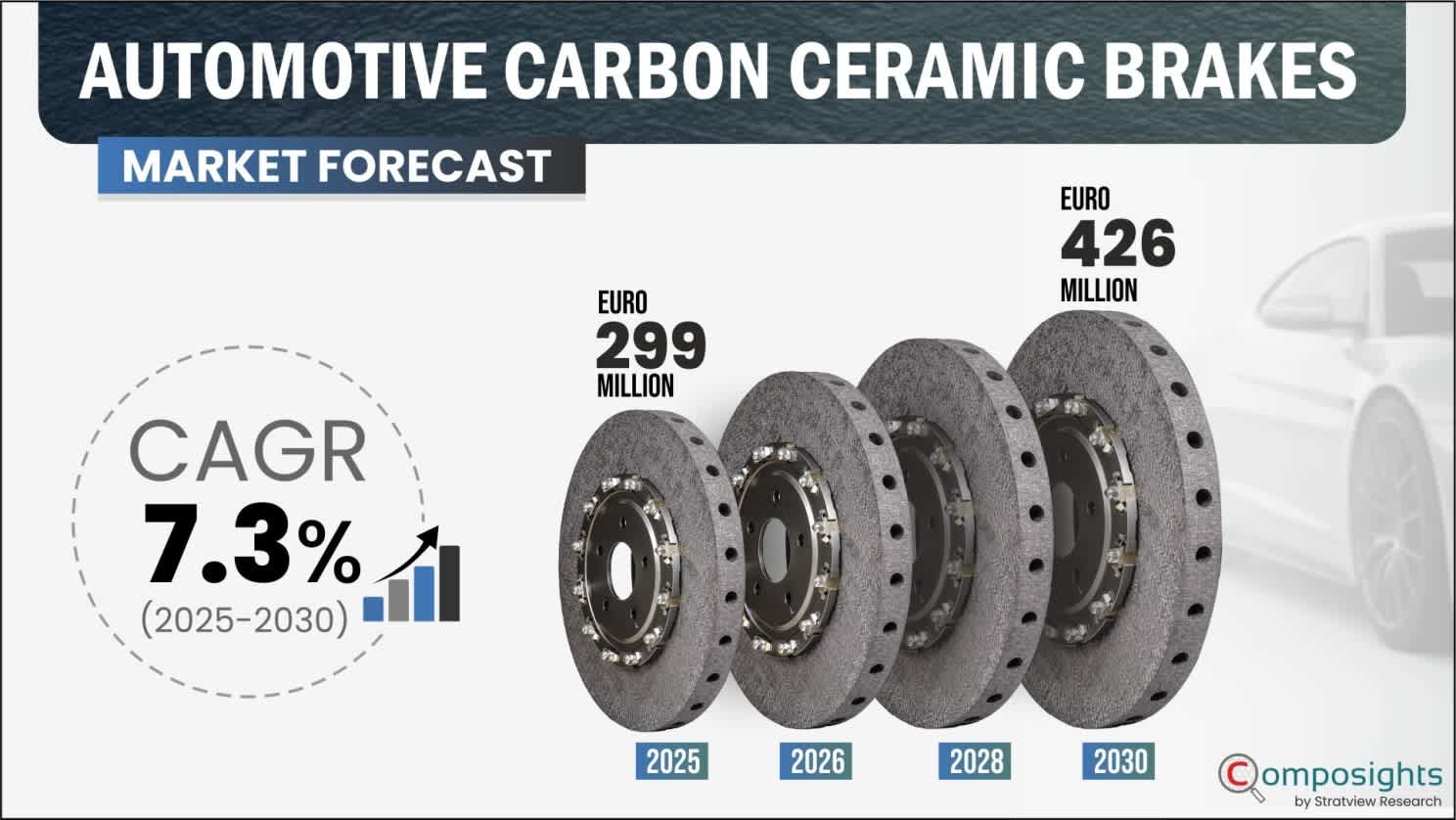
Image Courtesy of Composights
The growth is still largely tied to vehicle segments where the technology's benefits can justify its higher cost. High-performance and luxury vehicles remain the core applications, while premium electric vehicles are adding another potential area of demand.
Europe accounts for more than half of global demand, supported by its concentration of performance and luxury vehicle manufacturers and established carbon ceramic production capabilities.
Asia-Pacific is growing faster, supported by expanding automotive production, rising disposable incomes, and increasing demand for luxury and high-performance vehicles across China, Japan, South Korea, and India. The region is expected to record the fastest growth during the forecast period.
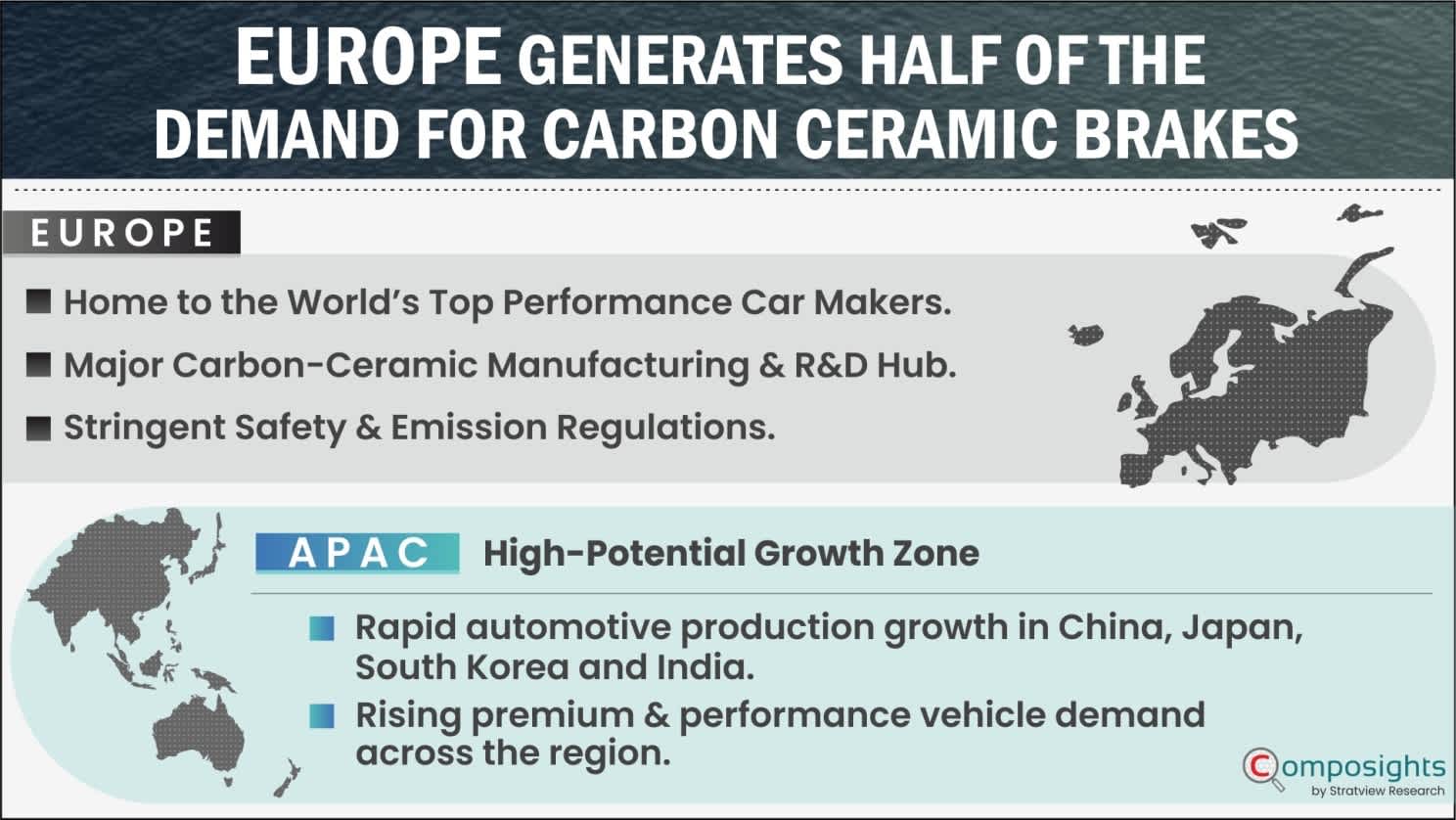
Image Courtesy of Composights
Where Carbon Ceramic Fits Next
Carbon ceramic brakes are unlikely to replace conventional cast-iron systems across the passenger-vehicle market. Their stronger case remains in vehicles where braking loads are high and the benefits of lower unsprung mass, thermal performance, and longer service life can justify the cost.
For the automotive composites industry, the significance goes beyond the brake market. Carbon ceramic brakes show how a composite can gain a place in a highly established automotive component when its combination of properties solves a specific engineering problem better than the conventional material.