
Four strategic transactions announced during June and July 2026 offer a closer look at how companies across automotive components, EV charging infrastructure, and shared mobility are strengthening their market position through mergers, acquisitions, and business combinations.
The mobility industry is witnessing a steady rise in strategic transactions as companies respond to changing technology requirements, growing capital commitments, and increasing competitive pressure. While each deal announced over the past two months serves a different business objective, they point in the same direction: companies are using mergers, acquisitions, and business combinations to expand capabilities, strengthen market presence, and build the scale needed for long-term growth.
The following four developments, announced during June and July 2026, provide a snapshot of how this trend is unfolding across different segments of the mobility value chain.
1. Mer + Eviny Fast Charging
Accelerating Consolidation in EV Charging Infrastructure
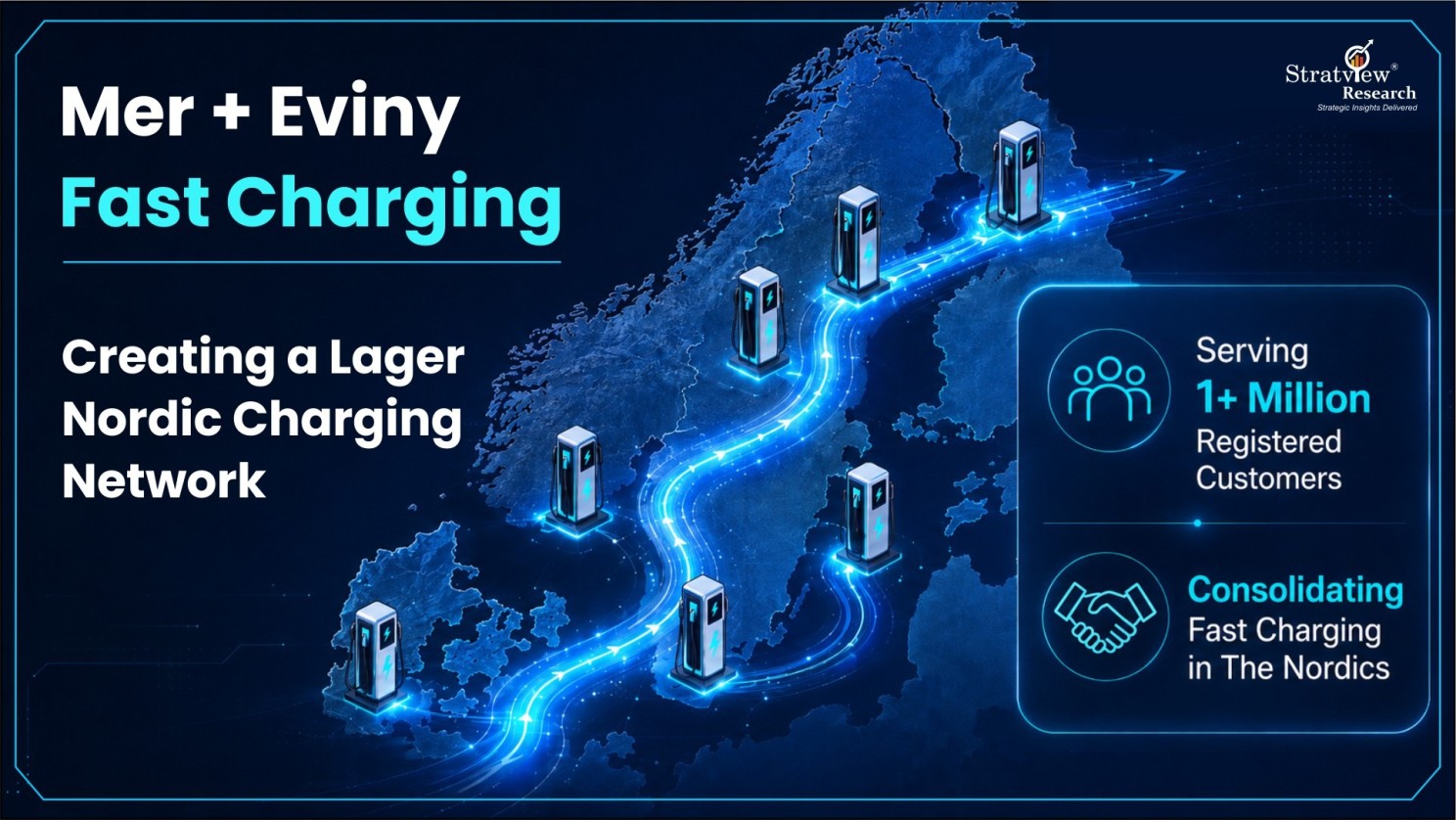
On July 9, 2026, Statkraft and Eviny announced the merger of their fast-charging businesses, Mer and Eviny Fast Charging, creating what the companies describe as the Nordic region's leading fast-charging operator. The combined business will operate across Norway, Sweden, and Denmark, serving more than one million registered customers, with plans to incorporate Mer's public charging operations in Germany following the required approvals.
Graphic of Stratview Research
The announcement comes at a time when the public charging market is placing greater emphasis on network quality, utilization, and operational efficiency. As infrastructure expands and competition intensifies, larger charging networks are better positioned to optimize investments, strengthen customer coverage, and improve profitability. The merger reflects this shift, bringing together complementary assets to build a stronger regional charging platform.
2. Vattenfall InCharge Acquires Nima Energy
Strengthening Sweden's Ultra-Fast Charging Network
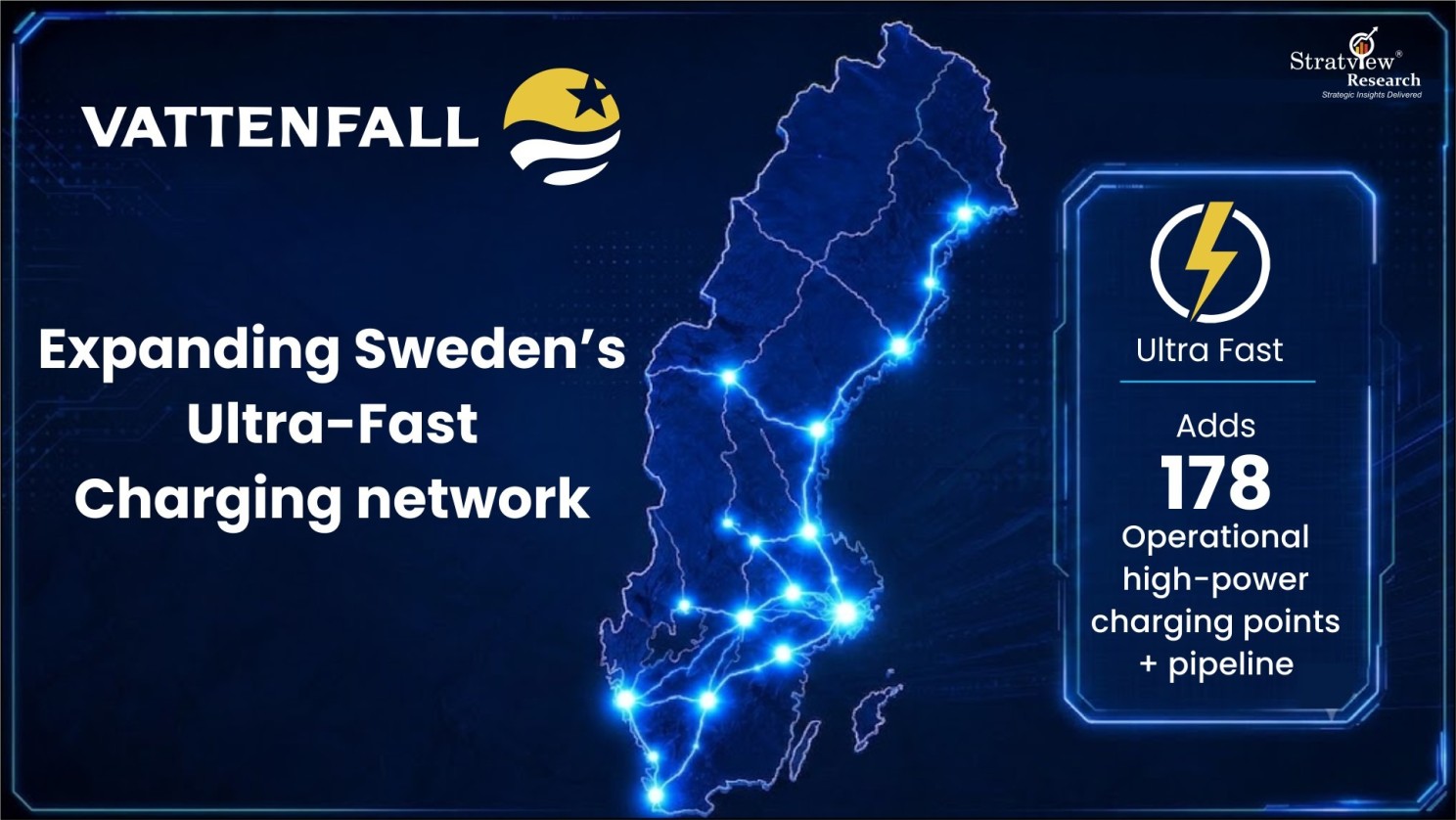
Also announced on July 9, 2026, Vattenfall fall acquired Swedish ultra-fast charging operator Nima Energy y, adding 178 operational high-power charging points capable of delivering up to 300–400 kW, along with a development pipeline of 254 additional charging points across 36 locations. The acquisition further strengthens Vattenfall's InCharge network, which already spans Sweden, Germany, and the Netherlands.
Graphic Courtesy of Stratview Research
Rather than expanding charging infrastructure through greenfield development alone, established operators are increasingly using acquisitions to strengthen existing networks and secure strategic locations. High-power charging sites with strong utilization potential are becoming valuable assets as EV adoption continues to grow, making targeted acquisitions an attractive route for expanding market presence.
The two charging-related announcements made on the same day illustrate how consolidation is becoming an increasingly important strategy within the EV charging ecosystem, where scale and network quality are emerging as key competitive advantages.
3. Dana + Eaton Mobility
Building Scale Across Automotive Components
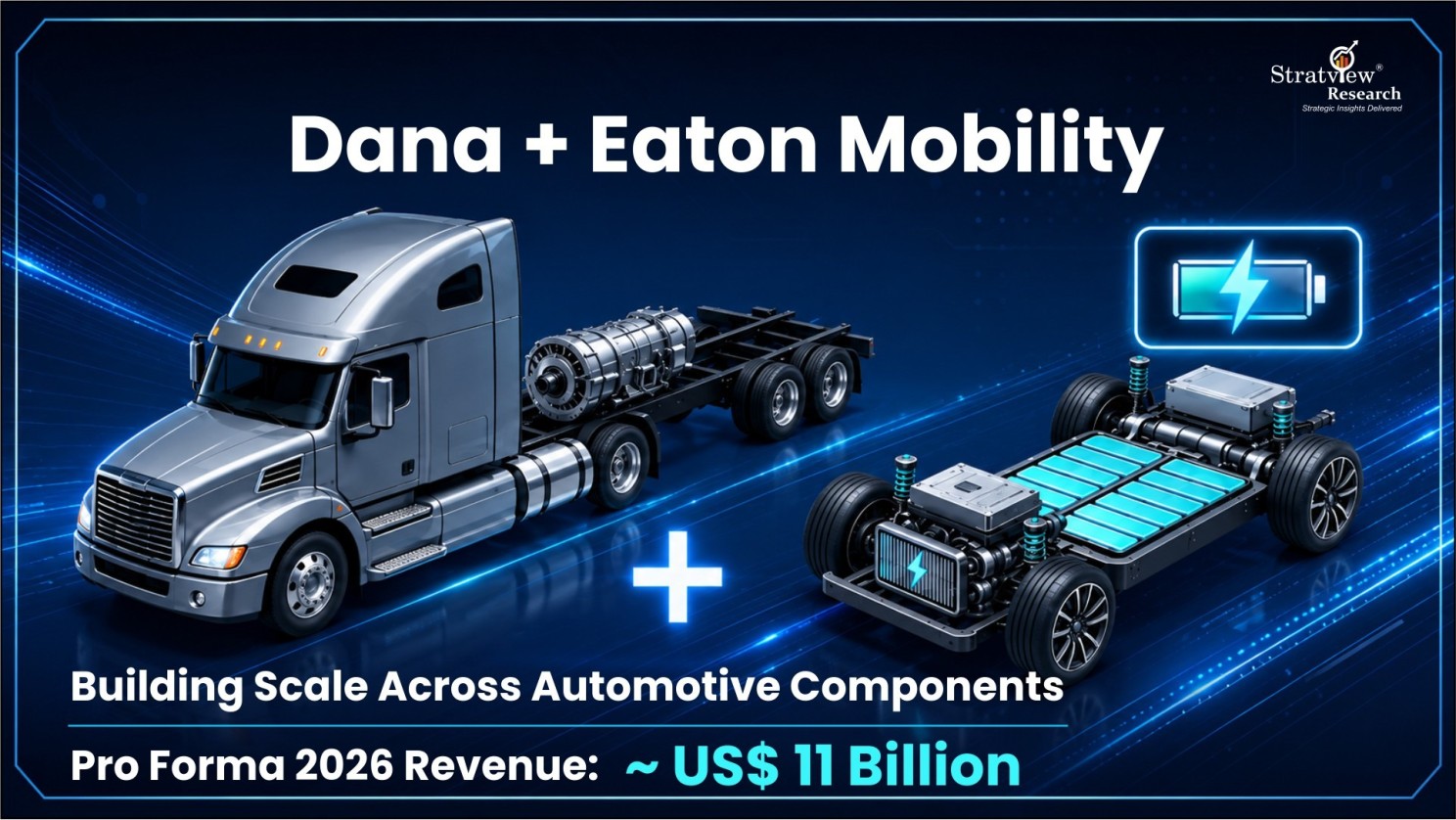
Consolidation is extending beyond charging infrastructure. On June 11, 2026, Dana Incorporated and Eaton announced an agreement to combine Dana with Eaton's Mobility Group through a Reverse Morris Trust transaction. The combined company is expected to generate approximately US$11 billion in pro forma 2026 revenue, bringing together complementary capabilities across driveline systems, commercial vehicle transmissions, thermal management, sealing technologies, and electrified propulsion.
Graphic Courtesy of Stratview Research
For automotive suppliers, expanding product portfolios is only part of the equation. Supporting global OEM programs increasingly requires broader engineering capabilities, manufacturing scale, and sustained investment in next-generation vehicle technologies. By combining their complementary businesses, Dana and Eaton are creating a larger platform capable of serving both conventional and electrified vehicle markets while improving operational efficiency.
4. Uklon Acquires E-wings
Expanding Mobility Services Beyond Ride-Hailing
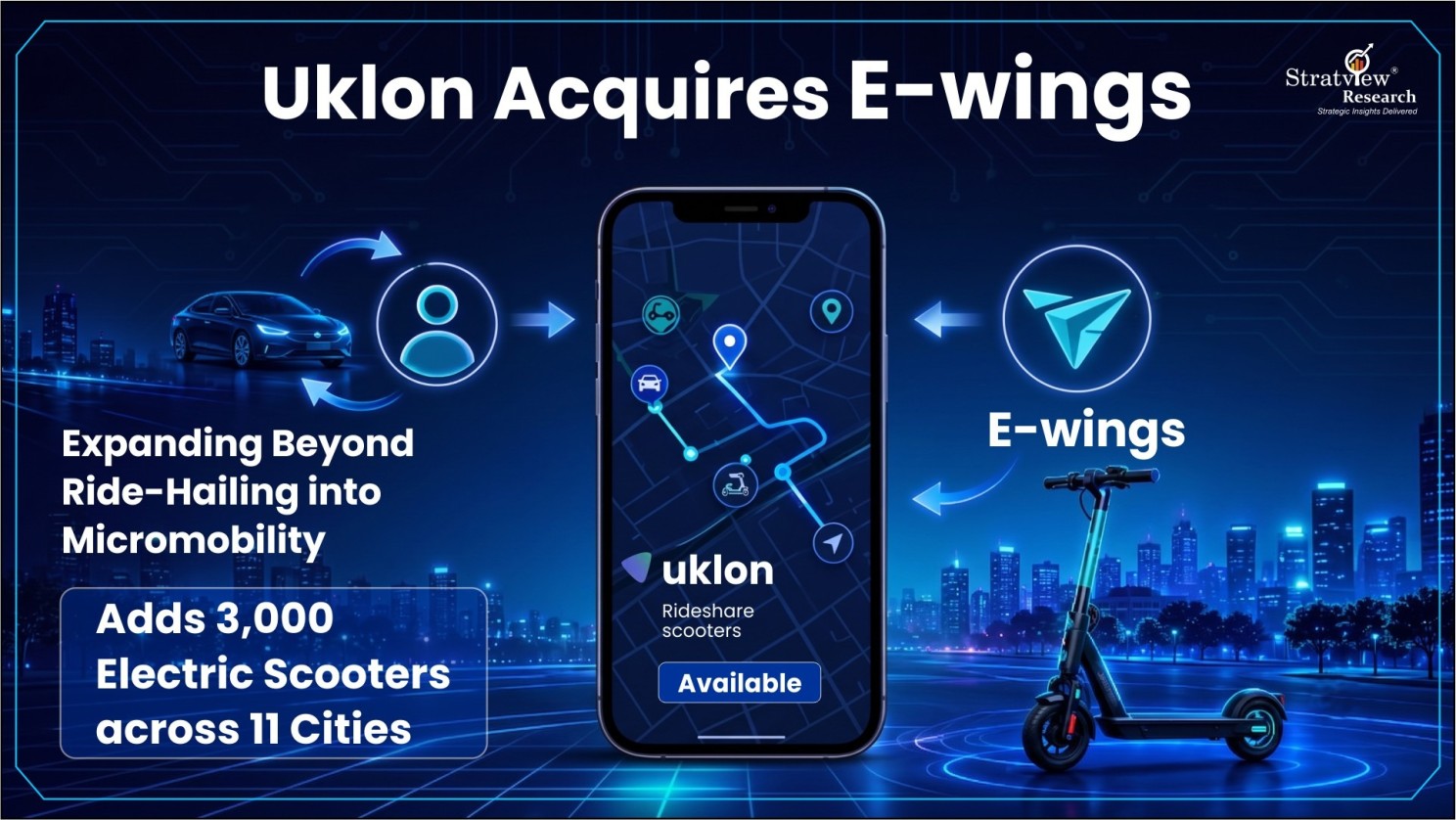
The same trend is also visible in urban mobility. Earlier in June 2026, Kyivstar Group's ride-hailing platform, Uklon , signed a definitive agreement to acquire Ukrainian micromobility operator E-wings. The transaction adds approximately 3,000 electric scooters operating across 11 Ukrainian cities, expanding Uklon's services beyond ride-hailing into shared micro-mobility.
Graphic Courtesy of Stratview Research
As urban transportation becomes increasingly multimodal, mobility platforms are looking beyond a single service offering. Integrating ride-hailing with micromobility allows operators to serve a wider range of journeys within a single digital platform while strengthening customer engagement and creating additional revenue opportunities. Acquiring an established operator also provides a faster route to market than building a new service from the ground up.
Signals from the Mobility Market
While each transaction serves a different business objective, together they point to a broader shift in the mobility industry.
-
Scale is becoming a strategic advantage. Whether in automotive components or charging infrastructure, larger organizations are better positioned to spread development costs, improve operational efficiency, and support global customers.
-
Electrification continues to influence investment decisions. Three of the four transactions are directly connected to electric mobility, either through vehicle technologies or charging infrastructure, highlighting where companies continue to allocate capital.
-
Acquisitions are accelerating capability expansion. Rather than developing every new capability internally, companies are using acquisitions and business combinations to gain access to technologies, infrastructure, and new customer segments.
-
Competition is shifting from products to ecosystems. Success increasingly depends on offering integrated capabilities, whether through broader component portfolios, larger charging networks, or multimodal mobility platforms.
Where Those Signals Lead
The transactions announced during June and July 2026 suggest that consolidation is gathering momentum across the mobility industry. Although each deal serves a different strategic objective, they share a common direction: strengthening capabilities, expanding market reach, and building scale.
Across automotive components, EV charging infrastructure, and shared mobility, strategic transactions are becoming an increasingly important growth lever. As investment continues across these segments, mergers, acquisitions, and business combinations are expected to remain a key part of how companies strengthen their competitive position and prepare for the next phase of industry growth.
Subscribe to our newsletter
Related Blogs:
Is India’s advanced air mobility future finally getting its runway?
Advanced Air Mobility Industry Update: Key Developments (April 2026 Edition)
Didn’t find what you were looking for?
Tell us about your requirements
(Our team usually responds within a few hours)