When discussing vehicle safety, attention is often focused on the ‘airbag’ itself. However, one of the most critical elements behind its performance remains largely unseen, the specialized ‘fabric’ that enables an airbag to deploy within milliseconds and perform reliably under extreme conditions.
As global automotive safety standards continue to evolve, the importance of high-performance airbag fabrics has grown alongside them. This increasing focus on occupant protection is driving steady growth in the automotive airbag fabric market, which, according to Stratview Research, is expected to grow from USD 3.0 billion in 2026 to USD ~4.0 billion by 2031. To address the evolving requirements of vehicle safety systems, manufacturers are investing in production expansion, advanced weaving technologies, and material innovation.
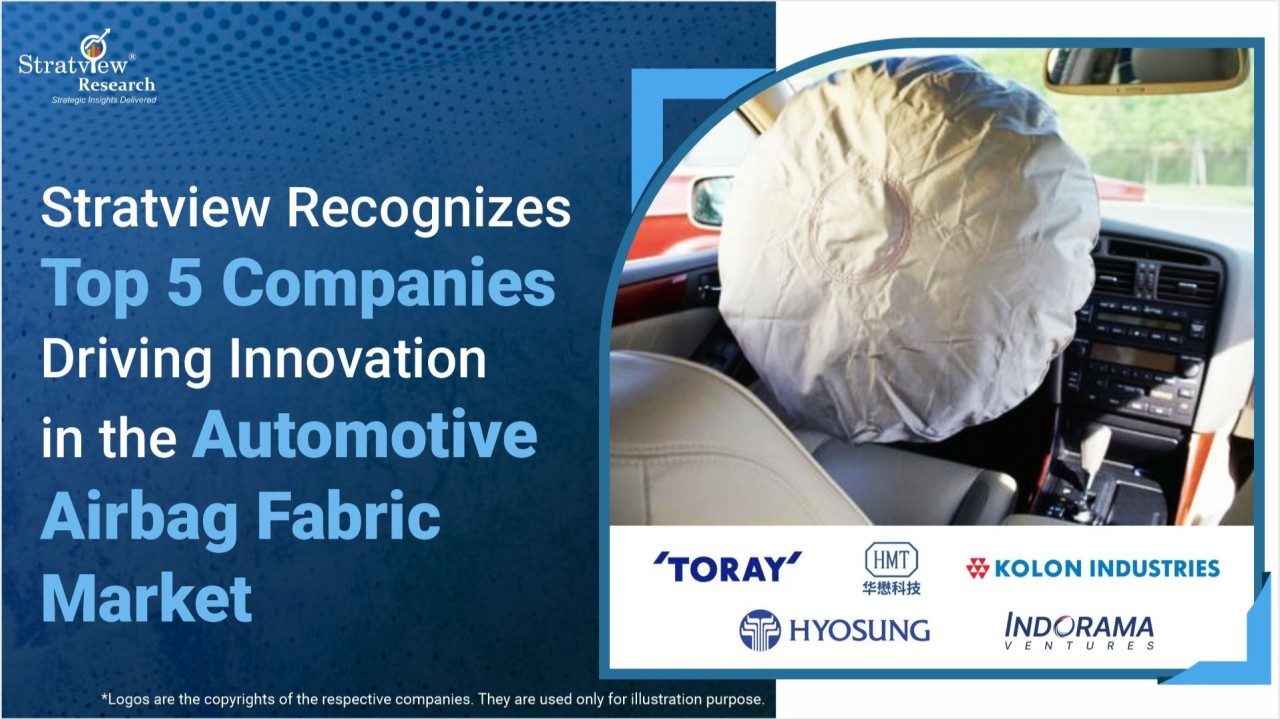
At the center of this growth are a handful of companies that continue to shape the direction of the automotive airbag fabric market. Stratview Research highlights top 5 key players whose investments, technological expertise, and manufacturing capabilities are contributing significantly to market development while supporting the next generation of vehicle safety solutions worldwide. Let's take a closer look at the companies driving growth in this market.
1. Kolon Industries, Inc.
Founded in 1957, Kolon Industries has evolved into one of South Korea’s leading industrial materials companies, supplying airbag fabrics, tire cords, industrial yarns, and advanced mobility materials. The company has established itself as a trusted supplier to automotive safety system manufacturers worldwide through decades of expertise in high-performance technical textiles.
Kolon's commitment to the airbag fabric market was reinforced in December 2025 when it signed a long-term supply agreement with Autoliv, the world's largest automotive safety supplier. To support future demand, the company announced plans to invest approximately US$48 million in a new airbag fabric production facility in Vietnam, scheduled to begin operations in 2028. The investment reflects Kolon’s focus on expanding manufacturing capacity and strengthening its role in supplying next-generation automotive safety systems.
2. Toray Industries, Inc.
With a legacy dating back to 1926, Toray Industries has grown into one of the world’s leading advanced materials companies. It provides a wide range of products, including fibers, textiles, carbon fiber composites, and specialty polymers for automotive, aerospace, and industrial applications. The company is also a major supplier of nylon 66 yarns and airbag fabrics, which are widely used in global vehicle safety systems.
In February 2025, Toray achieved a breakthrough in nylon 66 recycling by developing a proprietary depolymerization technology capable of efficiently recovering monomers from used nylon 66 materials, including automotive airbags. The innovation enables the production of recycled nylon 66 with significantly lower carbon emissions compared with conventional petroleum-based production.
As sustainability becomes increasingly important across the automotive industry, Toray's work in circular material technologies positions the company at the forefront of environmentally responsible airbag fabric manufacturing.
3. Hyosung Corporation
Established in 1966 and headquartered in South Korea, Hyosung Corporation has built a strong global presence in automotive safety textiles through its integrated production of airbag yarns, fabrics, and one-piece woven (OPW) airbags. The company strengthened its position in the industry through the acquisition of Global Safety Textiles (GST), expanding its manufacturing footprint across Europe, North America, and Asia.
Hyosung continues to invest aggressively in automotive safety materials. In February 2026, Hyosung expanded its manufacturing footprint in Vietnam through HS Hyosung Quang Nam, with a US$100 million investment in a new production plant in Vietnam that will manufacture polyester curtain fabrics and nylon fabrics for automotive airbags. The facility is expected to strengthen the company’s supply capabilities while supporting rising global demand for airbag systems.
With its fully integrated production network and strong global presence, Hyosung remains one of the most influential suppliers in the automotive airbag fabric market.
4. HMT (Xiamen) New Technical Materials Co., Ltd.
HMT (Xiamen) New Technical Materials Co., Ltd., founded in 2002, is a leading Chinese supplier of automotive passive safety materials. The company specializes in airbag fabrics, airbags, seatbelt materials, and one-piece woven (OPW) airbag technologies, serving major automotive safety system manufacturers globally. Unlike diversified material producers, HMT focuses strongly on automotive safety textiles as its core business. Continuous investments in R&D, weaving technologies, and intelligent manufacturing have strengthened its expertise, positioning HMT as a key contributor to the growing automotive airbag fabric market.
5. Indorama Ventures
Indorama Ventures, established in 1994 and headquartered in Thailand, is a leading global producer of industrial fibers and technical textile materials. Through its mobility business, the company supplies high-performance yarns and materials used in airbags, seat belts, tire reinforcement, and other automotive safety applications. Its vertically integrated manufacturing network across multiple regions ensures a reliable global supply to automotive safety customers. The company is also expanding into sustainable fibers and advanced mobility materials, strengthening its role in the global automotive airbag fabric value chain.
Looking Ahead
While airbags are often recognized as life-saving safety systems, the fabrics behind them are equally important to their performance. As automotive safety standards continue to evolve, the demand for stronger, lighter, and more reliable airbag fabrics will only increase.
The companies featured in this article are helping address that demand through continuous innovation, capacity expansion, and long-term investments in safety-focused technologies. Their efforts are not only shaping the automotive airbag fabric market but also contributing to safer vehicles for millions of drivers and passengers around the world
TAGS: Automotive