Fiberglass fabric has quietly become one of the most indispensable materials in modern engineering and manufacturing. Often referred to as the “workhorse of the composites” industry, fiberglass fabrics deliver a reliable balance of mechanical performance, processing versatility, and cost efficiency. But what makes it so widely adopted across industries? Let’s break it down - step by step.
What are Fiberglass Fabrics?
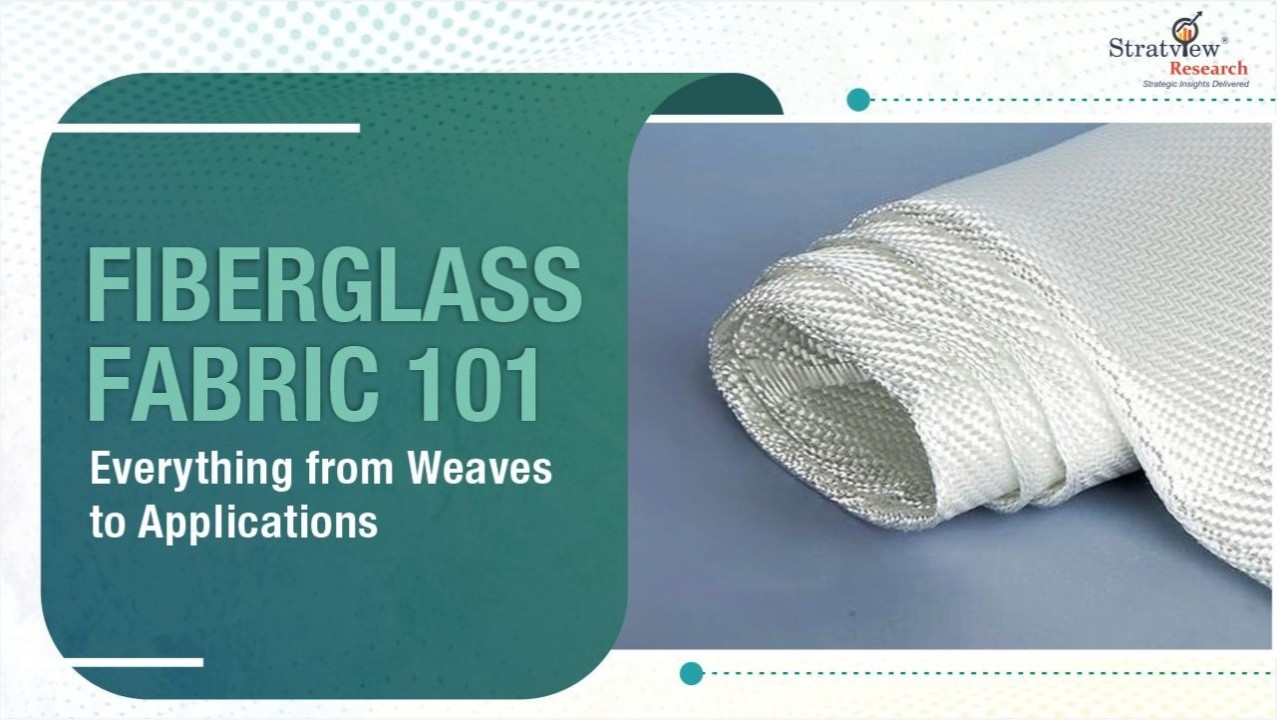
Fiberglass fabrics are engineered reinforcement textiles made from continuous glass filaments arranged in woven, knitted, or non-woven forms. When combined with polymer resins, they form fiber-reinforced composites that offer high strength, dimensional stability, thermal resistance, chemical durability, and reliable electrical insulation for industrial applications.
What are the Different Types of Fiberglass Fabrics?
Fiberglass fabrics are broadly classified by fabric construction and glass fiber type, each influencing performance and end-use suitability.
By Fabric Type
- Woven Fiberglass Cloth
Woven fiberglass cloth consists of fine glass fiber yarns interlaced into structured weaves such as plain, twill, and satin. It offers high strength, flexibility, and dimensional control and is available in a wide range of weights and widths for surface reinforcement and structural laminates.
- Chopped Strand Mat (CSM) CSM is a non-woven fabric made from randomly oriented short glass fibers bonded with a styrene-based binder. It builds thickness quickly, conforms easily to complex shapes, prevents print-through, and pairs well with woven reinforcements using polyester or vinyl ester resins. It is generally more affordable than woven fabrics.
- Biaxial Knit Woven Fiberglass Biaxial knit woven fiberglass contains fibers oriented at 0°/90°, enhancing stiffness, load transfer, and structural efficiency in high-strength applications.
- Woven Roving Woven roving is a heavyweight, bi-directional fabric used to rapidly increase laminate thickness and mechanical strength, often layered with CSM for improved bonding.
By Glass Fiber Type
- E-glass – E-glass is the most widely used glass fiber, offering a balanced combination of mechanical strength, electrical insulation, and cost efficiency for marine, automotive, and consumer applications.
- S-glass – S-glass provides higher tensile strength and stiffness than E-glass, making it ideal for high-performance applications, though at a higher cost and with lower electrical insulation properties.
- C-glass – C-glass is selected primarily for its superior chemical resistance and is commonly used in corrosive environments and chemical processing applications.
How are Fiberglass Fabrics Synthesized?
The synthesis of fiberglass fabrics combines glass manufacturing with textile processing:
- Raw Material Preparation: Silica sand, limestone, and other minerals are melted in furnaces at approximately 1,400°C.
- Fiber Formation: Molten glass is drawn through bushings to create fine continuous filaments.
- Winding and Twisting: Filaments are collected, wound onto spools, and twisted into yarns.
- Weaving or Knitting: Yarns are converted into fabrics using conventional textile machinery.
Finally, surface sizing or chemical finishes are applied to the fabrics to enhance fiber protection, improve handling, and ensure optimal compatibility with specific resin systems in composite applications.
What are the Key Properties of Fiberglass Fabrics?
Fiberglass fabrics are engineered to deliver a unique combination of mechanical, thermal, and electrical performance characteristics.
Fiberglass fabrics offer high tensile strength, with greater specific strength than steel wire of the same diameter at lower weight. They exhibit excellent dimensional stability due to low elongation under load, typically 3% or less. Glass fabrics retain around 50% of room-temperature strength at 371°C and approximately 25% at 482°C. With a softening point of ~850°C and a melting point exceeding 1100°C, they remain non-combustible due to their inorganic composition. Additional advantages include strong chemical resistance, effective thermal conductivity for electrical applications, outstanding dielectric properties, resistance to UV exposure and biological attack, and overall cost efficiency compared to alternative reinforcements.
Where do Fiberglass Fabrics Find their Application?
The versatility of fiberglass fabric enables its use across multiple industries. In aerospace and automotive, it reinforces lightweight structural components. In construction, it enhances durability, fire resistance, and structural integrity. Marine applications rely on fiberglass fabrics for strength and water resistance in hulls and decks. Its excellent insulating properties support electrical and electronic systems, while sports equipment manufacturers leverage its strength-to-flexibility balance. In textiles, fiberglass fabrics are essential for flame-retardant and protective clothing. As performance demands increase across industries, the application scope of fiberglass fabrics continues to expand.
Market Outlook
With increasing demand for lightweight, durable, and cost-effective materials, fiberglass fabric continues to gain momentum. The market was valued at US$9.1 billion in 2024 and is projected to grow at a CAGR of 6.5%, reaching US$15.0 billion by 2032. As industries prioritize performance, safety, and sustainability, fiberglass fabrics remain a foundational material shaping the future of composites engineering.
TAGS: Composite Materials