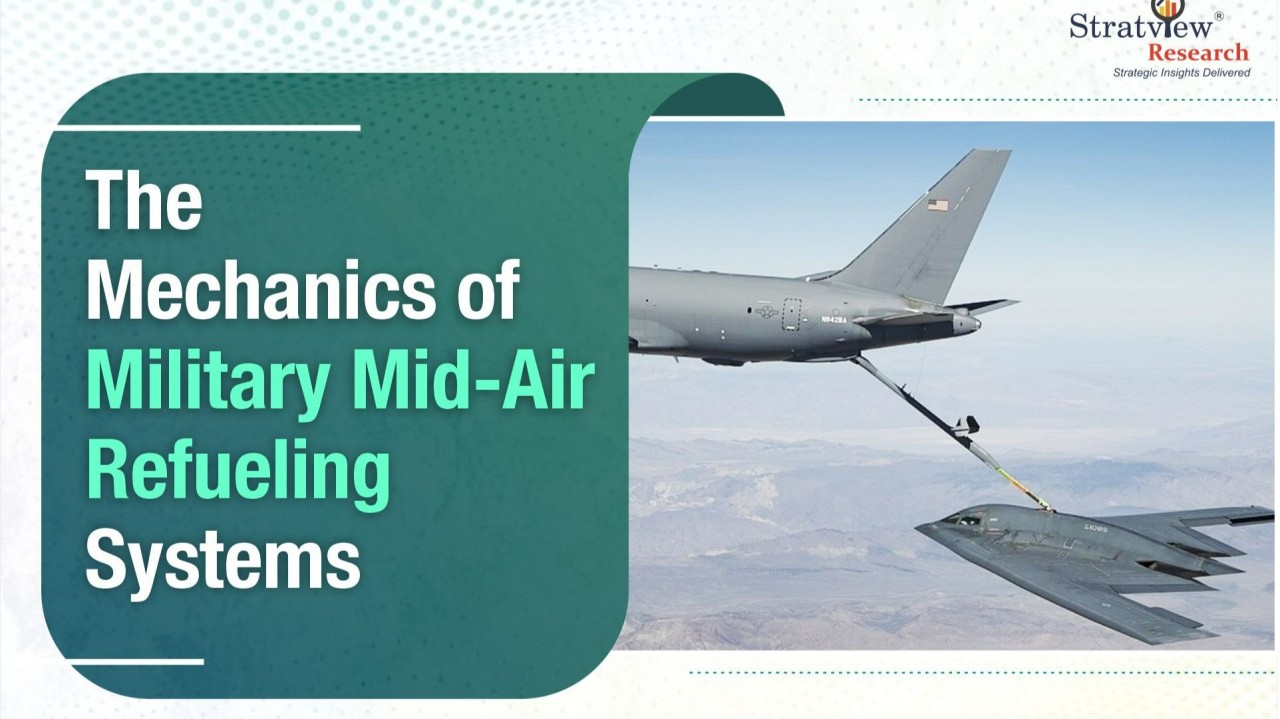
Modern military aircraft routinely operate far from their home bases, often in regions where access to airfields may be limited. Aerial refueling makes many of these missions possible by allowing aircraft to extend their range and remain airborne for longer periods without landing.
From fighter patrols and strategic bomber missions to surveillance operations and military transport flights, aerial refueling has become a routine part of modern air operations.
Did You Know? A fighter aircraft can receive more than 1.5 tonnes of fuel per minute during aerial refueling, allowing missions to continue without landing and significantly extending operational range.
Extending Range Beyond Onboard Fuel Capacity
Every military aircraft operates within limits defined by fuel capacity, payload, and mission requirements. Carrying additional fuel can increase range, but it also adds weight and may reduce the amount of weapons, sensors, or cargo an aircraft can carry.
Aerial refueling helps overcome this tradeoff. Instead of relying entirely on internal fuel tanks, aircraft can replenish fuel after takeoff and continue operating well beyond their normal mission radius. The result is greater operational reach without sacrificing mission capability.
The scale of modern tanker operations is significant. The Airbus A330 MRTT can carry up to 111 tonnes of fuel without requiring additional fuel tanks while simultaneously transporting personnel or cargo. The aircraft can also accommodate up to 300 passengers, allowing operators to combine refueling and transport missions when required.
How Mid-Air Refueling Works
The process involves a tanker aircraft transferring fuel to a receiving aircraft while both remain airborne. After reaching a designated refueling area, the receiving aircraft approaches the tanker and stabilizes its position relative to it. Once a connection is established, fuel transfer begins.
Although the concept appears straightforward, the operation requires precision from both crews. Pilots must maintain stable formation flight while operating in close proximity, often during nighttime operations or under changing weather conditions. Advances in flight controls, navigation systems, and refueling equipment have helped make aerial refueling a standard capability across many military fleets.
Two Refueling Systems Used Around the World
Modern aerial refueling operations primarily rely on two methods: the boom-and-receptacle system and the probe-and-drogue system. The boom system uses a rigid, telescopic tube controlled by an operator aboard the tanker aircraft. Because fuel can be transferred at very high flow rates, the system is particularly suited for large aircraft and missions requiring substantial fuel offload within a short period.
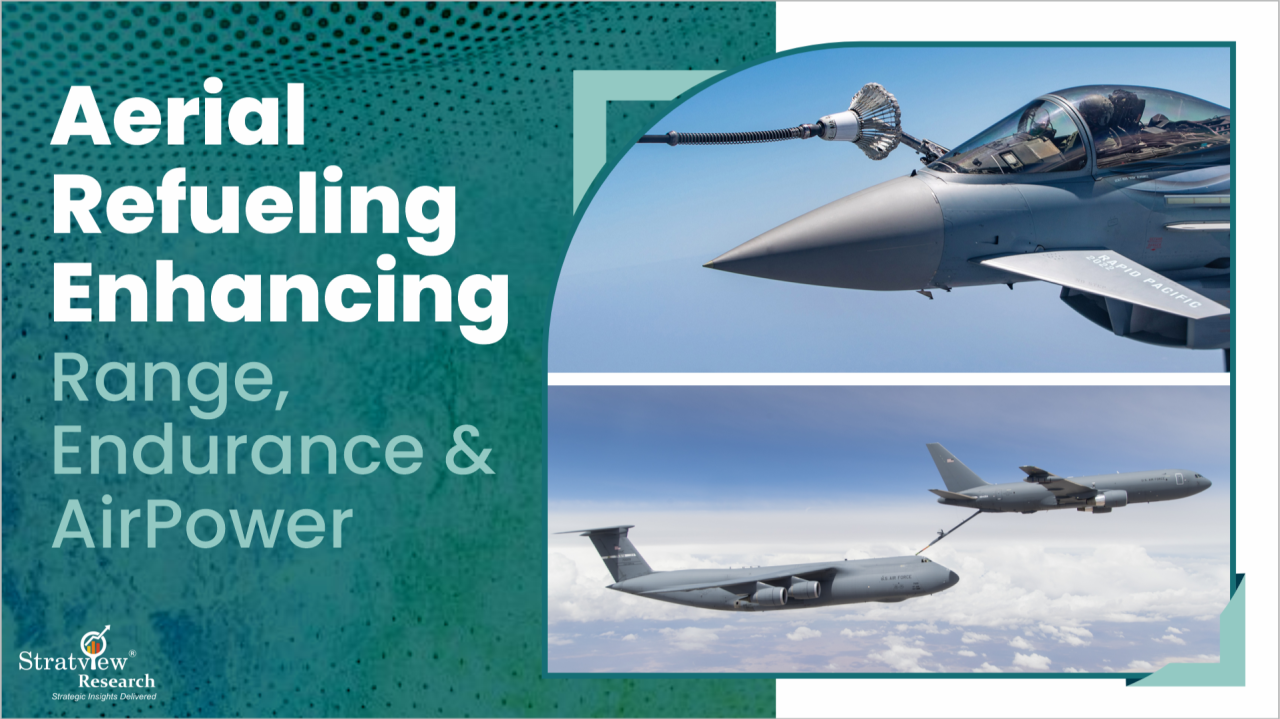
The U.S. Air Force extensively employs boom refueling through tanker fleets such as the KC-135 Stratotanker and KC-46 Pegasus, supporting aircraft including the B-52 Stratofortress, B-2 Spirit, C-17 Globemaster III, F-15, F-16, F-22 Raptor, and F-35A. The probe-and-drogue system uses a flexible hose with a basket-shaped drogue attached to its end. The receiving aircraft extends a probe and connects to the drogue to receive fuel through the hose assembly. Aircraft such as the F/A-18 Super Hornet, Rafale, Eurofighter Typhoon, F-35B/C, and Su-30MKI commonly use this method.
The difference between the two systems extends beyond how aircraft connect. Airbus states that the A330 MRTT's refueling boom can transfer fuel at rates of up to 3,600 kilograms per minute, while its under-wing hose-and-drogue pods transfer approximately 1,300 kilograms per minute. Higher transfer rates make boom systems particularly effective for large aircraft requiring substantial quantities of fuel in a short period.
Why Hose-and-Drogue Systems Remain Widely Used
While boom systems offer higher fuel transfer rates, hose-and-drogue refueling continues to see extensive use across military aviation. As per our analysis hose-and-drogue systems accounted for more than 60% of the aerial refueling systems market in 2025, reflecting their adoption across fighter, transport, and naval aviation platforms.
One of the key reasons is flexibility. The system can support a broad range of fighter, transport, and naval aircraft. Tankers equipped with multiple hose stations can refuel more than one aircraft simultaneously or sequentially, depending on tanker configuration. Its compatibility with naval aviation has further contributed to its widespread adoption. As a result, many NATO operators, the Royal Air Force, the French Air and Space Force, the Indian Air Force, and several Asia-Pacific air forces continue to rely heavily on probe-and-drogue refueling capabilities.
Automation Brings Greater Precision to Refueling Operations
Advances in sensors, imaging systems, and flight control technologies are helping crews perform refueling operations with greater accuracy and consistency. Modern tanker aircraft increasingly incorporate optical and infrared tracking systems that monitor aircraft alignment in real time, helping crews maintain accurate positioning throughout the refueling process. Airbus also notes that the A330 MRTT became the first tanker certified for Automatic Air-to-Air Refuelling (A3R) using a boom system, a capability designed to reduce operator workload and improve consistency during fuel transfer operations. Higher levels of automation can also reduce crew workload and improve consistency during complex refueling operations.
Why Air Forces Continue to Invest in Tanker Fleets
The importance of aerial refueling is reflected in ongoing fleet modernization programs across major defense markets. Many air forces are replacing aging tanker aircraft, expanding refueling capacity, and upgrading mission systems to support longer-range operations. According to Boeing program updates reported by Reuters, the U.S. Air Force had received 98 KC-46A Pegasus tankers since 2019 and later awarded a contract for 15 additional aircraft in 2025, highlighting the continued demand for long-range refueling capability.
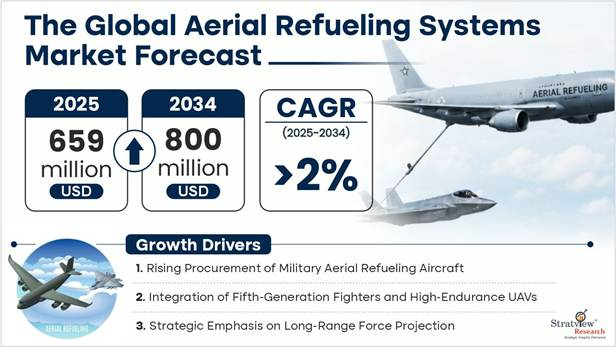
Investment is also occurring at the subsystem level, including refueling booms, hose-and-drogue systems, fuel transfer systems, sensors, and mission control software. According to Stratview Research's analysis of the Aerial Refueling Systems Market, the global aerial refueling systems market was valued at US$659 million in 2025 and is projected to reach US$800 million by 2034, supported by tanker modernization programs and continued investment in mission endurance capabilities.
Few military capabilities receive as little public attention while influencing so many operations. Modern air campaigns increasingly depend on the ability to move aircraft rapidly across vast distances, maintain a persistent presence over operational areas, and reduce reliance on forward bases. Aerial refueling sits at the center of these requirements. Whether supporting combat aircraft, surveillance platforms, or strategic airlifters, tanker fleets provide the operational reach that allows air forces to project power well beyond the limits of onboard fuel capacity.
TAGS: Aerospace
Subscribe to our newsletter
Related Blogs:
Aerial Refueling Enhancing Range, Endurance, and Airpower
Didn’t find what you were looking for?
Tell us about your requirements
(Our team usually responds within a few hours)