




404
+1-313-307-4176

Aircraft Brake System Market Analysis | 2026-2032

Aircraft Brake System Market Size, Share, Trends, Dynamics, Forecast, & Growth Analysis: 2026-2032
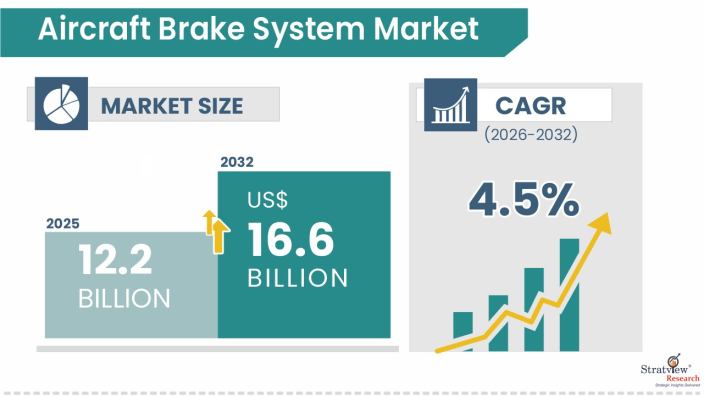
The aircraft brake system market was estimated at USD 12.2 billion in 2025 and is likely to grow at a CAGR of 4.5% during 2026-2032 to reach USD 16.6 billion in 2032.
Want to know more about the market scope? Register Here
Aircraft brake system is an important segment in any aircraft as it is used in braking the wheels during the landing of the aircraft. This includes the disc brakes that are a part of the landing gear.
Aircraft brake system works with the brakes operating pneumatically or hydraulically. Wheels, brakes, and braking systems are the important components of the aircraft brake system.
The aircraft brake system market is expected to witness steady growth over the forecast period, driven by rising commercial aircraft traffic, increasing fleet utilization, and growing adoption of lightweight braking technologies. Airlines and aircraft manufacturers are focusing on improving fuel efficiency, lowering maintenance costs, and enhancing operational safety, thereby accelerating the demand for advanced aircraft brake systems across both OEM and aftermarket applications.
Rising Commercial Air Traffic Driving Market Growth
Growing global air passenger traffic is driving the market growth of the aircraft brake system market. Expanding airline fleets, increasing aircraft deliveries, and higher flight frequencies are generating sustained demand for brake systems across both OEM and aftermarket segments. Rising aircraft utilization is also increasing brake replacement and overhaul requirements throughout an aircraft's service life.
Increasing Adoption of Lightweight Carbon Brake Systems
The increasing adoption of lightweight carbon brake systems is strengthening the market demand for aircraft brake systems. Carbon brakes are significantly lighter than conventional steel brakes, helping airlines reduce aircraft weight, improve fuel efficiency, and lower maintenance costs while extending service intervals.
Growing Aircraft Utilization Supporting Aftermarket Demand
Higher aircraft utilization and increasing flight frequencies are boosting the market demand for aircraft brake systems. Frequent takeoffs and landings accelerate brake wear, resulting in greater demand for replacement components, maintenance, repair, and overhaul (MRO) services.
Aerospace Supply Chain Disruptions Limiting Market Growth
Persistent supply chain disruptions continue to restrain the market growth of the aircraft brake system market. Delays in aircraft production and shortages of critical aerospace components have slowed OEM brake system installations and postponed fleet expansion programs.
Rising Maintenance and Operating Costs
Increasing maintenance and operating costs remain a challenge for the aircraft brake system market. Delivery delays are forcing airlines to operate older aircraft for longer periods, increasing expenditures on brake replacement, inspections, and overhaul activities.
Stringent Certification and Safety Requirements
Strict certification and regulatory requirements increase development complexity and time-to-market for aircraft brake systems. Manufacturers must comply with rigorous safety and performance standards established by global aviation authorities, resulting in higher testing, qualification, and certification costs.
Expansion of Next-Generation Aircraft Programs
The expansion of fuel-efficient aircraft programs is creating significant opportunities for the aircraft brake system market. Modern aircraft increasingly incorporate lightweight carbon brake technologies to improve operational efficiency, reduce maintenance frequency, and lower lifecycle costs.
Growing Military Aircraft Modernization Programs
Increasing investments in military aviation modernization are creating new opportunities for the aircraft brake system market. Defense agencies are upgrading fighter aircraft, transport aircraft, and special-mission platforms, driving demand for advanced braking technologies and replacement systems.
Emergence of Advanced Air Mobility (AAM) and eVTOL Aircraft
The commercialization of Advanced Air Mobility (AAM) and electric vertical take-off and landing (eVTOL) aircraft is creating new opportunities for the aircraft brake system market. These next-generation aircraft require compact, lightweight, and highly reliable braking technologies tailored to new aircraft architectures.
|
Segmentations |
List of Sub-Segments |
Segments with High Growth Opportunity |
|
Component Type Analysis |
Wheels, Brakes, and Braking Systems |
The brakes segment is estimated to register the highest growth during the forecast period. |
|
Fit Type Analysis |
Linefit, Retrofit |
The retrofit segment is expected to witness a higher growth during the forecast period. |
|
Regional Analysis |
North America, Europe, Asia-Pacific, and Rest of the World |
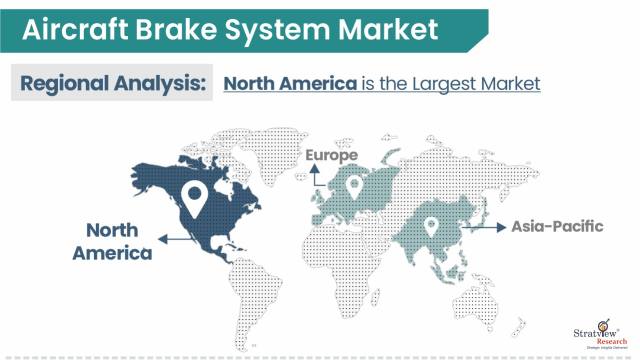
North America is estimated to command the aircraft brake system market during the forecast period. |
Based on the component type, the market is segmented as wheels, brakes, and braking systems. The brakes segment is estimated to register the highest growth during the forecast period, driven by the high demand for carbon brakes and technological progressions in braking systems, such as electric braking systems.
Based on the fit type, the market is segmented as linefit and retrofit. The retrofit segment is expected to witness a higher growth during the forecast period. This growth is mainly owing to the aircraft maintenance and repair activities executed within a span of four to five years.
In terms of regions, North America is estimated to command the aircraft brake system market during the forecast period. The aircraft brake system market in Europe and Asia-Pacific is likely to portary significant growth, driven by the increase in demand for cost-effective and highly dependable aircraft brake system components.
Know the high-growth countries in this report. Register Here
Some of the major players in the aircraft brake system market are:
Note: The above list does not necessarily include all the top players in the market.
Are you the leading player in this market? We would love to include your name. Write to us at [email protected]
This strategic assessment report, from Stratview Research, provides a comprehensive analysis that reflects today’s aircraft brake system market realities and future market possibilities for the forecast period of 2026 to 2032. After a continuous interest in our aircraft brake system market report from the industry stakeholders, we have tried to further accentuate our research scope to the aircraft brake system market to provide the most crystal-clear picture of the market. The report segments and analyses the market in the most detailed manner to provide a panoramic view of the market. The vital data/information provided in the report can play a crucial role for the market participants as well as investors in the identification of the low-hanging fruits available in the market as well as to formulate the growth strategies to expedite their growth process.
This report offers high-quality insights and is the outcome of a detailed research methodology comprising extensive secondary research, rigorous primary interviews with industry stakeholders, and validation and triangulation with Stratview Research’s internal database and statistical tools. More than 1000 authenticated secondary sources, such as company annual reports, fact books, press releases, journals, investor presentations, white papers, patents, and articles, have been leveraged to gather the data. We conducted more than 15 detailed primary interviews with the market players across the value chain in all four regions and industry experts to obtain both qualitative and quantitative insights.
This report provides market intelligence in the most comprehensive way. The report structure has been kept such that it offers maximum business value. It provides critical insights into market dynamics and will enable strategic decision-making for existing market players as well as those willing to enter the market. The following are the key features of the report:
This report studies the market, covering a period of 12 years of trends and forecasts. The report provides detailed insights into the market dynamics to enable informed business decision-making and growth strategy formulation based on the opportunities present in the market.
The aircraft brake system market is segmented into the following categories:
By Component Type
By Platform Type
By Fit Type
By Region
With this detailed report, Stratview Research offers one of the following free customization options to our respectable clients:
Company Profiling
Market Segmentation
Competitive Benchmarking
Custom Research: Stratview Research offers custom research services across sectors. In case of any custom research requirement related to market assessment, competitive benchmarking, sourcing and procurement, target screening, and others, please send your inquiry at [email protected].
The report is delivered digitally through our online portal. Buyers receive login credentials from our team to access the report and may update their credentials at any time after the initial login.
Delivery timelines depend on the status of the report:
For the most accurate delivery timeline, please contact us to confirm the current status of the report.
Yes. You may request a complimentary preview of the report through a video conference with our team.
Yes. The scope of the report can be fully customized to align with your specific research objectives and information requirements.
Please contact us at [email protected], and our team will be happy to discuss your requirements and propose a tailored solution.
Yes. Selected sections of the report can be purchased separately based on your requirements. Please contact us at [email protected] to discuss your needs.
Yes, AI can help gather publicly available information, but its outputs are only as reliable as the data it accesses. Stratview Research reports are built using validated data, extensive primary interviews with industry stakeholders, and the expertise of our experienced research team.
Additionally, many critical insights, including market dynamics, competitive intelligence, and industry-specific trends, are not publicly available and therefore cannot be captured through AI alone.
Aircraft brake system is an important segment in any aircraft as it is used in braking the wheels during the landing of the aircraft. This includes the disc brakes that are a part of the landing gear. Aircraft brake system works with the brakes operating pneumatically or hydraulically. Wheels, brakes, and braking systems are the important components of the aircraft brake system.
The aircraft brake system market was estimated at USD 12.2 billion in 2025 and is likely to grow at a CAGR of 4.5% during 2026-2032 to reach USD 16.6 billion in 2032.
The forecasted value of the aircraft brake system market is expected to be USD 16.6 billion in 2032.
The aircraft brake system market is likely to grow at a CAGR of 4.5% during 2026-2032.
North America is estimated to command the market during the forecast period.
Some of the major players in the market are AAR Corporation, Beringer Aero, Crane Aerospace & Electronics, Grove Aircraft Landing Gear Systems Inc., Honeywell International Inc., Jay-Em Aerospace & Machine, Inc., Lufthansa Technik AG, Meggitt PLC, Matco Manufacturing Inc., and Parker Hannifin Corporation.
The retrofit segment is expected to witness a higher growth in the market in the coming years.
The increasing fleet size of commercial aircraft and the growing demand for lightweight aircraft components are the major factors that are expected to underpin the growth of the global aircraft brake system market during the forecast period.


WE ACCEPT