




404
+1-313-307-4176

PMMA Market Analysis | 2026-2032

PMMA Market Size, Share, Trend, Forecast, Competitive Landscape & Growth Opportunities: 2026-2032
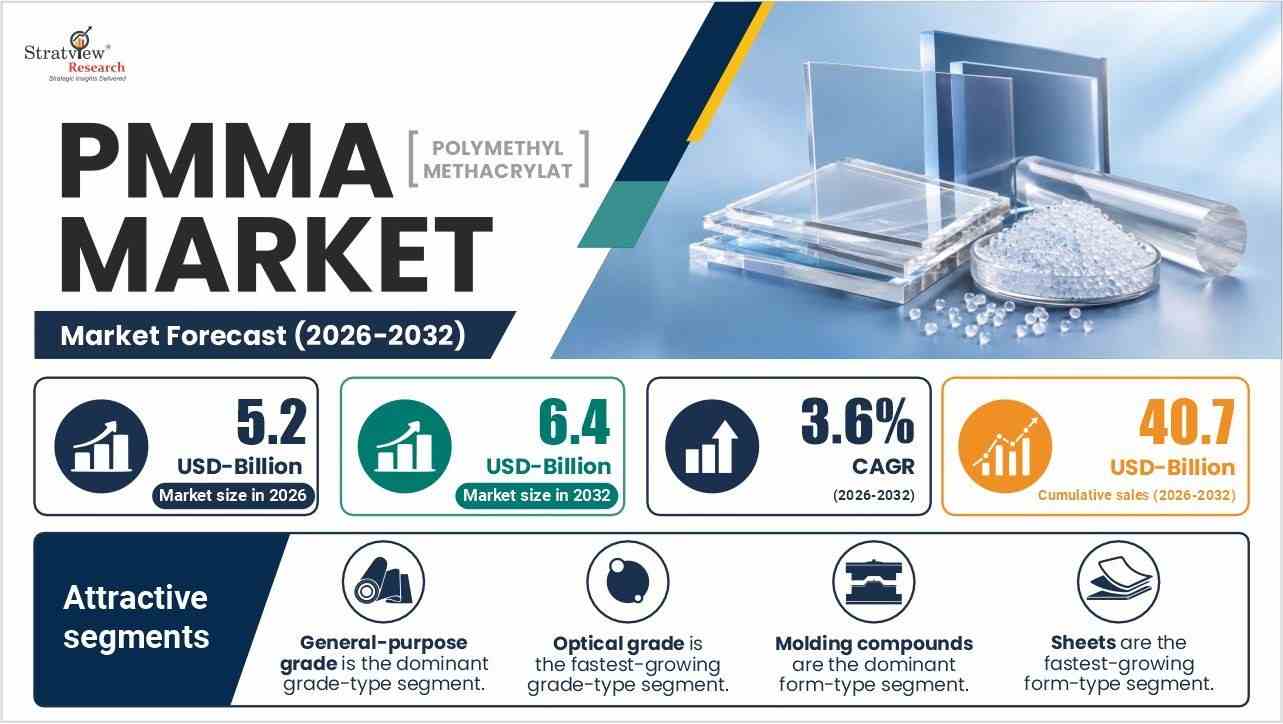
“The PMMA Market size will reach USD 5.2 billion in 2026 and offers healthy growth opportunities for the market stakeholders. With the market expected to grow at a CAGR of 3.6%, the annual sales will hit the USD 6.4 billion mark in 2032, highlighting sustained demand growth driven by lightweight material adoption, expanding automotive and electronics applications, and increasing investments in high-performance transparent materials.”
The annual demand for polymethyl methacrylat (PMMA) was USD 5.0 billion in 2025 and is expected to reach USD 5.2 billion in 2026, up 4.6% than the value in 2025.
During the forecast period (2026-2032), the market is expected to grow at a CAGR of 3.6%. The annual demand will reach USD 6.4 billion in 2032, nearly 1.3 times the 2025 level.
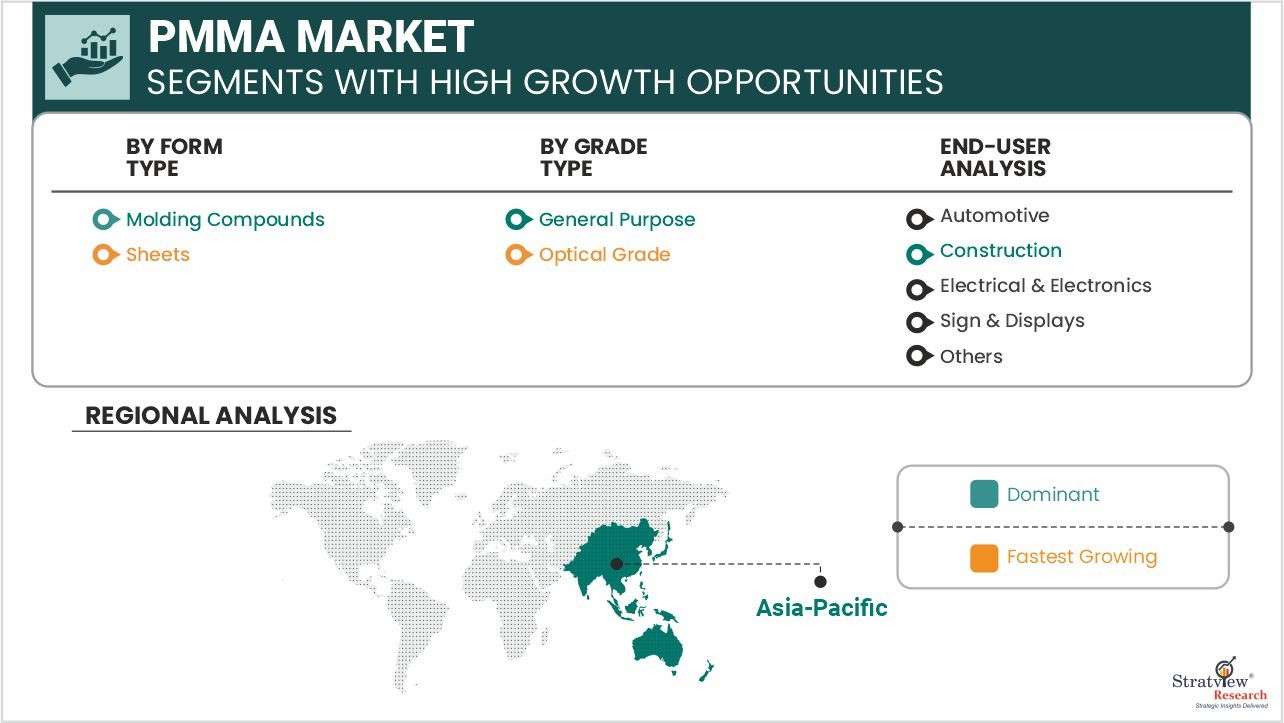
Asia-Pacific had a market share of >70% in 2025, generating the greatest demand across regions.
General Purpose will continue to dominate in the coming years.
Among the form types, molding compounds are estimated to generate the highest demand, capturing the largest market share throughout the forecast period.
By end-use industry type, construction is anticipated to remain dominant and will be the fastest-growing end-use industry over the years.
“According to the Senior Analyst at Stratview Research, the global PMMA Market will generate a cumulative sales opportunity worth USD 40.7 billion during 2026-2032. During the next five years, general purpose molding compounds, the construction industry, and Asia-Pacific are some of the high-opportunity segments to bank upon.”
Sharpen Your Strategies to Explore this USD 40+ billion Opportunity. Get a Free Sample of Our Report: “Here”.
Have a look at the sales opportunities presented by the Polymethyl Methacrylate (PMMA) Market in terms of growth and market forecast.
|
Market Statistics |
Value (in USD Billion) |
Market Growth (%) |
|
|
Market Size in 2025 |
USD 5.0 billion |
- |
|
|
Market Size in 2026 |
USD 5.2 billion |
YoY Growth in 2026: 4.6% |
|
|
Market Size in 2032 |
USD 6.4 billion |
CAGR 2026-2032: 3.6% |
|
|
Cumulative Sales Opportunity during 2026-2032 |
USD 40.7 billion |
- |
|
|
Top 10 Countries’ Market Share in 2025 |
USD 3.0 billion + |
> 79% |
|
|
Top 5 Companies’ Market Share in 2025 |
USD 3.2 billion to USD 3.3 billion |
65% - 67% |
|
Want to Explore the Market Opportunities? Get Free Sample “Here”.
The PMMA market is transitioning from a traditional transparent plastics market toward a high-value materials market, where growth will increasingly be driven by sustainability initiatives, advanced optical applications, and lightweighting requirements across transportation and electronics sectors.
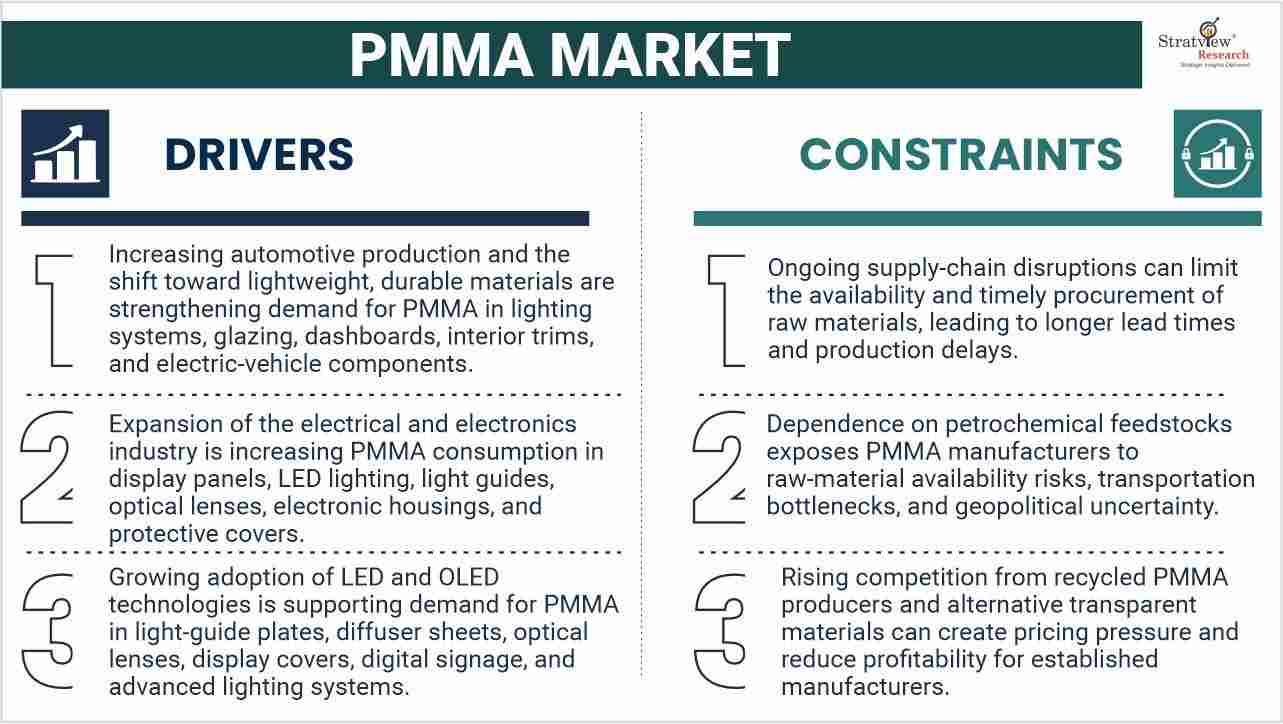
The Polymethyl Methacrylat (PMMA) market is primarily driven by the increasing demand for lightweight, durable, and optically transparent materials across automotive, electronics, construction, and healthcare industries. Automakers are increasingly utilizing PMMA in lighting systems, instrument panels, glazing applications, and electric vehicle components to reduce vehicle weight and improve energy efficiency. Simultaneously, the material's excellent light transmission, weather resistance, and aesthetic appeal continue to support its adoption in architectural glazing, signage, LED displays, and consumer electronics applications.
The market is also benefiting from ongoing advancements in display technologies and the rapid expansion of digital infrastructure. PMMA's superior optical clarity and UV resistance make it a preferred material for display panels, light guides, and protective screens. In the healthcare sector, increasing demand for medical devices, diagnostic equipment, and dental products is creating additional growth opportunities, supported by the material's biocompatibility and ease of processing.
Rising Automotive Sales and Demand for Lightweight, Durable Components
The PMMA market growth is driven by increasing automotive production and the industry's shift toward lightweight, durable materials. PMMA is widely used in automotive lighting, glazing, dashboards, and interior trims as a lightweight alternative to glass, offering excellent optical clarity, UV resistance, and weatherability. Its ability to reduce vehicle weight while enabling greater design flexibility and improved fuel efficiency is supporting its growing adoption across modern passenger and commercial vehicles.
According to the International Organization of Motor Vehicle Manufacturers (OICA), global motor vehicle production increased from 92.7 million units in 2024 to 96.4 million units in 2025 (+3.9%), while global vehicle sales reached 99.8 million units (+4.7%), expanding the demand for PMMA in automotive lighting, glazing, interior trims, and exterior components.
According to the U.S. Environmental Protection Agency (EPA), reducing vehicle weight by 10% can improve fuel economy by approximately 6% to 8%, reinforcing the automotive industry's continued adoption of lightweight materials such as PMMA to improve efficiency and reduce emissions while maintaining design flexibility.
PMMA Market Demand Fueled by the Expanding Electrical and Electronics Industry
The demand for polymethyl methacrylate market is increasing with the rapid expansion of the electrical and electronics industry, where the material is widely used for display panels, LED lighting, light guides, optical lenses, electronic housings, and protective covers. Often used as an alternative to glass, polymethyl methacrylate (PMMA) offers excellent optical transparency, UV resistance, weatherability, and ease of processing, making it well suited for consumer electronics and advanced lighting applications. As manufacturers continue to develop thinner, lighter, and more energy-efficient electronic devices, the demand for polymethyl methacrylate is expected to grow steadily.
According to the Japan Electronics and Information Technology Industries Association (JEITA), global electronics and IT production is projected to reach approximately USD 3.6 trillion in 2025, driven by sustained demand for consumer electronics, communication equipment, and electronic components. The expansion of electronics manufacturing is supporting higher consumption of PMMA in optical and protective applications.
According to the India Brand Equity Foundation (IBEF), India's electronics manufacturing industry is expected to reach USD 300 billion by 2026, supported by government initiatives and increasing domestic production of smartphones, consumer electronics, and electronic components. The growth of electronics manufacturing is expected to accelerate demand for PMMA in display panels, lighting systems, and transparent electronic components.
Rising Demand for LED and OLED Display Panels
The growth in market share for PMMA is supported by the increasing adoption of LED and OLED display technologies across consumer electronics, automotive displays, digital signage, televisions, smartphones, and lighting systems. PMMA is widely used in light guide plates, optical lenses, diffuser sheets, and display covers due to its exceptional optical transparency, high light transmission, UV resistance, and ease of processing. As manufacturers continue to develop thinner, brighter, and more energy-efficient display technologies, the demand for PMMA in optical and display applications is expected to rise.
According to the International Energy Agency (IEA), around 30% of residential lamps worldwide have yet to be upgraded to LED technology, indicating substantial room for further LED adoption. As LED lighting expands, the demand for PMMA used in optical lenses, light guide plates, diffuser sheets, and protective covers is expected to increase, supporting long-term PMMA market growth.
“As per the analyst, the global PMMA industry is evolving steadily. While conducting the market analysis and speaking with the leading players, it is quite clear that the next decade will be defined by trends like automotive electrification driving advanced lighting & display demand, replacement of glass in construction & infrastructure applications, and growing demand for high-optical-clarity materials in displays, signage, LED panels, and consumer electronics.”
Align with Mega Trends Shaping the Industry. Get Free Sample “Here”.
Ongoing Supply Chain Disruptions Affecting Material Availability
The PMMA industry continues to face challenges from ongoing supply chain disruptions that affect the availability and timely procurement of raw materials. Dependence on petrochemical feedstocks, transportation bottlenecks, and geopolitical uncertainties can lead to supply shortages, longer lead times, and production delays. These disruptions increase operational costs for manufacturers and create uncertainty across the PMMA value chain, particularly for industries requiring a consistent supply of high-quality materials.
Toward Circular PMMA and Sustainable Material Adoption
The polymethyl methacrylate market trend is shifting toward circular material adoption as manufacturers invest in advanced recycling technologies to recover high-quality polymethyl methacrylate (PMMA). The material's ability to be mechanically and chemically recycled while retaining its optical and mechanical properties makes it well suited to support circular economy initiatives across automotive, electronics, construction, and consumer goods industries.
Expanding Healthcare Industry Driving Material Adoption
The PMMA market opportunity is expanding with the continued growth of the healthcare sector and rising demand for advanced medical materials. PMMA is widely used in orthopedic bone cement, intraocular lenses, dental prosthetics, medical devices, and diagnostic equipment due to its excellent biocompatibility, optical clarity, chemical resistance, and ease of sterilization. Increasing healthcare investments and the growing demand for advanced medical devices are expected to support the wider adoption of PMMA in medical applications.
"Construction is expected to remain dominant in the PMMA market during the forecast period."
The PMMA market is segmented by end-use industry type into automotive, construction, electrical & electronics (consumer electronics and lighting fixtures), sign & display, and others.
The construction industry dominated the market due to PMMA's lightweight nature, ease of installation, and low structural support requirements. Its excellent weatherability, UV resistance, and recyclability make it suitable for exterior applications such as window panels, skylights, sound barriers, facades, and greenhouses.
Growing urbanization, infrastructure development, and demand for aesthetically appealing, lightweight building materials are expected to strengthen the PMMA market forecast for the construction segment during the forecast period.
"General-purpose grade is expected to capture the larger PMMA market share, whereas optical grade is projected to grow at the fastest rate during the forecast period."
Based on grade type, the market is segmented into general-purpose and optical grade.
General-purpose grade is expected to dominate due to its broad application base, offering excellent impact resistance, weatherability, processability, and high optical clarity.
These properties make it suitable for displays, lighting products, furniture, home décor, packaging, and other consumer goods. Optical grade is expected to register the fastest growth during the forecast period, supported by increasing demand from the electronics and healthcare industries, where superior transparency and optical performance are essential.
"Molding compounds are expected to remain the dominant segment, whereas sheets are likely to witness faster growth during the forecast period."
Based on form type, the market is segmented into molding compounds and sheets (extruded sheets and cast sheets).
Molding compounds are expected to remain the dominant segment throughout the forecast period due to their extensive use in automotive, electronics, lighting, medical, and consumer goods applications. Their ease of processing and balanced optical and mechanical properties make them well suited for injection molding and extrusion, helping the segment maintain a significant PMMA market share.
PMMA sheets are projected to witness faster growth during the forecast period, driven by rising demand from the construction, architecture, signage, transportation, and interior design industries. Their high transparency, lightweight nature, and weather resistance make them a preferred alternative to glass in applications such as skylights, facades, partitions, and retail displays, while increasing infrastructure investments continue to support segment growth.
"Asia-Pacific is projected to remain the largest and fastest-growing PMMA market during the forecast period."
Asia-Pacific is expected to maintain the largest PMMA market share throughout the forecast period, supported by its extensive manufacturing base across China, Japan, India, South Korea, and Australia. China remains the world's largest producer and consumer of PMMA and is a major manufacturing hub for consumer electronics, including smartphones, computers, home appliances, and display technologies.
PMMA also enjoys strong demand in the region's construction and automotive industries, where it is used in applications such as glazing, lighting systems, and interior components. In addition, the presence of major manufacturers, including Röhm, Mitsubishi Chemical Group, Sumitomo Chemical, and Wanhua Chemical, along with continued investments in EV production and infrastructure development, is expected to sustain regional market growth.
“Analysis suggests that the Top 10 countries generate 80% of the annual sales for the PMMA. A few countries are the demand powerhouses and will drive the regional markets in big ways, offering attractive business opportunities.”
Speak to Us for Deep Diving into a Country/Region Specific Opportunity. Contact Us “Here”.
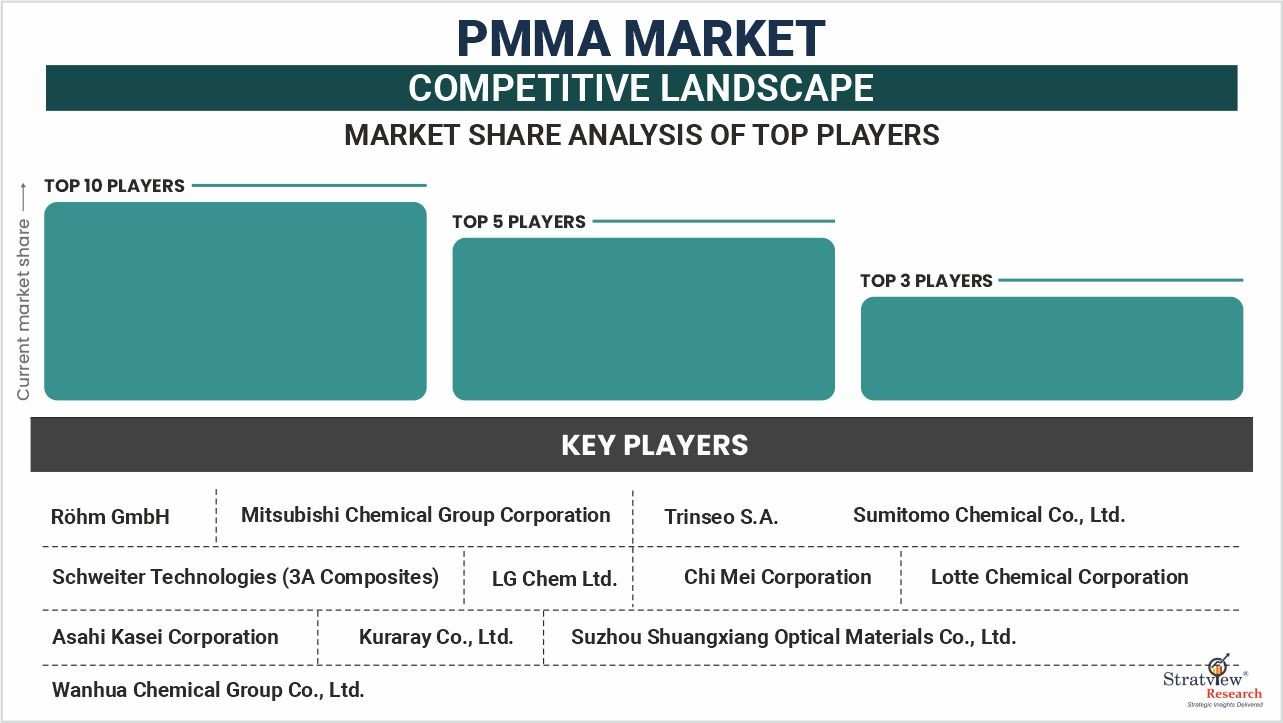
The market is moderately consolidated with the presence of fewer than 50 players across the region. Most of the major players compete in some of the governing factors, including price, service offerings, and regional presence, etc. The emergence of players inclined towards recycled PMMA portends a more competitive market, and this competition can influence production improvements, but at the same time, put pressure on pricing and profitability for players already in the field. Engaging in depolymerization technology can help to improve their competitiveness in the market.
The following are the key players in the PMMA Market.
Röhm GmbH
Mitsubishi Chemical Group Corporation
Trinseo S.A.
Sumitomo Chemical Co., Ltd
Schweiter Technologies (3A Composites)
LG Chem Ltd.
Chi Mei Corporation
Lotte Chemical Corporation
Asahi Kasei Corporation
Kuraray Co., Ltd.
Suzhou Shuangxiang Optical Materials Co., Ltd.
Wanhua Chemical Group Co., Ltd
Note: The above list is not an exhaustive list of the key players in the market. If your company is active in this market and would like to be considered for inclusion in future editions of this study, please contact us at [email protected].
Have the Competitive Edge with Our Intelligence. Get Free Sample “Here”.
Recent mergers & acquisitions and other developments in the PMMA Market reflect evolving market trends and their impact on the market. Below are a few recent developments in the market –
In May 2026, Mitsubishi Chemical Group announced a global restructuring of its MMA and PMMA business, including a review of its European operations, the dissolution of its Taiwan joint venture, and the evaluation of strategic partnerships in India to improve competitiveness amid global oversupply.
In April 2026, Röhm integrated chemical recycling technology into its existing MMA production facility to expand the production of recycled MMA, supporting the development of circular PMMA materials.
In October 2025, Trinseo PLC approved a restructuring plan to permanently close its MMA production facility in Rho, Italy, and its acetone cyanohydrin (ACH) facility in Porto Marghera, Italy, to streamline its MMA production network and improve operational efficiency.
In November 2025, NextChem and Pekutherm formed a European alliance to expand PMMA chemical recycling infrastructure, with NextChem developing a recycling plant in Italy and Pekutherm strengthening its PMMA recycling capabilities.
PMMA, or Polymethyl Methacrylate, is a versatile thermoplastic material commonly used in molding compounds due to its properties, including high transparency, UV stability, and ease of processing. With exceptional clarity, it serves as an effective glass substitute and is highly resistant to UV radiation and outdoor elements. PMMA is widely employed in various applications, including signs & displays, construction (facades, windows, skylights, and others), lighting fixtures, and automotive parts.
This report provides market intelligence most comprehensively. The report structure has been kept so that it offers maximum business value. It provides critical insights into market dynamics and will enable strategic decision-making for existing market players as well as those willing to enter the market.
The following are the key features of the report:
Market structure: Overview, industry life cycle analysis, supply chain analysis.
Market environment analysis: Growth drivers and constraints, Porter’s five forces analysis, SWOT analysis.
Market trend and forecast analysis.
Market segment trend and forecast.
Competitive landscape and dynamics: Market share, Service portfolio, New Product Launches, etc.
Attractive market segments and associated growth opportunities.
Emerging trends.
Strategic growth opportunities for the existing and new players.
Key success factors.
|
Market Study Period |
2020-2032 |
|
Base Year |
2025 |
|
Forecast Period |
2026-2032 |
|
Trend Period |
2020-2025 |
|
Number of Tables & Figures |
>100 |
|
Number of Segments Analyzed |
4 (Grade Type, Form Type, End-user industry Type, and Region) |
|
Number of Regions Analyzed |
4 (North America, Europe, Asia-Pacific, Rest of the World) |
|
Countries Analyzed |
11 (The USA, Canada, Mexico, Germany, France, The UK, China, Japan, India, Brazil, and Saudi Arabia) |
|
Free Customization Offered |
10% |
|
After Sales Support |
Unlimited |
|
Report Presentation |
Complimentary |
|
Market Dataset |
Complimentary |
|
Further Deep Dive & Consulting Services |
10% Discount |
Want a Report Tailor-Made to Your Objectives? Speak with Our Analyst at sales@stratviewresearch
The report provides detailed insights into the market dynamics to enable informed business decision-making and growth strategy formulation based on the opportunities present in the market.
PMMA Market, by End-Use Industry Type
Automotive
Construction
Electrical & Electronics
Sign & Displays
Others
PMMA Market by Grade Type
General Purpose
Optical Grade
PMMA Market, by Form Type
Molding Compounds
Sheets
PMMA Market, By Region
North America (Country Analysis: The USA, Canada, and Mexico)
Europe (Country Analysis: Germany, France, The UK, and the Rest of Europe)
Asia-Pacific (Country Analysis: Japan, China, India, and Rest of Asia-Pacific)
Rest of the World (Country Analysis: Brazil, Saudi Arabia, and Others)
Looking for a Deep Dive? Speak with Our Analyst at [email protected]
This strategic assessment report from Stratview Research provides a comprehensive analysis that reflects today’s PMMA market realities and future market possibilities for the forecast period.
The report segments and analyzes the market in the most detailed manner to provide a panoramic view of the market. The vital data/information provided in the report can play a crucial role for market participants and investors in identifying the low-hanging fruit available in the market and formulating growth strategies to expedite their growth process.
This report offers high-quality insights and is the outcome of a detailed research methodology comprising extensive secondary research, rigorous primary interviews with industry stakeholders, and validation and triangulation with Stratview Research’s internal database and statistical tools.
More than 1,000 authenticated secondary sources, such as company annual reports, fact books, press releases, journals, investor presentations, white papers, patents, and articles, have been leveraged to gather the data.
We conducted more than 10 detailed primary interviews with market players across the value chain in all four regions and industry experts to obtain both qualitative and quantitative insights.
With this detailed report, Stratview Research offers one of the following free customization options to our respectable clients:
Company Profiling
Competitive Benchmarking
Custom Research: Stratview Research offers custom research services across sectors. In case of any custom research requirement related to market assessment, competitive benchmarking, sourcing and procurement, target screening, and others, please send your inquiry to [email protected]
The report is delivered digitally through our online portal. Buyers receive login credentials from our team to access the report and may update their credentials at any time after the initial login.
Delivery timelines depend on the status of the report:
For the most accurate delivery timeline, please contact us to confirm the current status of the report.
Yes. You may request a complimentary preview of the report through a video conference with our team.
Yes. The scope of the report can be fully customized to align with your specific research objectives and information requirements.
Please contact us at [email protected], and our team will be happy to discuss your requirements and propose a tailored solution.
Yes. Selected sections of the report can be purchased separately based on your requirements. Please contact us at [email protected] to discuss your needs.
Yes, AI can help gather publicly available information, but its outputs are only as reliable as the data it accesses. Stratview Research reports are built using validated data, extensive primary interviews with industry stakeholders, and the expertise of our experienced research team.
Additionally, many critical insights, including market dynamics, competitive intelligence, and industry-specific trends, are not publicly available and therefore cannot be captured through AI alone.
PMMA or Polymethyl Methacrylate is a widely used thermoplastic that is used in molding compounds because of properties such as High transparency, UV stability, and ease of processing. It has excellent transparency and can be used as an effective substitute for glass.
The PMMA market is expected to grow at a CAGR of 3.6% during 2026-2032, driven by increasing demand for mobile advertisements, growth in the graphics and sign industry, increasing demand for lightweight products to achieve fuel efficiency in the automotive industry, and technological advancement in the electronics industry.
The key drivers of the PMMA market include optical performance demand, lightweight trends, and rapid expansion of electronics and EV ecosystems, with sustainability and specialty material innovation shaping long-term evolution.
Röhm GmbH, Mitsubishi Chemical Group Corporation, Trinseo S.A., Sumitomo Chemical Co., Ltd, Schweiter Technologies (3A Composites), LG Chem Ltd., Chi Mei Corporation, Lotte Chemical Corporation, Asahi Kasei Corporation, Kuraray Co., Ltd., Suzhou Shuangxiang Optical Materials Co., Ltd., and Wanhua Chemical Group Co., Ltd are the leading players in the PMMA market.


WE ACCEPT