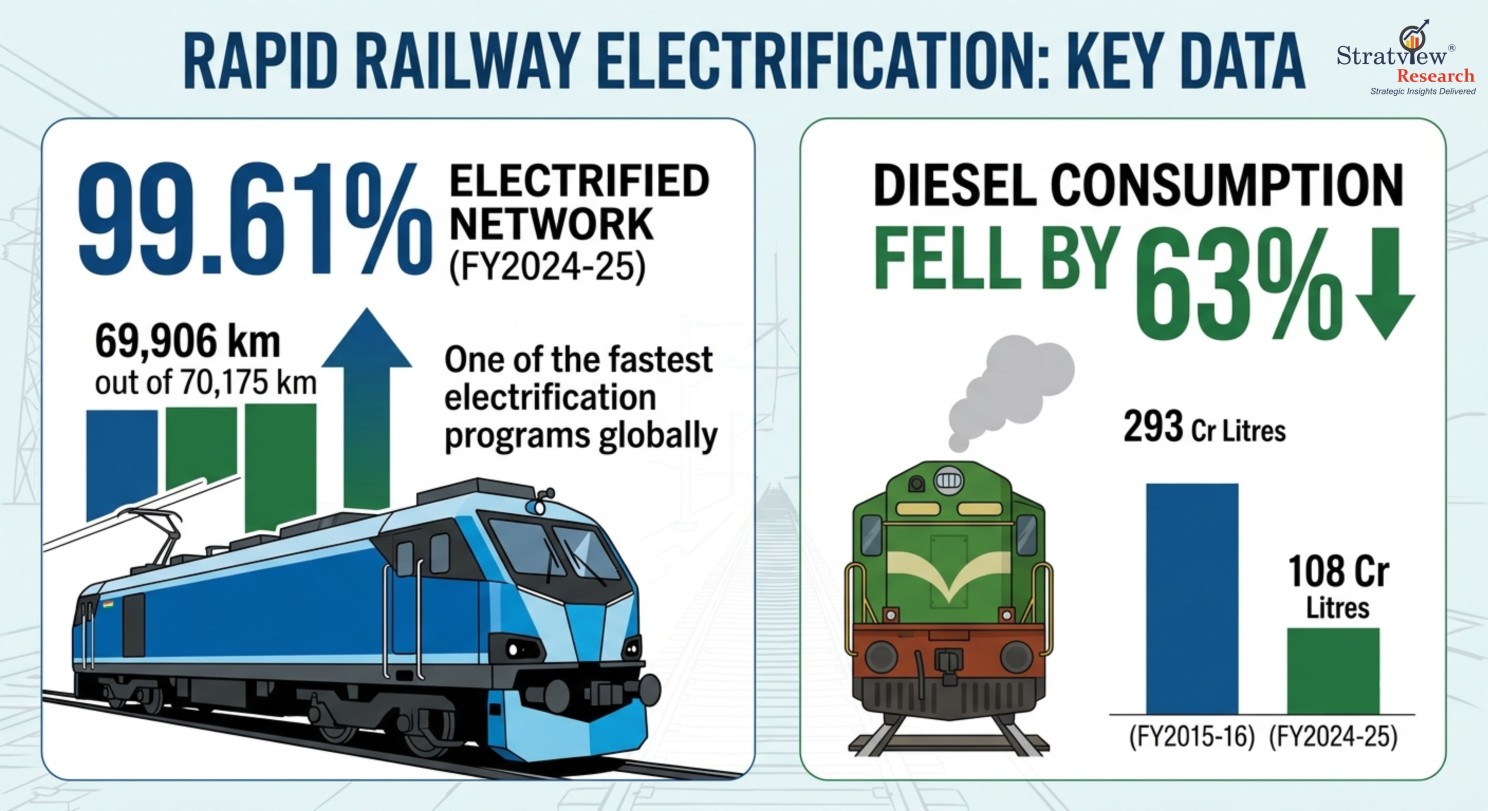
Indian Railways (IR) has undertaken one of the fastest railway electrification programs in the world. By FY2024–25, 69,906 km of the country's 70,175 km broad-gauge network (99.61%) had been electrified. Over the same period, diesel consumption fell by 63%, from 293 crore litres in FY2015–16 to 108 crore litres.
Graphic Courtesy of Stratview Research
Most discussions around these numbers focus on cleaner transport and lower diesel consumption. What receives far less attention is how electrification changes battery demand. It doesn't reduce the need for batteries - it changes where that demand comes from.
From Mechanical Systems to Electrical Systems
A diesel locomotive relies primarily on fuel and mechanical components. An electrified railway relies on electrical systems that must operate continuously.
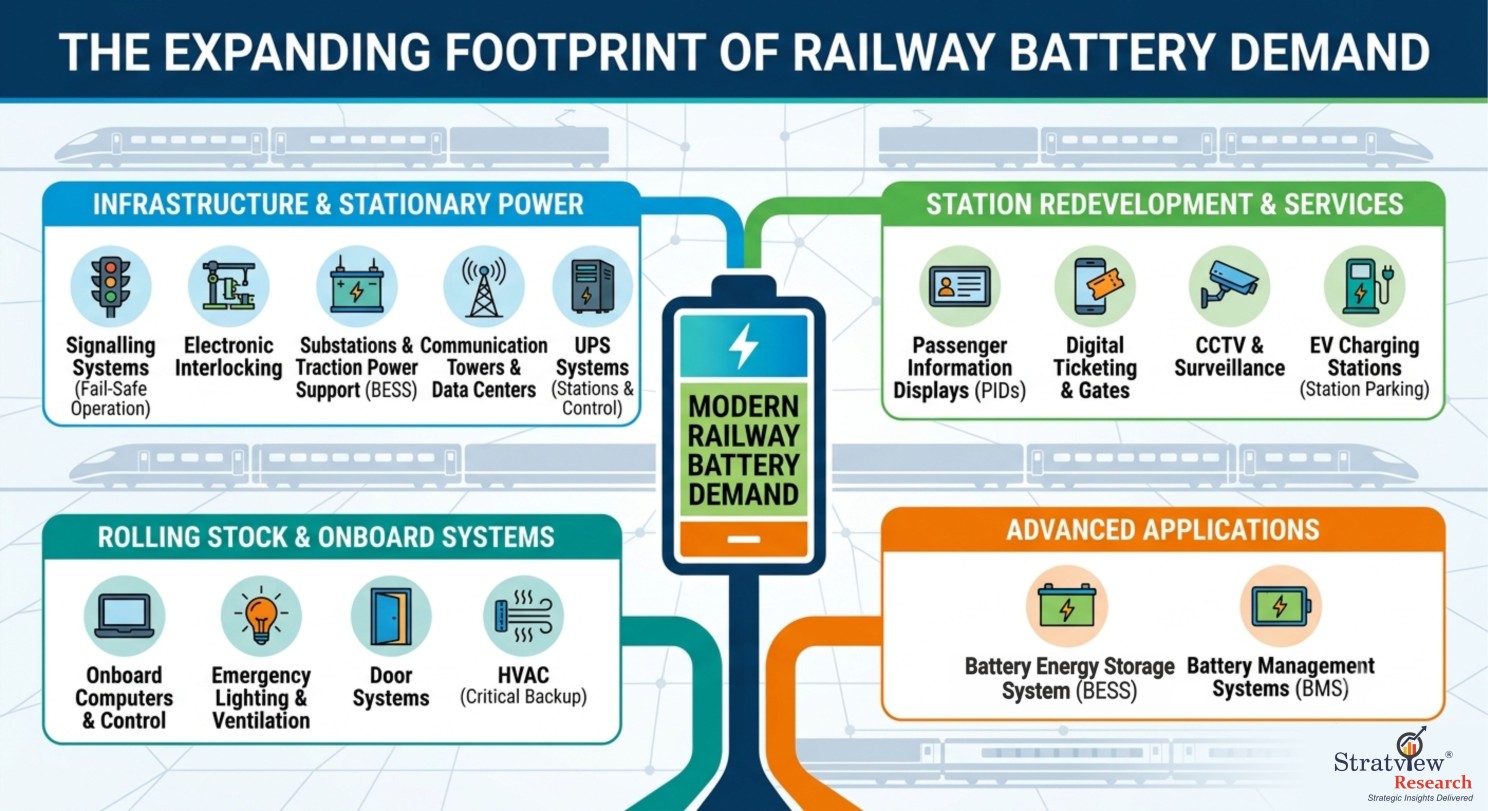
Passenger information displays, signalling systems, electronic interlocking, CCTV, onboard computers, automatic doors, HVAC systems, and emergency lighting all rely on batteries to maintain operation whenever the primary power supply is interrupted.
As rail operations become more dependent on electricity, batteries move beyond locomotives and coaches. They become an essential part of keeping the railway network operating safely and reliably.
Battery Demand Is Moving into Railway Infrastructure
For decades, railway batteries were associated mainly with rolling stock. That definition no longer reflects how modern railways operate.
Graphic Courtesy of Stratview Research
Today's railway stations rely on far more electrical equipment than they did a decade ago. Digital ticketing systems, passenger information displays, surveillance networks, communication equipment, rooftop solar installations, UPS systems, and EV charging infrastructure all require dependable backup power.
The same is true for signalling cabins, substations, telecom towers, and traffic control centres, where even a brief power interruption can disrupt railway operations.
As Indian Railways redevelops stations, expands dedicated freight corridors, and advances high-speed rail projects, the number of battery-dependent assets across the network will continue to grow.
Regenerative Braking Adds a New Market
Electrification also introduces battery applications that simply didn't exist in diesel-based rail networks.
Electric trains can feed part of their braking energy back into the traction network. If another train is not drawing power from the same section, part of that recovered electricity goes unused.
Battery Energy Storage Systems (BESS) capture this surplus electricity and release it when demand increases. Besides making better use of regenerative braking, they can reduce peak electricity demand and improve power stability around substations and busy rail corridors.
For battery suppliers, this creates an entirely different category of demand, one linked to energy storage rather than onboard power alone.
Lead-Acid Isn't Going Away, but the Market Is Changing
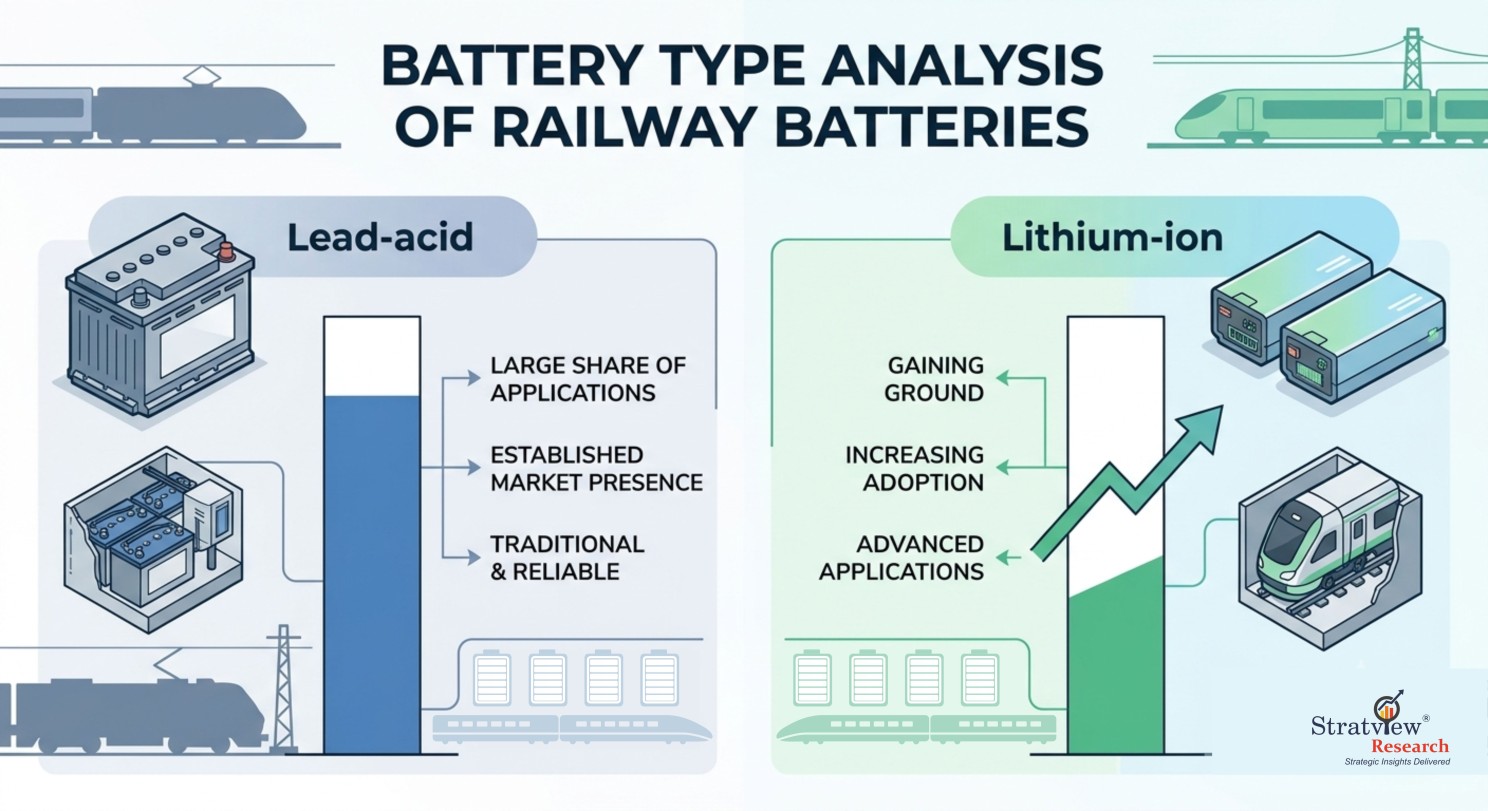
Lead-acid batteries continue to hold a large share of railway applications because they are cost-effective, well understood, and backed by established maintenance practices.
Graphic Courtesy of Stratview Research
Lithium-ion batteries, however, are gaining ground in applications where lower weight, longer service life, faster charging, and reduced maintenance offer clear operational advantages. As these applications expand, demand is also increasing for battery management systems, charging equipment, thermal management solutions, power electronics, and battery monitoring software.
Different battery chemistries are now serving different railway applications, rather than competing for the same one.
Where the Market Goes From Here
The study indicates that, the global railway battery market is projected to reach US$514 million by 2030, with Asia-Pacific remaining the largest regional market, specifically, China, India, and Japan are the rail industry hubs in the region and are creating a mammoth demand for batteries.
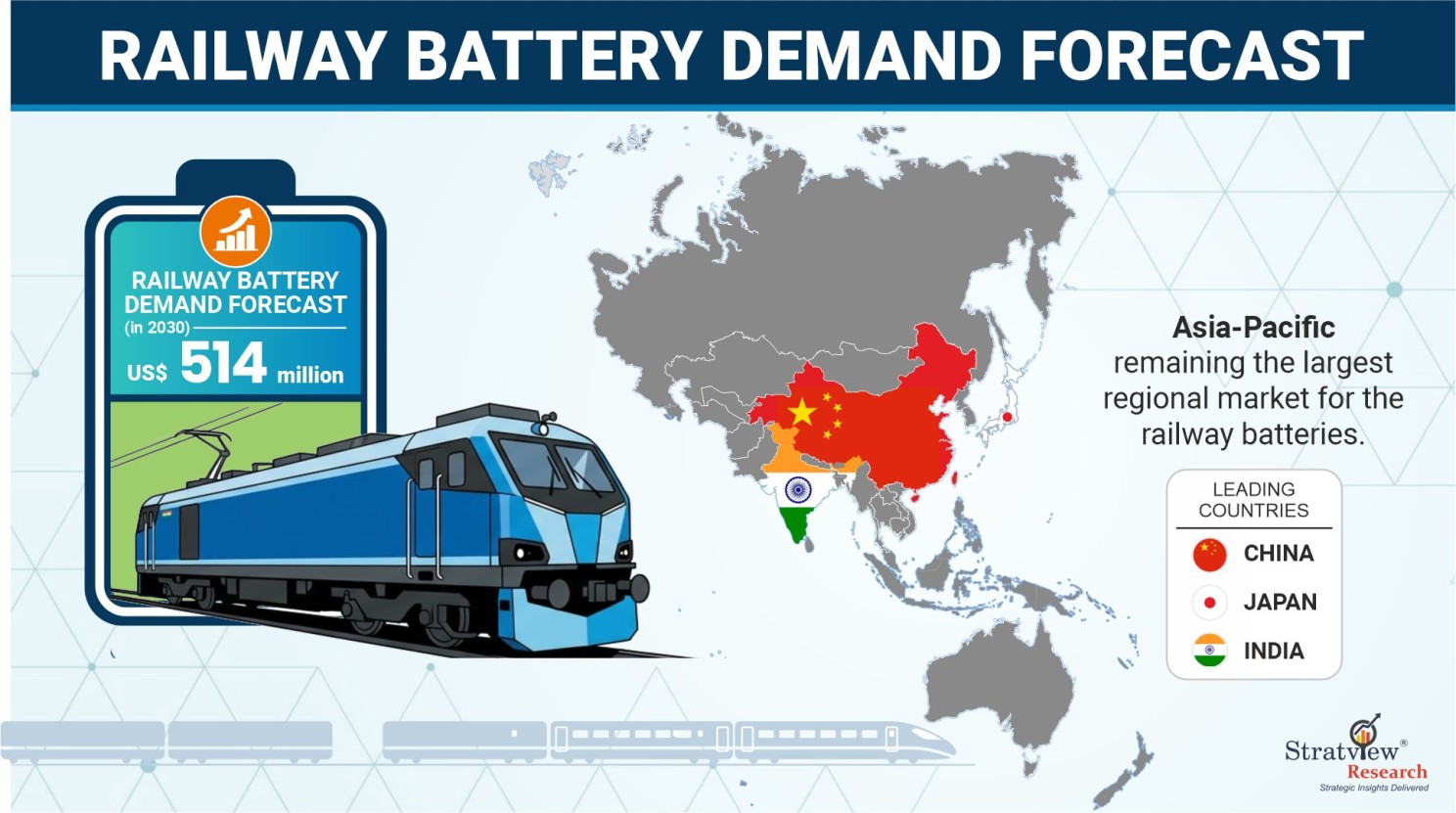
Graphic Courtesy of Stratview Research
India's railway electrification programme will not change that market overnight. What it does change is where battery demand comes from. Instead of being driven mainly by replacement batteries for diesel fleets, demand is expanding into station backup systems, signalling equipment, Battery Energy Storage Systems (BESS), and battery management technologies.
For suppliers, this means the market is no longer defined only by rolling stock. As railways become more electrified and digitally connected, the next phase of demand will increasingly come from the wider railway network rather than the train itself.
Subscribe to our newsletter
Related Blogs:
How Battery Enclosure Design Influences EV Range?
Metals vs. Composites – The Weight Battle of EV Battery Enclosures
Specialty Batteries 101 - Power Where Standard Batteries Fall Short
Didn’t find what you were looking for?
Tell us about your requirements
(Our team usually responds within a few hours)