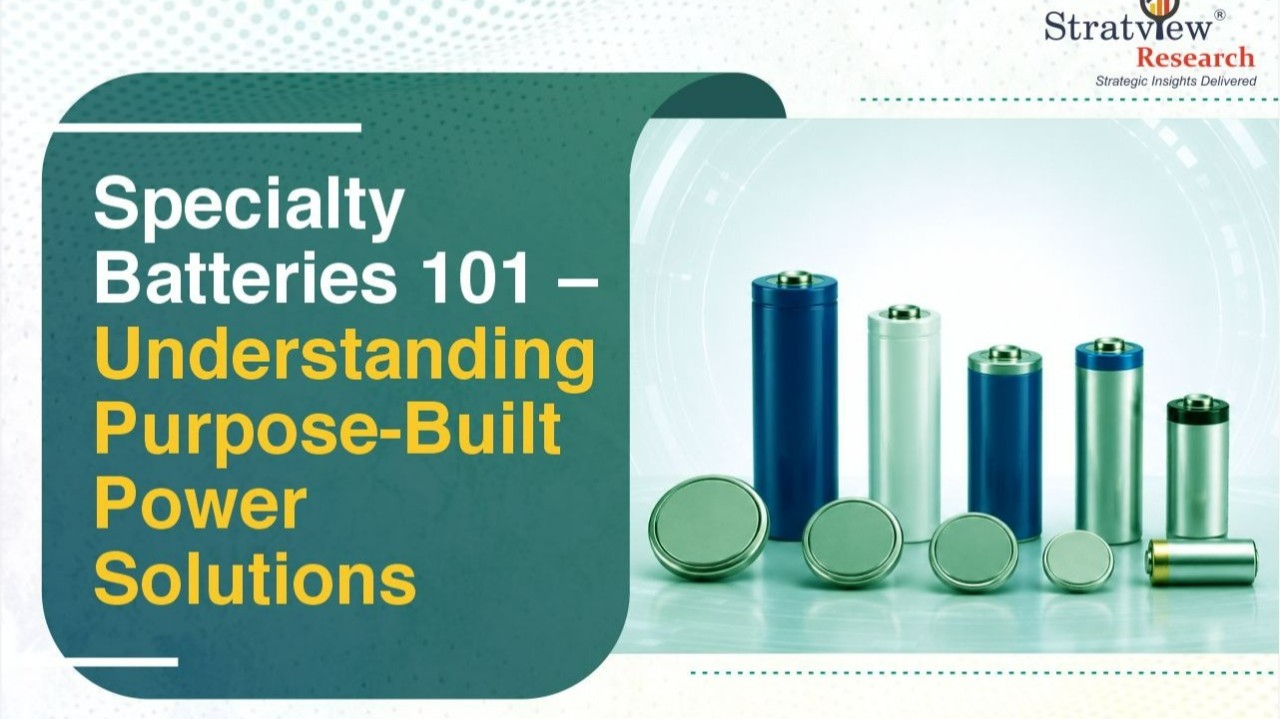
Every day, billions of batteries power smartphones, laptops, and household devices. However, many devices and systems require batteries designed to meet specific performance, safety, or environmental requirements that conventional batteries cannot always deliver. From pacemakers and satellites to industrial sensors and defense equipment, these applications rely on specialty batteries.
Unlike conventional batteries developed for mass-market use, specialty batteries are designed for specific applications. Whether they need to operate in extreme temperatures, fit into compact devices, or deliver reliable power after years of storage, these batteries are built to meet specialized operating requirements.
What Are Specialty Batteries?
Specialty batteries are energy storage solutions designed for devices and systems that require unique shapes, sizes, power capacities, or operating characteristics. They are developed to provide features such as high energy density, long shelf life, stable voltage output, compact form factors, and compliance with industry standards.
Compared with conventional batteries, specialty batteries are produced in lower volumes and require more extensive engineering, testing, and validation. Their primary focus is reliable performance in applications where consistency and safety are essential.
How Do Specialty Batteries Differ from Conventional Batteries?
Both conventional and specialty batteries store electrical energy, but they are designed for different operating requirements.
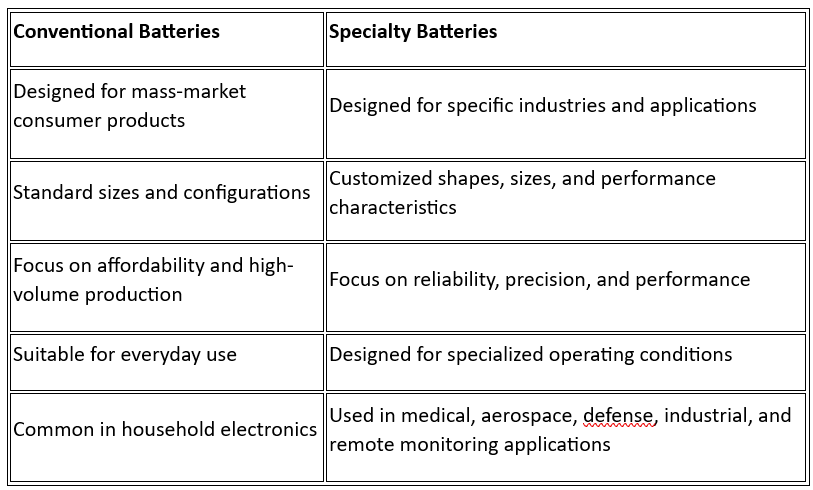
Courtesy of Stratview Research
Key Types of Specialty Batteries
1. Lithium Primary Batteries
Lithium primary batteries are non-rechargeable cells known for their high energy density, long shelf life, and stable voltage output. Their long service life makes them suitable for utility meters, remote sensors, medical devices, and defense equipment.
2. Lithium-Ion Specialty Batteries
Specialty lithium-ion batteries are rechargeable batteries designed for applications that require lightweight, compact, and high-performance power sources. They are commonly used in medical equipment, aerospace electronics, industrial tools, robotics, and advanced mobility systems.
3. Nickel-Based Batteries (NiMH and NiCd)
Nickel-metal hydride (NiMH) and nickel-cadmium (NiCd) batteries remain widely used in applications requiring durability and consistent performance across a broad operating temperature range. Common applications include aviation systems, emergency backup equipment, and industrial machinery.
4. Thermal Batteries
Thermal batteries remain inactive during storage and become operational only when activated by heat. They provide high power over a short duration, making them suitable for defense and aerospace applications such as missile systems and emergency power units.
5. Thin-Film and Micro Batteries
Thin-film and micro batteries are ultra-compact power sources developed for devices where space is limited. They are widely used in medical implants, wearable electronics, smart sensors, and miniature electronic systems.
6. High-Temperature Batteries
High-temperature batteries are designed for environments where conventional batteries cannot operate reliably. They are commonly used in oil and gas exploration, downhole drilling tools, and industrial monitoring systems.
Where Are Specialty Batteries Used?
Specialty batteries are used across industries that require reliable power under specialized operating conditions.
Some of their major applications include:
-
Consumer electronics: Watches, hearing aids, key fobs, and smoke detectors often use compact specialty button cells.
-
Medical devices: Pacemakers, implantable devices, infusion pumps, portable diagnostic equipment, and patient monitoring systems depend on batteries that offer long service life and reliable performance.
-
Aerospace and defense: Satellites, avionics, unmanned aerial systems (UAS), emergency power units, and military equipment rely on batteries built for high-reliability applications.
-
Industrial equipment: Utility meters, remote monitoring systems, instrumentation, and process control equipment require batteries capable of delivering dependable performance over extended periods.
-
Telecommunications: Backup power systems and remote communication infrastructure use specialty batteries to maintain uninterrupted operation under varying environmental conditions.
Why Specialty Batteries Matter in Today's Market
Specialty batteries account for a relatively small share of the global battery industry, but they are essential for applications where conventional batteries cannot meet specific performance, size, or environmental requirements. From medical devices and aerospace systems to industrial equipment and remote monitoring, they provide dependable power in applications where reliability is critical.
The increasing adoption of advanced medical devices, aerospace and defense systems, industrial automation, and connected infrastructure continues to drive demand for specialty batteries. According to Stratview Research , the global specialty batteries market was valued at approximately USD 3.8 billion in 2025 and is projected to reach USD 4.4 billion by 2030. Unlike conventional battery markets, growth in this segment is driven by application-specific requirements such as reliability, long service life, and performance under demanding operating conditions.
As industries continue to develop more specialized technologies, the need for application-specific battery solutions is expected to grow steadily. With their ability to meet unique operating requirements, specialty batteries will remain an integral part of medical, aerospace, defense, industrial, and telecommunications applications.
Subscribe to our newsletter
Related Blogs:
How Battery Enclosure Design Influences EV Range?
Specialty Batteries 101 - Power Where Standard Batteries Fall Short
Didn’t find what you were looking for?
Tell us about your requirements
(Our team usually responds within a few hours)