
Used beverage cartons are not typically associated with automotive manufacturing. Yet today, material recovered from these cartons is being used in vehicle interiors. Alongside lightweighting and sustainability initiatives, automakers are also increasing the use of recycled polymers and composite materials to reduce dependence on virgin plastics while maintaining performance and design standards.
Recovering PolyAl
Beverage cartons are made from multiple layers of paperboard, polymer, and aluminium that protect liquids and extend shelf life. On average, they consist of 70% paperboard, 25% polymers, and 5% aluminium. After the paper fibres are recovered, the remaining polymer-aluminium composite, known as PolyAl, has traditionally been difficult to separate and recycle economically because of its multi-layer structure.
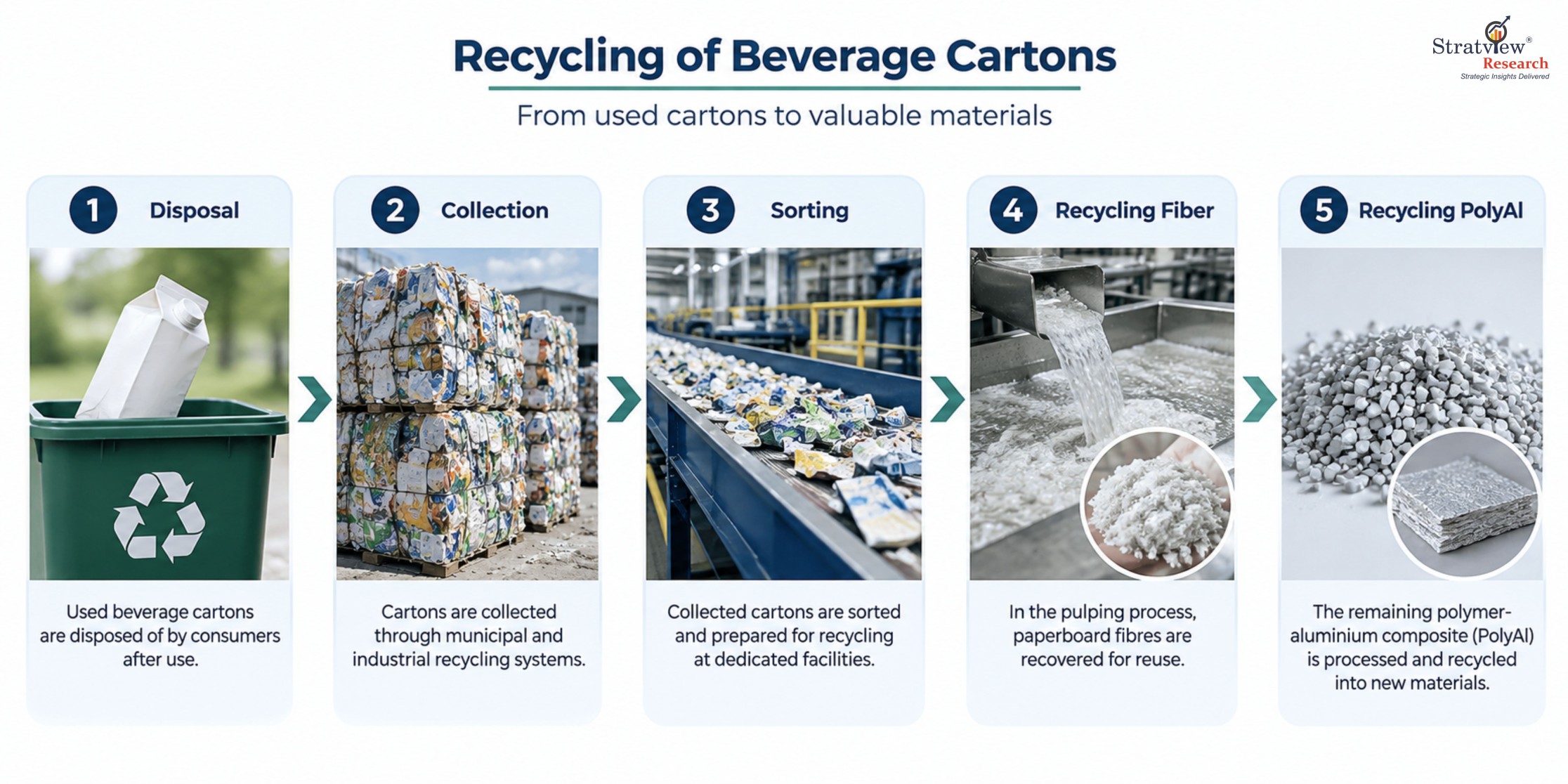
Graphic Courtesy of Stratview Research
Advancements in recycling and material compounding have improved the recovery and processing of PolyAl. The recycled material can now be converted into automotive-grade compounds suitable for dashboards, centre consoles, door panels, and other interior trim components. One example is Lapolen Ecotek, a PolyAl-based compound developed specifically for automotive applications.
As recycling technologies continue to improve, PolyAl is moving beyond conventional recycling applications into higher-value engineering uses. One of the most visible examples can now be found in automotive interiors.
Where Is Recycled PolyAl Used?
The Fiat Grande Panda incorporates recycled PolyAl into the dashboard, centre console, and both front and rear door panels. Each vehicle contains material recovered from approximately 140 used beverage cartons, demonstrating how post-consumer packaging waste can be converted into automotive-grade materials.
The application is notable because the material is used in visible interior components rather than hidden parts. Fiat selected the material not only for its recycled content but also for the distinctive shimmering finish created by the aluminium particles within the compound. The result demonstrates that recycled materials can meet the appearance, durability, and quality standards expected for modern automotive interiors.
Implications for Automotive Materials
The significance of this development lies in demonstrating a practical end-use for a material that has long presented recycling challenges. Rather than remaining a by-product of the recycling process, PolyAl is now being used in visible automotive interior components that demand consistent quality, durability, and appearance.
For the automotive industry, this expands the range of recycled materials available for interior applications. For the recycling industry, it demonstrates that advances in material recovery and compounding can create commercially viable engineering materials from post-consumer packaging waste. As manufacturers continue to evaluate alternative material solutions, developments such as these reinforce the growing role of recycled materials across the broader automotive interior materials market.