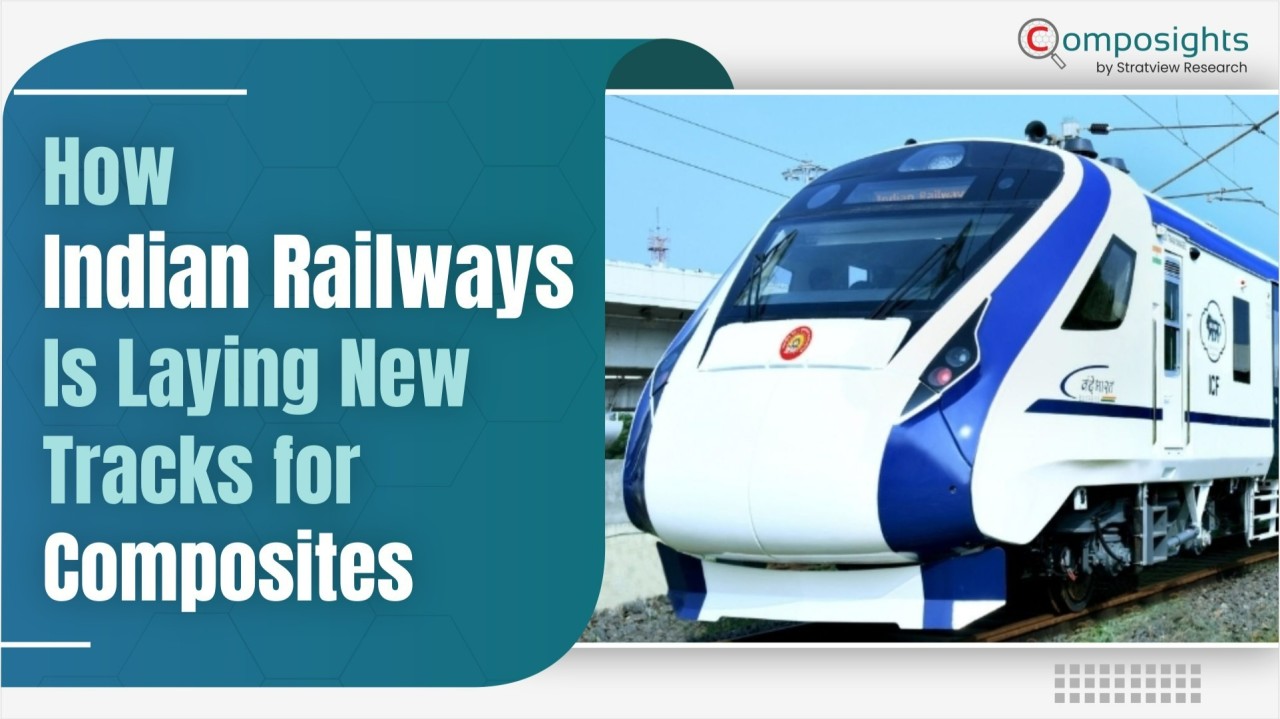
Most discussions around railway modernization in India focus on new trains, improved connectivity, and passenger experience. Less attention is given to the materials making these upgrades possible. As Indian Railways expands programs such as Vande Bharat Sleeper and modern coach manufacturing, composites are becoming increasingly visible across a growing range of railway applications.
The opportunity is already substantial. According to our analysis, India consumed approximately 155.5 kilotons of composites in ground transportation applications in 2024, accounting for nearly 21% of the country's total composites demand. Railways represent an important end-use segment, supported by annual coach production of around 6,000-7,000 units.
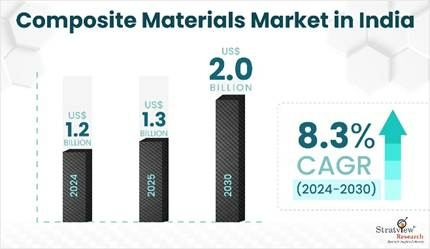
Graphic Courtesy of Stratview Research
The broader market outlook also points toward continued growth. India's composites market, valued at US$ 1.3 billion in 2025, is projected to reach nearly US$ 2.0 billion by 2030. Transportation applications are expected to remain among the key growth areas as railway modernization programs continue expanding.
Recent developments highlight how this opportunity is beginning to translate into business activity. In May 2026, Goa-based Kineco Group secured a contract to design interiors for 100 Vande Bharat Sleeper trains, highlighting the increasing focus on advanced interior systems within India's railway manufacturing ecosystem.
Why Composites Are Gaining Importance in Railways
Modern railway manufacturing increasingly prioritizes weight reduction, durability, corrosion resistance, modular assembly, and lower maintenance requirements. These requirements have expanded the use of fibre-reinforced composites across multiple railway applications.
In Indian Railways, Fiber-Reinforced Polymer (FRP)-based systems are already being used in interior and ceiling panels, sidewall structures, modular flooring systems, berth backings, luggage bins, seating assemblies, and folding tables. Modular FRP toilet units are also being adopted because of their resistance to moisture-related degradation and lower maintenance requirements over long operating cycles.
Composites are also finding applications in operational components such as window frames, axle box covers, battery box trays, and locomotive gear cases. Indian Railways has reportedly achieved weight savings of up to 372 kilograms per six-axle locomotive system through the use of Glass Fiber Reinforced Polymer (GFRP) gear cases.
Sound attenuation panels used in engine compartments represent another growing application area where composites help improve acoustic performance while maintaining durability under demanding operating conditions.
Vande Bharat Sleeper Program and Demand Expansion
The Vande Bharat platform is expected to play a vital role in increasing demand for advanced interior systems and lightweight railway components.
By December 2025, Indian Railways had deployed 164 Vande Bharat trains across major corridors nationwide. The introduction of the Vande Bharat Sleeper in 2026 extends the platform into long-distance overnight travel, creating additional opportunities for lightweight interiors, modular assemblies, and composite-based systems.
The scale of the opportunity becomes clearer when viewed against Indian Railways' long-term plans. The railway network aims to expand the Vande Bharat fleet to 800 trains by 2030 and 4,500 trains by 2047.
In parallel, Indian Railways has outlined plans for more than 200 Vande Bharat Sleeper trains by 2029, while Titagarh Rail Systems alone is manufacturing 80 trains under a contract valued at approximately ₹24,000 crore.
Recent manufacturing and procurement developments suggest that the sleeper program is moving steadily toward large-scale production, creating sustained demand for FRP panels, modular interiors, acoustic systems, fire-resistant materials, and other lightweight railway components.
The Long-Term Opportunity for Composites
One of the most significant developments is Indian Railways' objective to gradually eliminate wood and plywood from railway coaches. While often overlooked, this initiative has important implications for material suppliers.
Replacing traditional materials with composite-based alternatives can improve durability, reduce maintenance requirements, enhance corrosion resistance, and support longer service life. Given the scale of India's rolling stock production, even incremental material substitutions can create meaningful demand for composite manufacturers.
For the composites industry, this represents more than a component-level opportunity. It signals a broader change in how future railway coaches are likely to be designed and manufactured.
Export-Oriented Platforms Could Further Increase Demand
While domestic railway programs alone represent a significant opportunity, export-oriented train platforms could further expand the addressable market for railway composites.
India is exploring export opportunities for future Vande Bharat platforms, and export-focused trainsets would require globally competitive interior systems, lightweight structures, fire-safe materials, acoustic solutions, and modular passenger cabins aligned with international operating standards.
This could increase the role of companies involved in railway interiors and advanced composite systems as India strengthens its position in railway manufacturing and rolling stock exports.
For many years, composites in India were largely associated with aerospace, defense, and wind energy applications. Railways are now emerging as a high-volume segment with long-term manufacturing potential.
As India expands its railway manufacturing capabilities and explores international markets, composites are likely to become increasingly embedded in the next generation of coaches and train interiors. For material suppliers, the tracks being laid today could support decades of demand across rolling stock production, fleet refurbishment, and export-oriented rail platforms.