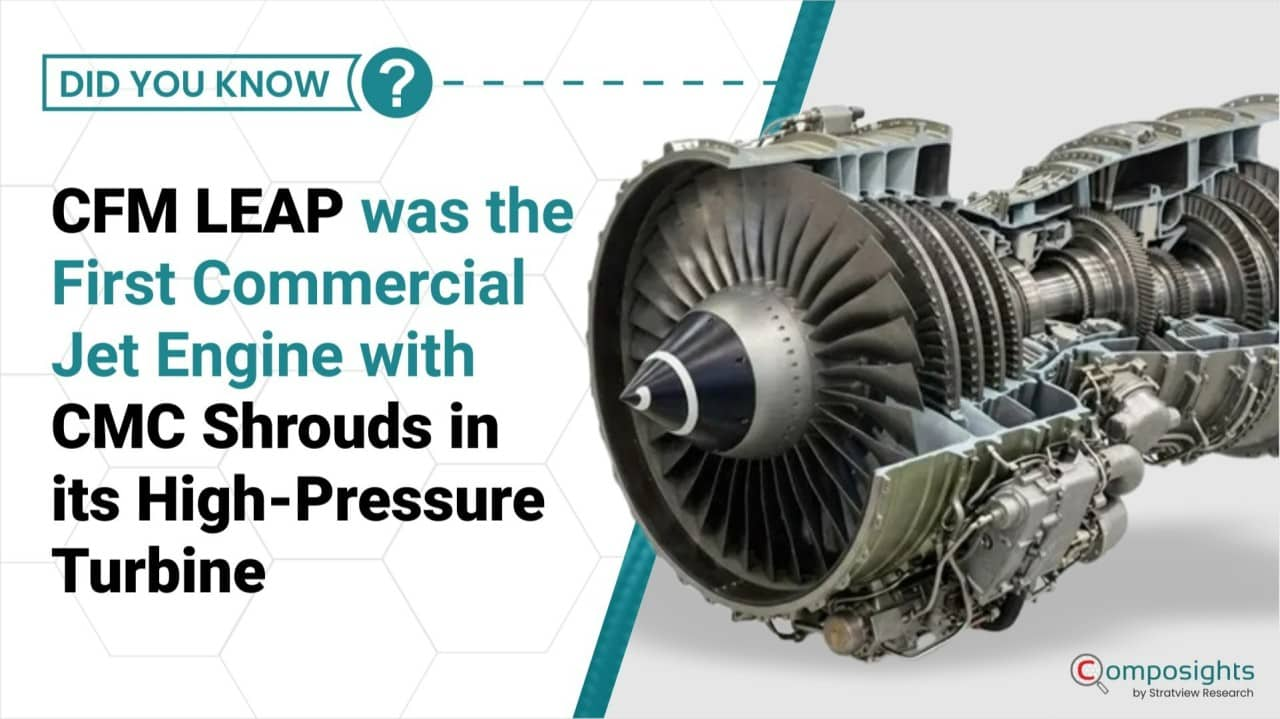
In 2016, the CFM Leading Edge Aviation Propulsion (LEAP) became the first commercial jet engine to use ceramic matrix composite (CMC) shrouds in its high-pressure turbine (HPT). This marked the first commercial airline use of CMCs after decades of development.
Why Were CMCs Chosen for the HPT?
The HPT operates immediately downstream of the combustor, where temperatures are extremely high. Its components must withstand this environment while maintaining performance over repeated flight cycles.
CMCs can withstand higher temperatures than conventional metal alloys while requiring less cooling air. They are also significantly lighter than many metallic alternatives. Using less cooling air leaves more compressed air available for the engine's main flow path, which can support higher engine efficiency.
LEAP Put CMCs Into Commercial Service
For LEAP, commercializing CMCs also required consistent production at the volumes needed for commercial aviation.
GE's Asheville, North Carolina, facility started CMC production in 2014, ahead of the LEAP's entry into service. The facility later produced and shipped its 100,000th CMC turbine shroud for the CFM LEAP engine.
GE9X Expanded CMC Use Across the Hot Section
With CMC production established for the LEAP, GE expanded the technology to additional engine components.
The GE9X uses CMCs in inner and outer combustor liners, HPT stage 1 shrouds, and HPT stage 1 and stage 2 nozzles. GE describes the GE9X as its most extensive use of CMCs in an engine.
RISE Takes CMC Into Next-Generation Propulsion
CFM's Revolutionary Innovation for Sustainable Engines (RISE) program is developing technologies for a future commercial engine, including an Open Fan architecture and a compact engine core. CMC technology is one part of this development program, building on experience gained through programs such as the LEAP and GE9X.
As of July 2026, CFM reported approximately 500 RISE test campaigns and more than 3,000 endurance cycles, with further ground and flight testing planned as development progresses. The RISE program targets more than 20% better fuel efficiency than today's commercial engines.
LEAP brought CMC shrouds into commercial service. GE9X expanded their use across the hot section, while RISE is taking the technology into next-generation propulsion development.