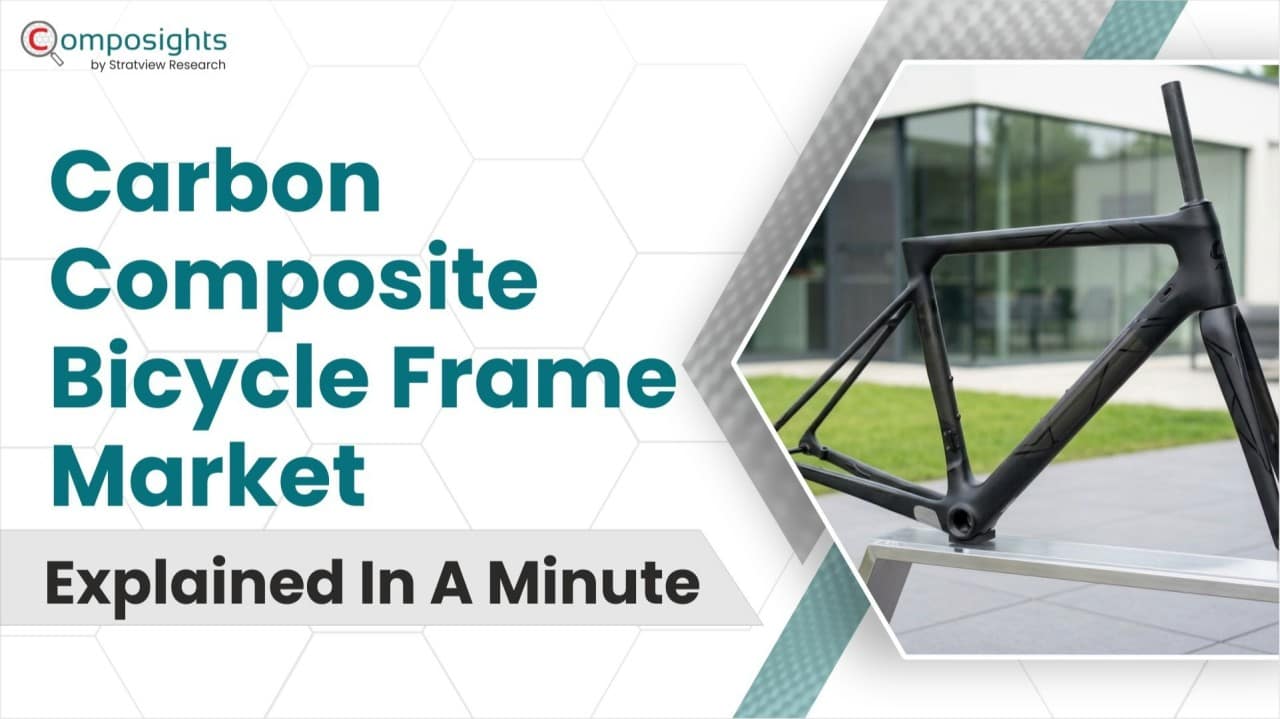
Carbon composite bicycle frames represent one of the most established applications of advanced composites in consumer mobility. Once associated primarily with professional racing, these lightweight structures are now widely used across road bikes, mountain bikes, gravel bikes, and electric bicycles, reflecting their growing role in higher-value segments of the global bicycle market.
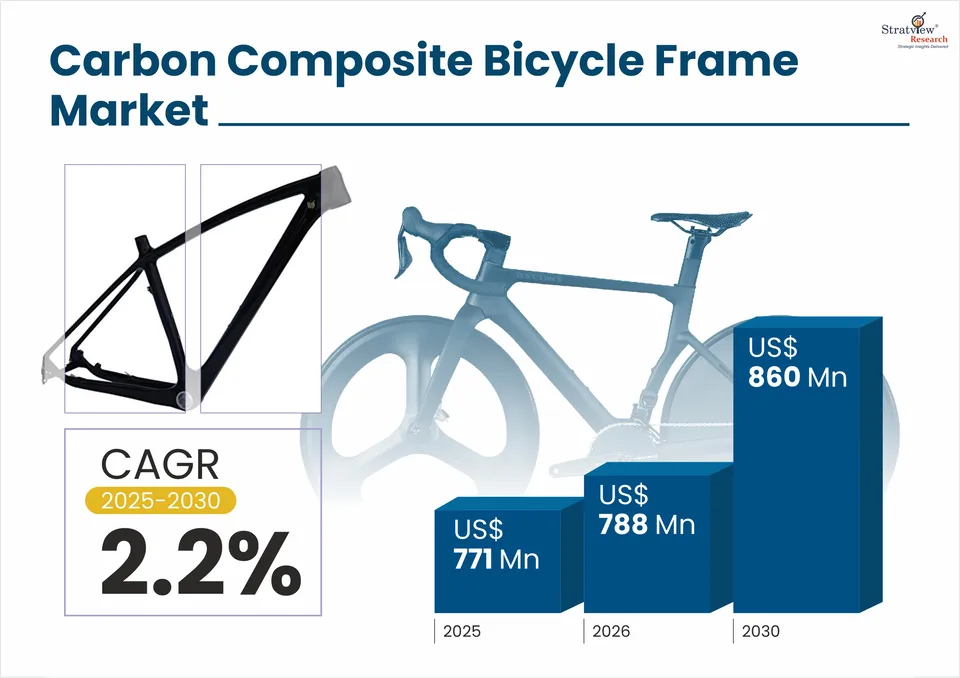
The commercial impact of this shift is increasingly evident. The global carbon composite bicycle frame market reached approximately US$771 million in 2025, with annual sales estimated at nearly 3 million frames. Growth is being driven by rising demand for performance-oriented bicycles, expanding e-bike adoption, and continuous improvements in manufacturing efficiency.
Graphic Courtesy of Stratview Research
Why Composite Frames Continue to Expand
Weight reduction is often the first advantage associated with composite frames, but it is not the only driver of adoption.
An advanced composite frame can weigh as little as 700–900 grams, compared to approximately 1200–1500 grams for many aluminum alternatives. Beyond weight savings, composites offer a combination of stiffness, durability, and design flexibility that metals cannot easily replicate.
Unlike metals, advanced composites allow manufacturers to tailor frame characteristics with greater precision. Specific areas can be reinforced for strength, while material can be reduced elsewhere to improve efficiency and ride performance. This flexibility enables manufacturers to optimize speed, comfort, handling, and structural performance within the same frame platform.
As performance differences between leading bicycle brands narrow, frame engineering and ride characteristics are playing a larger role in purchasing decisions, further supporting adoption across multiple bicycle categories.
Expansion Beyond Road Cycling
Road bikes remain the largest segment of the composite bicycle frame market, accounting for roughly one-third of total demand by value.
However, growth is increasingly broad-based across cycling categories:
- Mountain bikes are gaining traction due to demand for lightweight durability on challenging terrain
-
Gravel bikes are emerging as one of the fastest-growing segments, driven by versatility across mixed surfaces
This diversification reduces dependence on a single end-use segment and expands the addressable market for both frame manufacturers and composite suppliers.
Among these applications, e-bikes are emerging as a key growth driver for advanced frame materials.

Graphic Courtesy of Stratview Research
Among these expanding applications, e-bikes are emerging as one of the most important demand drivers for advanced frame materials.
E-Bikes Add Another Layer of Demand for Lightweight Structures
E-bikes introduce additional weight through motors, batteries, and electronic systems. Composite frames help offset this increase while enabling better integration of electrical components within the frame structure.
As a result, composites are increasingly used in electric mountain bikes and performance-oriented e-bikes, where weight, range efficiency, and ride quality remain critical purchasing factors.
The rise of e-bikes is also increasing the value contribution of advanced materials within the bicycle industry.
Production Economics Are Becoming Critical
Historically, manufacturing complexity limited wider adoption of composite frames due to high labor intensity and long production cycles.
To improve scalability, manufacturers are increasingly adopting:
- Resin Transfer Molding (RTM)
- High-Pressure RTM
- Automated Fiber Placement (AFP)
These technologies are reducing cycle times, improving consistency, and narrowing the cost gap between composites and conventional materials. Production efficiency is now becoming as important as material performance in determining competitiveness.
APAC Remains the Industry's Manufacturing Hub
The composite bicycle frame supply chain remains highly concentrated in Asia, particularly Taiwan and China.
Over decades, the region has developed strong expertise in composite processing, frame manufacturing, and supply chain integration. Established players such as Giant Bicycles, Carbon Team, and MERIDA BIKES, along with deep supplier networks, continue to provide a structural advantage.
A substantial share of composite bicycle frames sold by leading global brands is manufactured within this ecosystem, making relocation or replication of this capability outside Asia a significant challenge.
Sustainability Gains Attention
Traditional thermoset composites present end-of-life and recyclability challenges. In response, manufacturers are exploring:
- Recycled reinforcement materials
- Thermoplastic composites
- Alternative processing routes to improve circularity
While performance remains the primary purchasing driver in premium segments, sustainability is gradually influencing material development priorities, particularly in regions with stricter environmental regulations.
The Track Ahead
The track for carbon composite bicycle frames remains positive, supported by:
- Continued strength in premium bicycle demand
- Rapid expansion of the e-bike segment
- Ongoing improvements in manufacturing efficiency
- Diversified adoption across road, mountain, gravel, and electric bicycles
This diversified demand base reduces reliance on any single segment and strengthens long-term market stability.
Future growth will depend on further improvements in production economics and wider application across cycling categories. Stratview Research’s analysis indicates that the market is projected to cross US$850 million by 2030, supported by sustained demand for lightweight performance structures and expanding e-bike penetration.