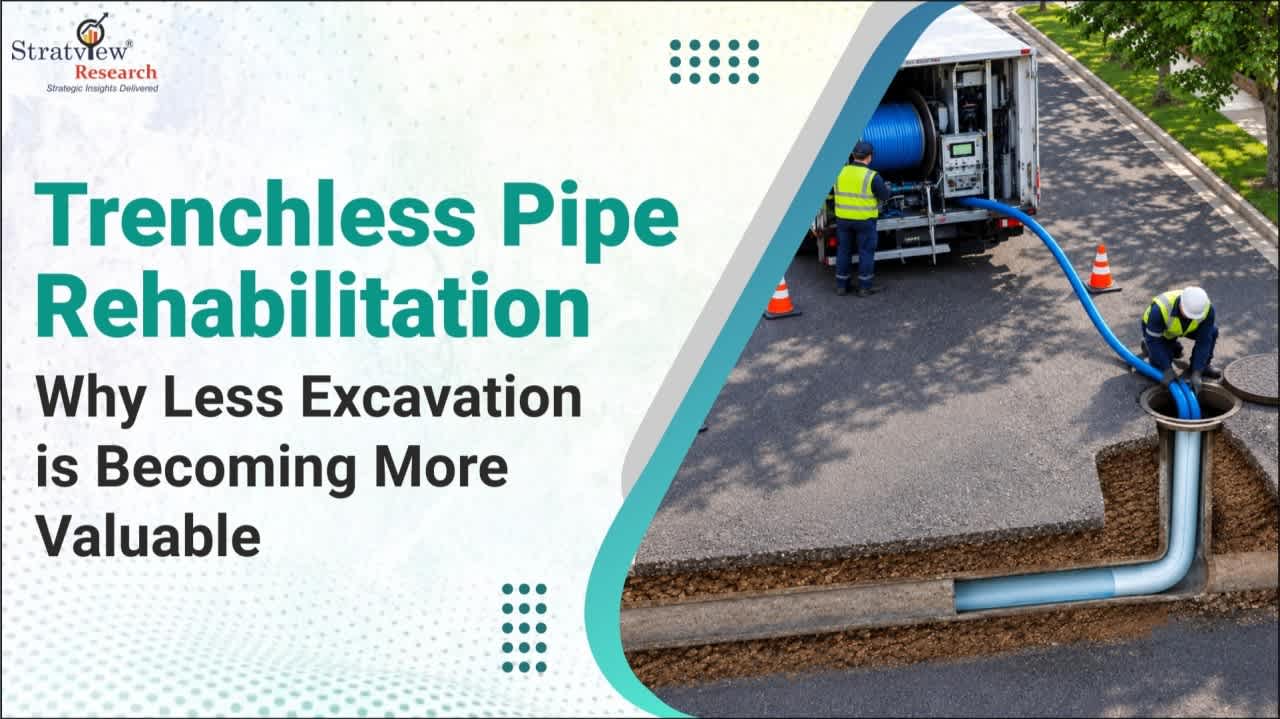
Can Aging Underground Pipes Be Repaired Without Tearing Up Entire Streets?
What happens when the pipes beneath a city start reaching the end of their useful lives?
Replacing them sounds simple, until you consider that these pipelines often run under busy roads, sidewalks, buildings, landscaped areas, and other critical infrastructure. Digging them up can turn a pipe-replacement project into a much larger civil-engineering exercise. And the cost is not always where you might expect it.
Did you know? More than 70% of total open-cut pipe installation costs can often go toward restoring roads, sidewalks, and landscapes, not replacing the pipe itself.
If the pipe can be repaired or renewed without excavating everything above it, why dig up the city in the first place? This is where trenchless pipe rehabilitation offers a different way forward.
Why Dig More When Less Digging Gets the Job Done?
Instead of removing an ageing pipeline completely, trenchless rehabilitation lets infrastructure owners repair, renew, or replace underground pipes with little to no excavation.

Graphic Courtesy of Stratview Research
The benefits are practical. Trenchless methods can be 30–50% more cost-effective than conventional excavation, while projects that may take several days or weeks through open-cut methods can often be completed in hours to one or two days. They also minimize disruption to surrounding infrastructure and can deliver more than 50% reductions in CO₂ emissions in suitable applications.
Even better, rehabilitation can extend the service life of a pipe by more than 30 years.
But “trenchless” is not one technology. It is an entire toolbox, and one method has become particularly important within it.
4 Out of 10 Rehabilitations Are Done Via CIPP
If four out of every ten trenchless rehabilitation projects rely on one method, it is worth looking at what makes that method so widely used.
Cured-in-Place Pipe (CIPP) uses a resin-impregnated flexible liner that is inserted into the existing pipe and cured using heat, steam, or UV light. Once cured, the liner forms a new structural pipe within the old one, allowing deteriorated pipelines to be renewed without removing the existing pipe or extensively excavating the surface above it.
But CIPP is only one part of the trenchless rehabilitation toolkit. Depending on the condition of the pipe, the type of damage, and the rehabilitation objective, utilities can turn to several other methods.

Graphic Courtesy of Stratview Research
Pipe bursting fractures the existing pipe while pulling a new pipe into its place and can also allow for diameter upsizing. Sliplining involves inserting a smaller new pipe inside the existing host pipe, while Spray-in-Place Pipe (SIPP) applies a protective coating, such as epoxy or polyurea, to the inner pipe surface. Other trenchless approaches add further options for addressing different structural and operational requirements.
Wastewater Keeps the Pipes Busy, While Water Mains Build the Next Opportunity
Wastewater pipelines represent a substantial portion of trenchless rehabilitation demand. Years of exposure to wastewater, corrosion, blockages, infiltration, and structural deterioration can gradually weaken sewer networks, making rehabilitation an attractive alternative to disruptive replacement.
Water main pipes present a different but equally important opportunity. Aging distribution networks, leakage, recurring failures, and the need to preserve treated drinking water are pushing utilities to look beyond conventional replacement.
So, the market is not being driven by a single pipeline problem. Wastewater rehabilitation forms a major base of demand, while water-main rehabilitation is opening another avenue for growth.
North America: The Largest Demand Generator
North America generates more than half of the global demand for trenchless pipe rehabilitation, making it the largest regional demand base. The scale of its existing underground water and wastewater networks creates a particularly large rehabilitation opportunity. Within North America, the United States stands out as the region’s primary demand hub.
The scale of the U.S. infrastructure challenge makes this dominance easier to understand. The country experiences around 240,000 water main breaks every year, while leaking water mains result in the loss of trillions of gallons of treated drinking water and about USD 2.6 billion annually. At the same time, more than USD 1 trillion is needed for water infrastructure improvements over the next two decades, creating a substantial pipeline of rehabilitation opportunities.
With such a large and aging underground network to maintain, utilities and municipalities are increasingly looking for ways to extend the life of existing pipelines without the disruption and cost of full-scale excavation.
The Case for Fixing What Already Exists
Aging pipelines are not just an infrastructure problem, they are also a growing source of avoidable water loss. Nearly 30% of the world’s treated water is lost every year through leaks in aging water distribution networks. Replacing every deteriorating pipeline through open-cut construction would mean not only replacing miles of buried infrastructure, but also disrupting and restoring everything above it. That is where rehabilitation offers a more practical path: extend the life of existing pipelines while limiting excavation, disruption, and restoration costs.

Graphic Courtesy of Stratview Research
The opportunity is already substantial, with the global trenchless pipe rehabilitation market projected to grow from USD 7.8 billion in 2026 to USD 9.7 billion by 2032. As cities face the dual pressure of aging networks and rising infrastructure needs, the question is increasingly shifting from how to replace old pipes to how to make existing ones last longer.