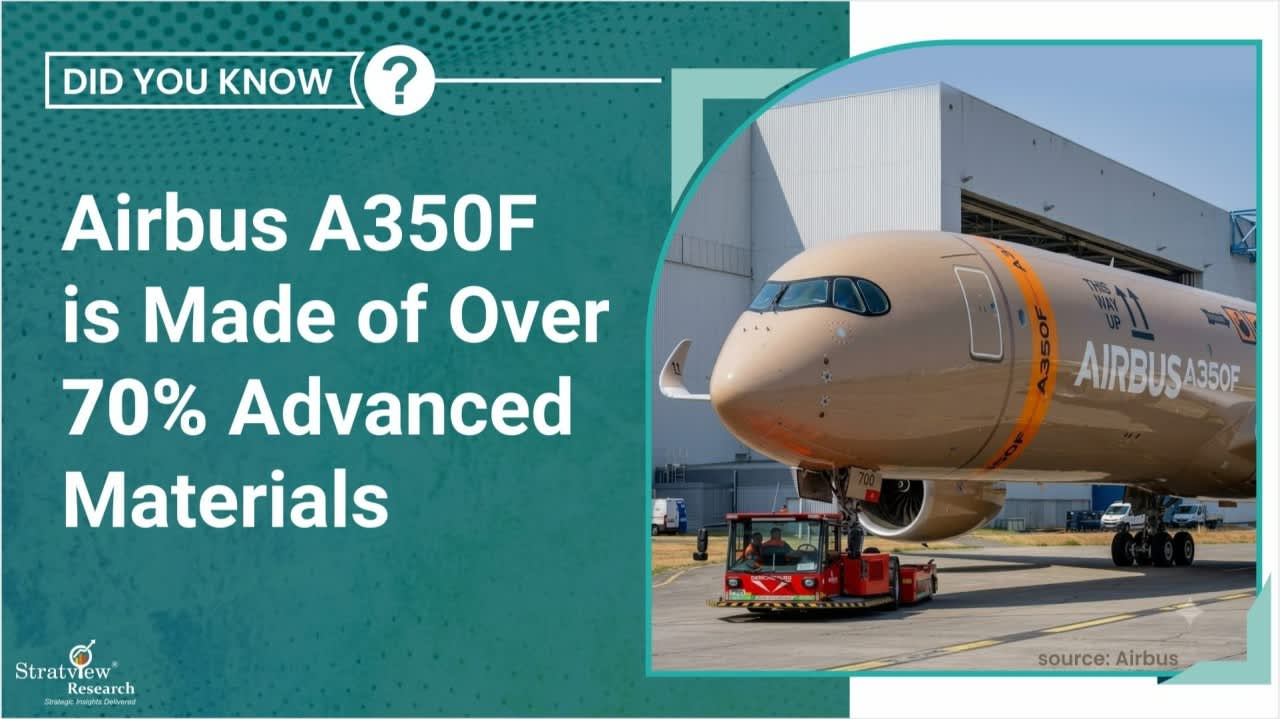
The A350F is Airbus' new-generation freighter, based on the A350 platform and designed for long-haul cargo operations. The first test aircraft, MSN700, completed its maiden flight on September 29, 2026, flying for 4 hours and 10 minutes.
Airbus says the aircraft is made of over 70% advanced materials, reflecting the role of material selection in reducing structural weight while meeting the demands of long-haul freight.
What Advanced Materials Does the A350F Use?
The 70% figure refers to the A350F's use of advanced materials, rather than composites alone. These include composites, titanium, and modern aluminium alloys. For context, the A350 family factsheet identifies 53% composites within its 70% advanced-material content. However, that 53% figure applies to the A350 family and is not a published A350F-specific material breakdown.
Composites help achieve the required strength and stiffness without adding unnecessary weight, while titanium and aluminium alloys serve other structural and system requirements. For a freighter, keeping structural weight under control has a direct connection with payload and operating requirements.
Why Does Weight Matter So Much for a Freighter?
For a freighter, structural weight directly affects how the aircraft balances payload, fuel, range, and other operating requirements. The A350F's maximum take-off weight (MTOW) is 46 tonnes lower than that of competitor aircraft, while it is designed to carry up to 111 tonnes of payload and fly up to 8,700 kilometres.
The 46-tonne difference does not translate directly into additional cargo capacity. Actual payload depends on factors such as fuel requirements, route length, operating conditions, and overall aircraft performance.
Where Do Advanced Materials Make a Practical Difference?
The benefits of material selection are not limited to structural weight. They also appear in features designed around the operational needs of a freighter.
The main-deck cargo door has a 4.3-metre clear opening, making it the largest main-deck cargo door in commercial aviation. Its structure uses advanced carbon-fibre composites and is designed to accommodate oversized loads, including aircraft engines.
The size of the opening also affects the loading process. Cargo that could take around an hour to load through smaller openings can be loaded in a matter of minutes through the A350F's larger door.
How Does the A350F Balance Weight and Efficiency?
The A350F combines its lightweight structure with aerodynamic features and Rolls-Royce Trent XWB-97 engines as part of its overall design. Airbus says the aircraft is designed to deliver up to 40% lower fuel consumption and carbon emissions compared with competitor aircraft with a similar payload-range capability.
That figure is a manufacturer-stated design performance claim, rather than an operational result. With flight testing only now beginning, the aircraft's performance will be assessed throughout the certification campaign.