
Aircraft design is a constant balancing act: achieving the required structural performance while keeping weight under control.
This balance has increased the role of advanced composites in modern aircraft, particularly in structures where high strength and stiffness are required at low weight. Aerospace prepregs support this application by combining high-performance reinforcement fibers with a precisely formulated resin system in a controlled material format. This helps manufacturers produce composite structures with consistent material properties and the repeatability demanded by aerospace applications.
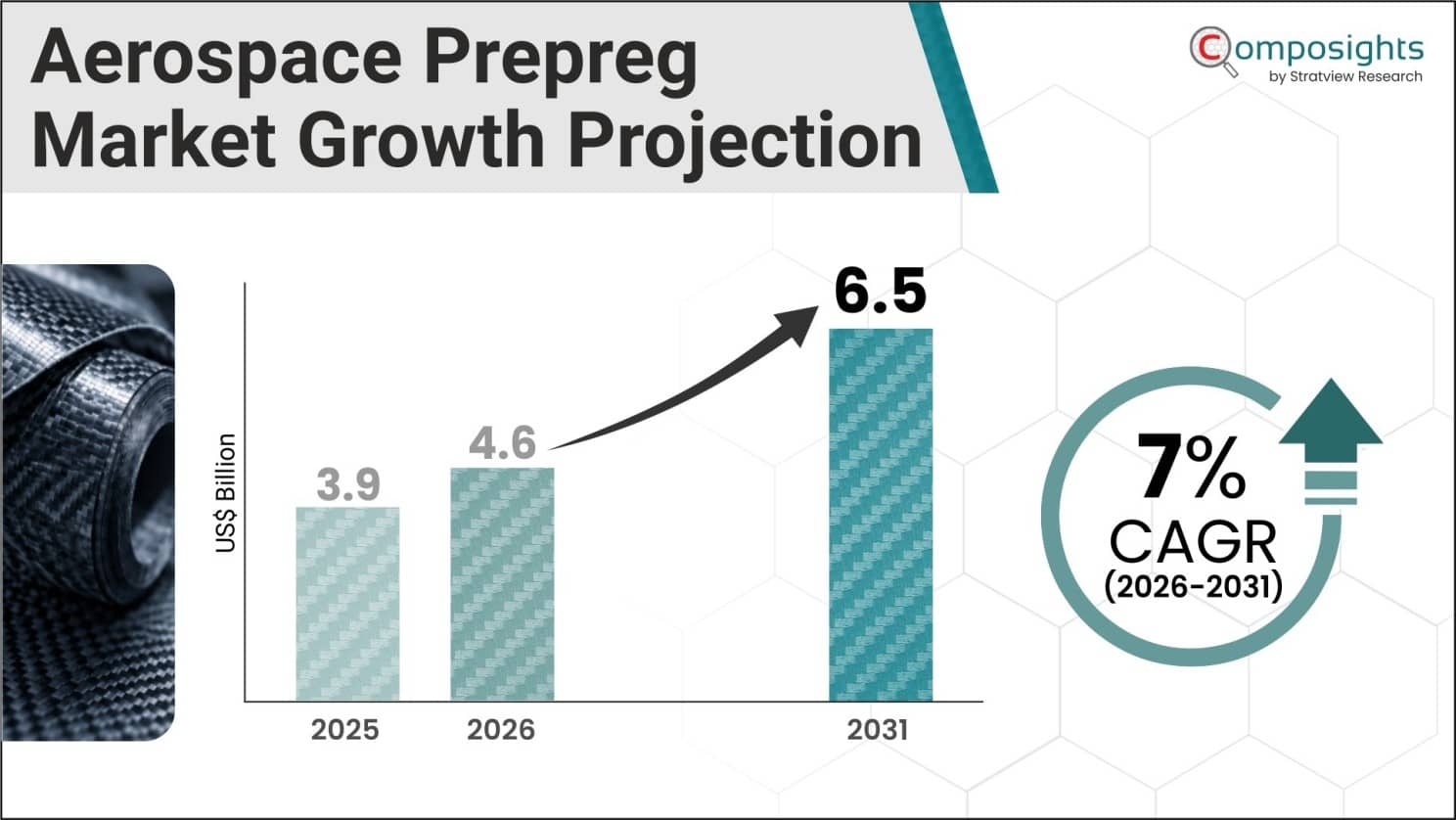
Image Courtesy of Stratview Research
The growing use of composite structures in aircraft is also supporting demand for prepreg materials. The global aerospace prepreg market was valued at USD 3.9 billion in 2025 and is projected to reach USD 6.5 billion by 2031.
Commercial Aviation Strengthens the Case for Carbon-Fibre Prepregs
The strongest evidence of prepregs' established position comes from commercial aviation, which remains the most demanding platform for aerospace prepregs. Large commercial aircraft programs rely extensively on composite structures across fuselages, wings, empennages, nacelles, control surfaces, and other weight-sensitive components.
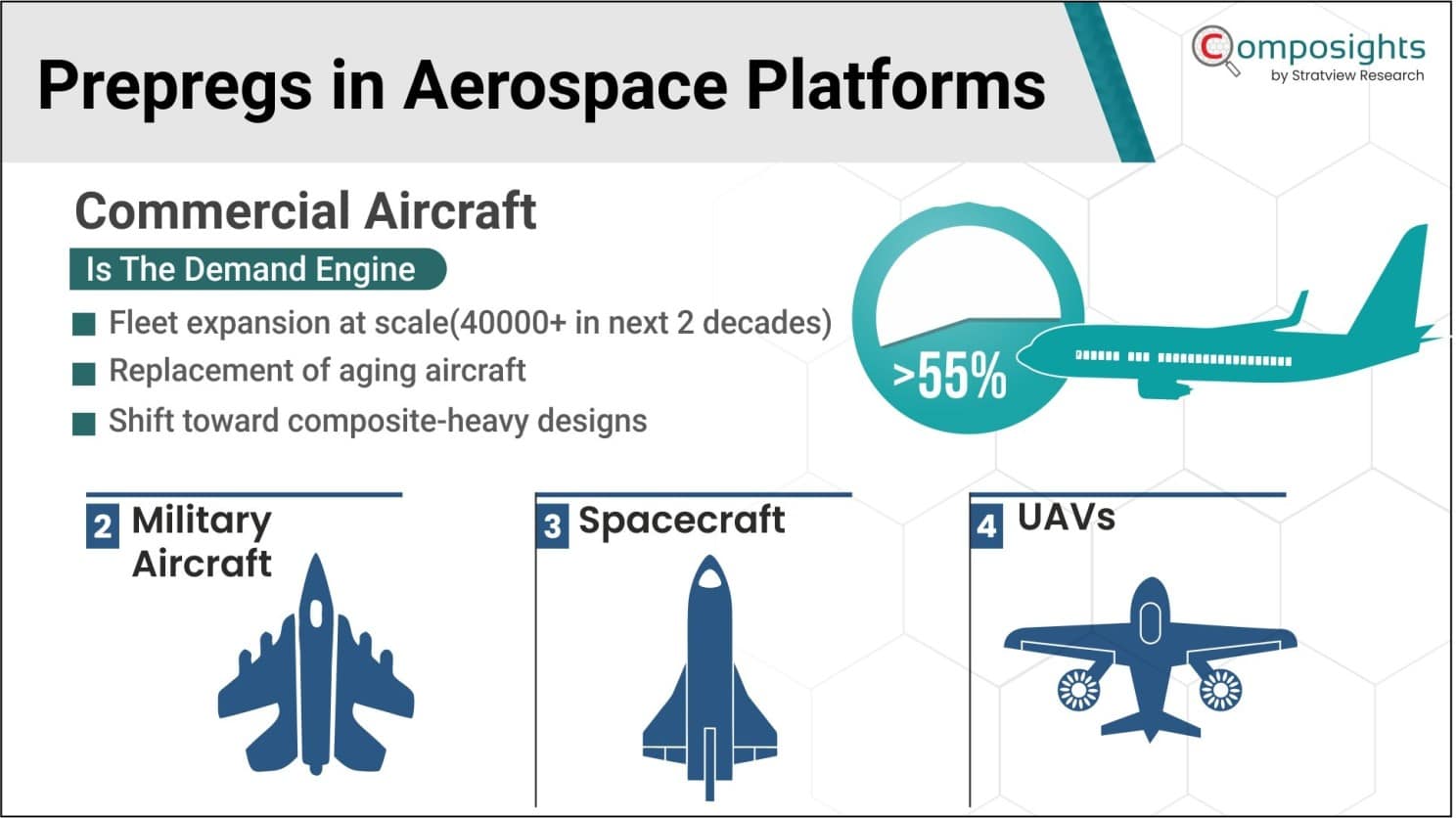
Image Courtesy of Stratview Research
That extensive structural use also helps explain why carbon fiber prepregs remains the preferred fiber. Carbon fiber combines high specific strength and stiffness with decades of aerospace qualification and manufacturing experience, making it a natural fit for structures where weight reduction has to be balanced with demanding performance requirements.
The Fiber Is Only as Good as the Process
Selecting the right fiber and resin is only part of the equation. The material must also be consolidated and cured under controlled conditions to achieve the required laminate quality and structural performance.
This is why for critical high-performance aerospace primary structures, the vast majority of structural prepregs are still traditionally cured using Autoclave Curing.
Production requirements are, however, creating greater interest in alternatives. Autoclaves are capital-intensive, and their capacity can become a consideration as manufacturers seek higher production rates. Out-of-autoclave (OoA) processing is therefore projected to be the fastest-growing process, particularly where manufacturers can achieve the required composite performance while reducing dependence on large autoclave infrastructure.
Production Economics Are Expanding the Processing Conversation
The focus on production efficiency also extends beyond curing methods to the prepreg material itself. Thermoplastic prepregs are gaining momentum, as aerospace manufacturers explore material systems that can enable faster processing and greater manufacturing flexibility in suitable applications.
Thermoplastics can offer advantages such as weldability, recyclability, and high damage tolerance, depending on the material system and application. These characteristics can become increasingly relevant as aerospace manufacturers look beyond structural performance alone and consider cycle time, assembly, and manufacturing efficiency.
Thermosets, however, retain a substantial qualification and production advantage across today's aerospace programs. The market is therefore developing along two parallel paths: maintaining the established performance and manufacturing base of thermosets while evaluating where thermoplastics and alternative processing routes can deliver additional production benefits.
A Concentrated Market with New Demand Emerging
That production capability is not evenly distributed. Aerospace prepregs demand remains concentrated across a group of countries, with more than 80% of global demand accounted by the top 10 countries. This concentration reflects the industry's dependence on established aircraft production, defense programs, qualified suppliers, and specialized composite manufacturing capabilities.
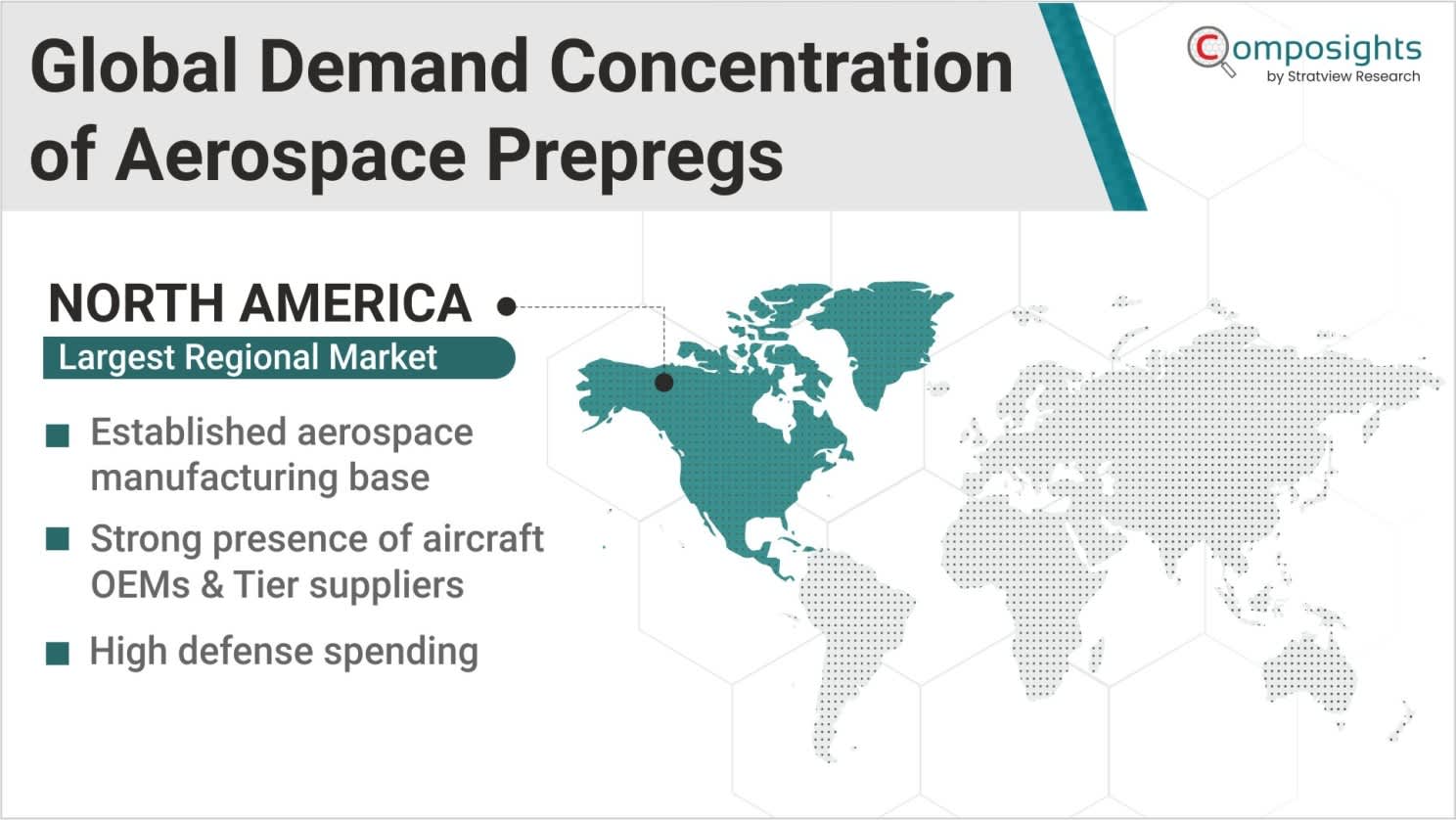
Image Courtesy of Stratview Research
North America accounted for nearly half of the market in 2025, making it the largest regional market. Its position is supported by an established aerospace manufacturing base spanning commercial aviation, defense, and space programs.
What Will Define the Next Phase?
The next stage of aerospace prepreg growth will depend on how effectively manufacturers can balance weight reduction, structural performance, and production efficiency. Established materials and processes will continue to support current aircraft programs, while faster and more flexible manufacturing routes create opportunities for further prepreg adoption.
As aircraft production scales and new platforms enter the market, the competitive advantage will increasingly come from achieving aerospace-grade composite performance with greater manufacturing efficiency.