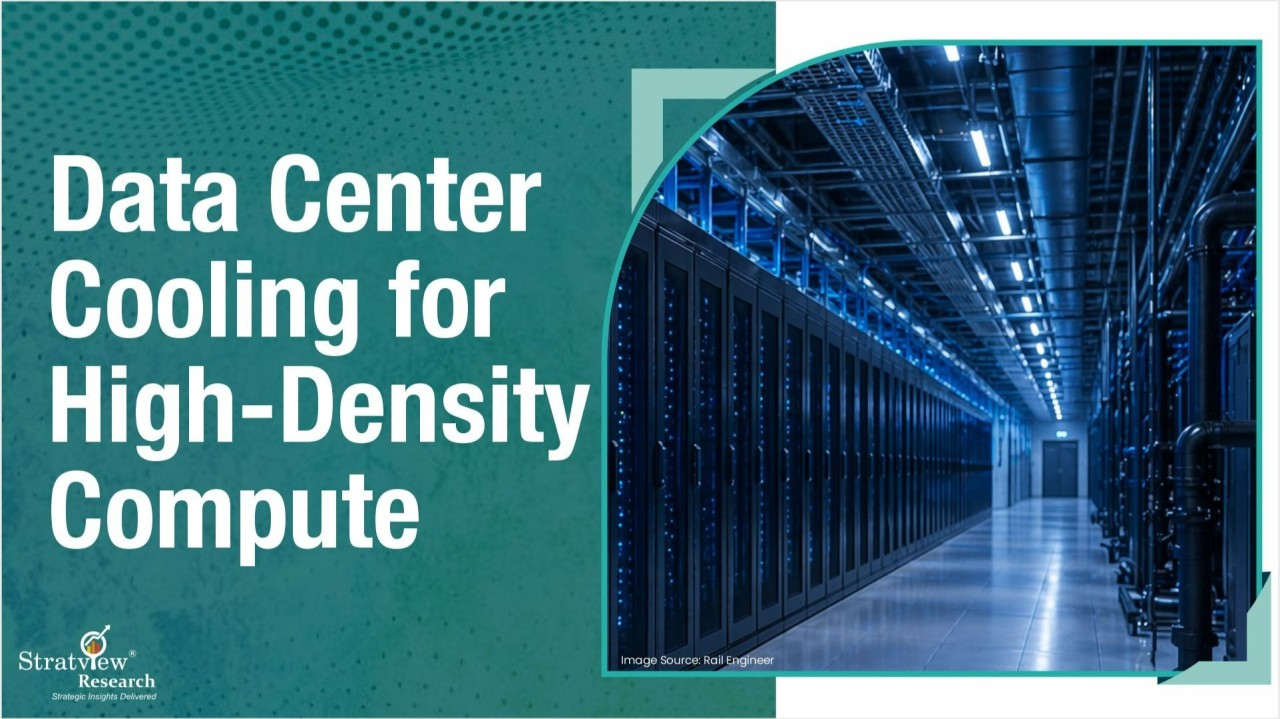
Data centers are handling higher workloads and denser racks than before, and cooling is becoming a much more critical part of that equation. Traditionally, enterprise racks operated around 5–10 kW, while AI-driven deployments are now pushing 30–80 kW, with some exceeding 100 kW, turning cooling into a capacity constraint rather than just a support function.
It now directly influences performance, hardware life, operating cost, and how much compute a facility can sustain.
When cooling is stable, systems avoid thermal throttling and maintain consistent performance, even under variable workloads. In high-density environments, even a 1–2°C rise in inlet temperature can begin to impact processor efficiency.
Cooling also has a direct link to hardware reliability. Higher operating temperatures increase thermal stress on components, which can lead to higher failure rates and shorter replacement cycles over time.
The impact becomes more visible when you look at efficiency. As per the U.S. Department of Energy, cooling can account for up to ~40% of a data center’s total energy consumption, making it a major contributor to operating costs.
Many large-scale facilities are now targeting Power Usage Effectiveness (PUE) levels below 1.2, compared to an industry average of ~1.5–1.6.
There is also a sustainability angle. Data centers account for roughly 1–1.5% of global electricity consumption (International Energy Agency), making cooling efficiency a direct lever for reducing emissions. This growing focus is also visible at the industry level, with the data center cooling market projected to surpass USD 17 billion by 2031, according to Stratview Research.
Data Center Cooling Systems and Their Practical Fit
In practice, cooling decisions are driven by workload intensity, rack density, and facility constraints. Broadly, data centers rely on three approaches: air cooling, liquid cooling, and hybrid systems.
1. Air Cooling Systems
Air cooling remains the default across most facilities due to its simplicity and compatibility with existing infrastructure. It continues to support a large share of existing deployments.
Common systems include Computer Room Air Conditioner (CRAC) and Computer Room Air Handler (CRAH) units, along with row-based cooling for higher-density zones. Perimeter-based setups remain widely used due to legacy deployment.
Air cooling performs well at moderate densities. However, as rack loads move beyond 15–20 kW, airflow becomes harder to manage efficiently. Power consumption rises, and maintaining consistent performance becomes more challenging, especially in AI-driven environments.
2. Liquid Cooling Systems
Liquid cooling is becoming increasingly relevant for high-density deployments where air cooling begins to reach its limits.
Direct-to-chip cooling is seeing faster adoption and is estimated to account for a significant share of nearly 70%, current deployments within this segment, particularly for AI and GPU-intensive workloads, as it enables heat removal closer to the source. This makes it especially suitable for environments where heat is highly concentrated.
Other approaches include rear door heat exchangers and immersion cooling. While immersion cooling offers strong thermal performance, its adoption remains selective due to design, integration, and operational considerations.
Liquid cooling supports higher rack densities, often beyond 50–100 kW, while maintaining tighter thermal control. At the same time, it involves higher upfront investment and greater system complexity.
3. Hybrid Cooling Systems
Hybrid cooling combines air and liquid approaches within the same facility.
Air cooling continues to support standard racks, while liquid cooling is deployed in high-density zones. This allows operators to scale cooling capacity without fully redesigning existing infrastructure.
This approach is becoming more common in facilities transitioning toward AI workloads, where only specific zones require high-density cooling.
Hybrid systems offer flexibility, but they also introduce additional complexity in system design, monitoring, and maintenance.
Expanding Footprint of Digital Infrastructure and Energy Demand
These developments reflect broader global trends. Data center capacity is expanding rapidly, driven by AI adoption, cloud computing, and large-scale digital infrastructure growth. Global data center demand is estimated to be more than 300 billion by the end of 2026, with AI-specific infrastructure growing at a significant CAGR. (Bank of America GS Estimates). At the same time, data center electricity demand is expected to rise sharply, reaching nearly 3% of global electricity consumption by 2030, according to the IEA, highlighting how closely compute growth and energy systems are becoming linked.
As compute demand continues to rise, cooling requirements will scale alongside it, not just in capacity but also in precision and efficiency. This will push systems toward more localized, adaptive, and intelligent control methods.
At the same time, continued innovation in cooling technologies is creating room for data centers to grow in a more efficient and balanced way going forward.
TAGS: Data Centers Data Center Coolers