When we talk about innovation in mobility, the spotlight usually falls on engines, batteries, aerodynamics, or software. Rarely do we talk about the floor. Yet across modern aircraft, trains, and buses, the floor is no longer just a surface; it has become a critical performance lever.
As mobility platforms scale globally, weight has become one of the most expensive design variables. Every extra kilogram compounds fuel consumption, limits payload, accelerates wear, and raises operating costs over decades of service. This is why the industry’s lightweighting strategy has quietly moved downward, to the structural floor.
Composite floor panels are emerging as one of the most effective ways to remove mass while maintaining safety, strength, and durability. By replacing metal and plywood-based structures with advanced composites, manufacturers are unlocking meaningful weight savings while improving fatigue life, corrosion resistance, and lifecycle economics. What was once a functional necessity is now a strategic design choice.
Beyond engineering relevance, this shift is now visible in market economics. The global composite floor panels market stood at USD ~500 million in 2024 and is expected to grow at a CAGR of >7.5%, reaching USD 785 million by 2030. Rising mobility demand, accelerating aircraft production, and an industry-wide push toward structural efficiency are collectively driving this momentum.
Inside the Structure – The Role of Core Materials in Performance
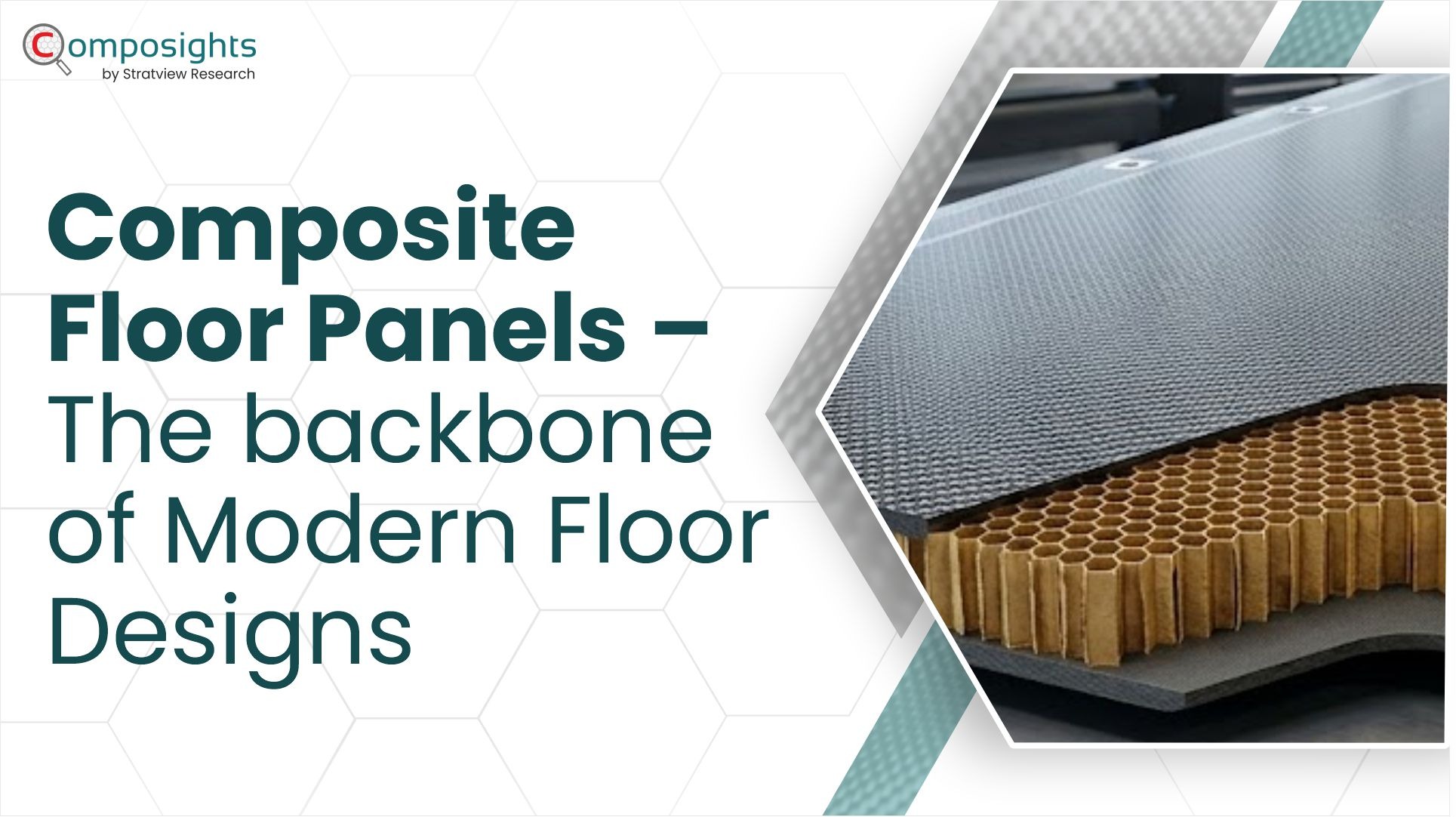
Composite floor panel performance starts with its sandwich architecture, where each layer is engineered for a specific function. A typical panel uses carbon or glass fiber laminates as the top skin for load distribution, a lightweight core for stiffness, and a phenolic composite bottom skin for fire protection and durability.
Core materials generally fall into three categories: honeycomb, foam, and balsa, each offering a different balance of weight, cost, and mechanical performance. Foam cores provide good impact resistance and manufacturing simplicity, while balsa offers natural stiffness and damping characteristics.
However, honeycomb has clearly emerged as the industry’s preferred choice, capturing more than three-quarters of the market, due to its exceptional stiffness-to-weight ratio, high shear strength, and long-term durability. Most high-performance panels rely on aramid honeycomb cores, typically reinforced with edge supports, inserts, and damping layers to meet structural, fire, and acoustic requirements.
A prominent example is the Airbus A320 family, the world’s most delivered commercial aircraft, which incorporates lightweight sandwich floor panels using Nomex honeycomb cores with composite face sheets, a benchmark configuration for modern interiors.
Where Demand Takes Flight – Aviation’s Leading Role
Composite floor panels serve aircraft, rail, and bus platforms, but aviation accounts for over 80% of total demand. The reason is simple: in aerospace, every kilogram matters. Weight reduction directly improves fuel efficiency, range, payload capacity, and emissions performance. As aircraft production accelerates, demand for lightweight interior structures is rising in tandem. Boeing projects 43,600 new aircraft deliveries and a global fleet nearing 50,000 by 2044, making high-performance composite floor panels a natural and increasingly essential choice.
From an installation standpoint, OEM demand dominates. Floor panels are increasingly integrated during early design phases, enabling better structural optimization, certification alignment, and lifecycle predictability. While retrofit opportunities exist, original installations offer scale efficiencies and deeper system integration.
Where is Growth Concentrated and Where is it Accelerating
Geographically, North America remains the largest market for composite floor panels with more than 40% market share. The United States serves as the region’s growth engine, supported by a dense ecosystem of aircraft OEMs, tier-one suppliers, composite specialists, and floor panel manufacturers. Industry leaders such as Boeing, along with a mature supplier base, continue to drive innovation, certification, and large-scale adoption.
Meanwhile, Asia-Pacific is the fastest-growing region, fueled by rising passenger traffic, rapid fleet expansion, urbanization, and sustained investments in aviation and rail infrastructure. As local manufacturing capabilities mature, the region is evolving from a demand center into an increasingly strategic production hub.
The Bottom Line
Composite floor panels may rarely be noticed by passengers, but their impact on mobility performance is substantial. As lightweighting shifts from an engineering objective to a strategic imperative, these panels are evolving from passive components into active enablers of efficiency, sustainability, and scale. In the race to build lighter and smarter mobility platforms, some of the most meaningful gains are no longer happening in the airframe or powertrain; they’re happening underfoot.
TAGS: Composites Composite Materials Automotive Honeycomb Core Sandwich Panels FRP Panels Mobility Aerospace
.jfif)