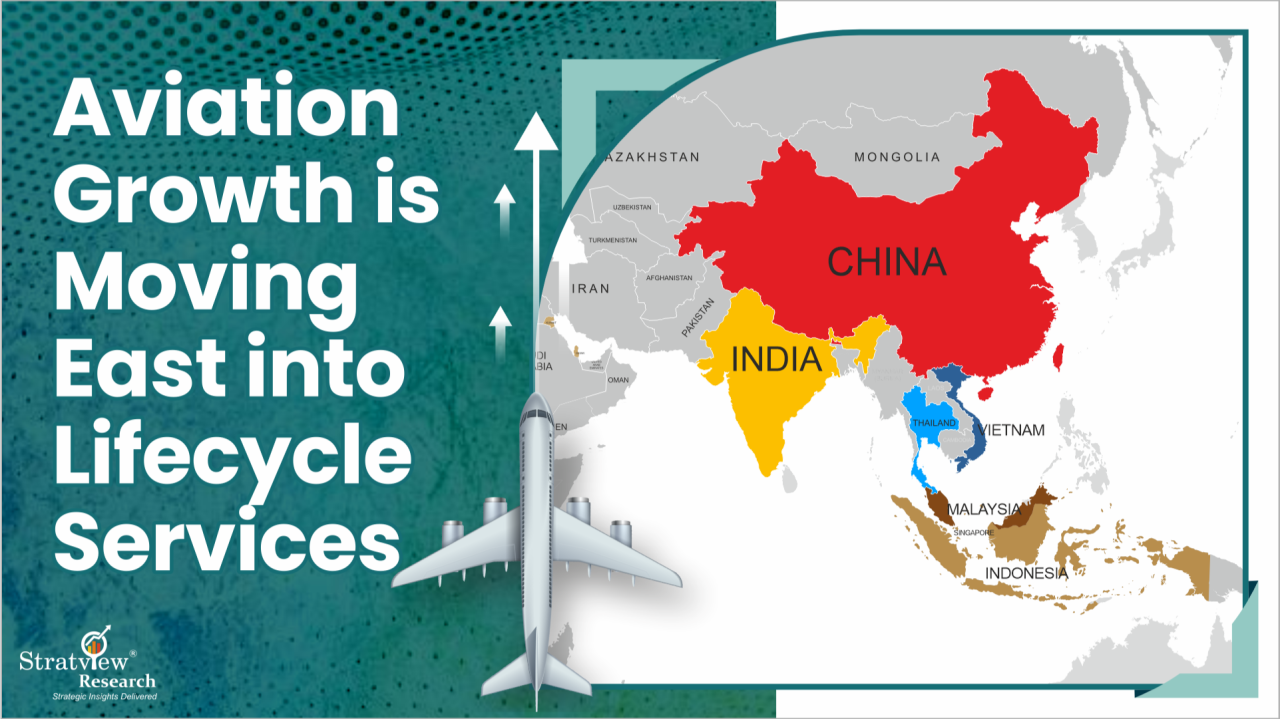
Asia-Pacific’s aviation expansion is increasing demand for maintenance capacity, technical infrastructure, and workforce resources. As fleets expand and utilisation rates rise, airlines are placing greater emphasis on lifecycle services to maintain reliability, manage costs, and preserve asset value.
In high-growth operating environments, performance is no longer determined solely by fleet size. It depends on how effectively aircraft are maintained, upgraded, and supported throughout their service life.
Asia-Pacific Emerges as the Primary Growth Engine
According to the latest Global Services Forecast from Airbus, aviation services demand across Asia-Pacific, including China and India, is projected to grow at a 5.2% CAGR through 2044, reaching US$138.7 billion.
This outlook reflects sustained expansion in air travel. The region is expected to require 19,560 new passenger aircraft over the next 20 years, accounting for 46% of global demand, while passenger traffic is forecast to grow 4.4% annually, compared with the global average of 3.6%.
As fleets expand and utilisation intensifies, lifecycle services are becoming essential to airline profitability, asset availability, and operational continuity.
Services Demand Is Expanding Across the Aircraft Lifecycle
Growth in aviation services now spans the full aircraft lifecycle, reflecting the industry’s focus on reliability, efficiency, and passenger experience.
Heavy maintenance demand is rising as fleets expand and mature. Off-wing maintenance alone is projected to grow from US$37.1 billion in 2025 to US$100 billion by 2044, highlighting the scale of future overhaul requirements. Supply chain bottlenecks and shortages of skilled technicians, however, continue to constrain maintenance capacity.
Investment in line and base maintenance capabilities is also increasing, supported by new infrastructure across India, Indonesia, Malaysia, and the Philippines to strengthen regional capacity.
Cabin retrofits and aircraft upgrades are becoming more frequent as airlines seek to improve yields and passenger experience through premium seating, connectivity integration, and interior modernization.
Digitalization is emerging as a key efficiency lever. Spending on digital and connectivity services is projected to expand from US$2.9 billion to US$11.2 billion, as predictive maintenance and operational analytics improve reliability and reduce downtime.
Workforce development remains a critical priority. The industry will require more than 1.06 million additional aviation professionals by 2044, underscoring the scale of talent development needed to sustain growth.
Together, these trends show that airlines are investing not only in aircraft, but in the infrastructure, technology, and talent required to keep fleets operating efficiently.
Operational Support Services Are Gaining Strategic Importance
Beyond maintenance and upgrades, operational support functions are becoming increasingly important to airline performance and cost control.
Maintenance operations support, including engineering services, technical records management, inventory planning, and fleet-wide maintenance coordination, is projected to reach US$46.4 billion by 2044. These functions enable operators to manage complex fleets more efficiently and maintain regulatory compliance.
Ground operations services are forecast to reach US$31 billion, supported by automation and digital tools designed to improve turnaround efficiency and optimise airport operations.
Together, these services underpin daily operational performance and service reliability.
A Structural Shift in Aviation Value Creation
While North America and Europe will continue to provide scale and technical depth, Asia-Pacific is expected to define the next phase of aviation services growth.
Rapid traffic expansion, fleet growth, and infrastructure investment are influencing where maintenance capacity, digital capabilities, and service ecosystems are being developed. This shift is reshaping supply chains, investment priorities, and partnership models across the aviation value chain.
For airlines, MRO providers, OEMs, and suppliers, lifecycle services are no longer peripheral activities. They play a central role in profitability, operational resilience, and passenger experience.
The Strategic Takeaway
Aviation growth increasingly depends on where fleets operate and the service ecosystems that support them.
As demand accelerates across Asia-Pacific, airlines and service providers are expanding maintenance capacity, digital capabilities, and workforce readiness to sustain operational reliability at scale.
Lifecycle services are emerging as a primary driver of efficiency, resilience, and long-term value across the aviation ecosystem.