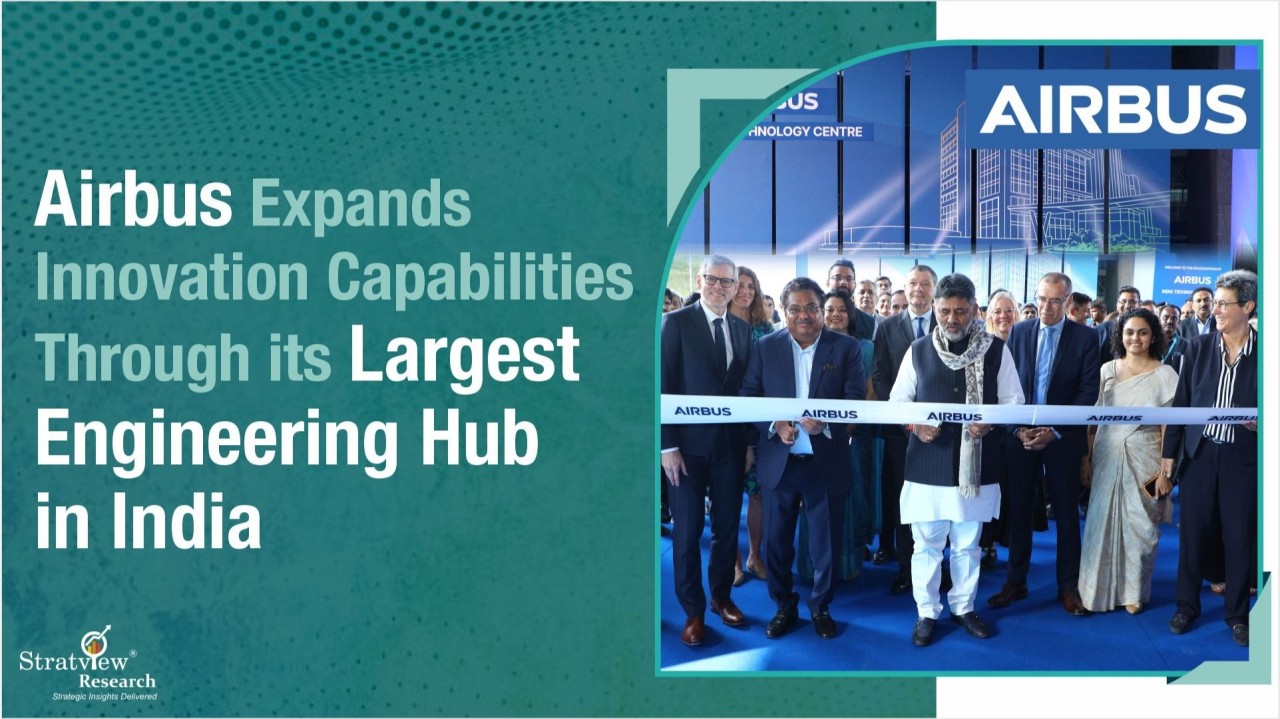
The inauguration of Airbus’ 5,000-seat, 880,000 sq. ft. technology centre in Bengaluru represents a major step forward in the global aerospace landscape. Positioned as the company’s largest engineering and digital innovation hub outside Europe, this facility will serve as a center for engineering, digital transformation, customer services and procurement. At a broader level, this move highlights how aerospace OEMs are increasingly distributing high-value capabilities across global hubs to improve resilience and scale innovation.
India, and particularly Bengaluru, is no longer viewed as a back-office engineering destination but as a strategic innovation nucleus. With Indian engineers already contributing across all major Airbus commercial and helicopter programs, this expansion reinforces the country’s growing role in global aircraft design, digital transformation, and lifecycle management. The scale and sophistication of this facility underline Airbus’ long-term confidence in India as a critical pillar of its global engineering ecosystem.
Strategic Expansion – Make in India Meets Aerospace Excellence
Airbus’ Bengaluru expansion aligns closely with the Indian government’s Make in India initiative, while simultaneously strengthening the country’s position within the global aerospace value chain. Over the years, Airbus has significantly deepened its industrial footprint in India, with annual sourcing exceeding $1.5 billion, up from $500 million in 2019, and a target to surpass $2 billion by 2030.
The supplier ecosystem now includes 100+ Indian partners, delivering critical components such as flap track beams, aircraft doors, and helicopter fuselages, while also supporting final assembly lines for the C295 aircraft in Vadodara and the H125 helicopter in Vemagal, near Bengaluru. This integration reflects a move away from basic outsourcing toward strategic co-development and co-production partnerships.
From a market perspective, such investments are likely to accelerate cluster development, enhance suppliers' capabilities, and facilitate technology transfer, positioning India as a competitive alternative to traditional aerospace hubs. For global OEMs, Airbus’ scale-up serves as strong validation of India’s ability to support complex, high-precision aerospace programs at scale.
Workforce & Talent Development
At the core of this expansion is a strong focus on talent. Built to accommodate up to 5,000 engineers and specialists, the Bengaluru centre brings together one of the largest pools of aerospace engineering talent within Airbus’ global network.
The facility integrates multi-functional capabilities, including engineering, digital services, procurement, and customer support, enabling seamless collaboration across the aircraft lifecycle. The inclusion of the Airbus Leadership University (India chapter) further reflects a long-term commitment to skill development and leadership building.
This also highlights how India is steadily emerging as a global aerospace talent hub. While it strengthens Airbus’ internal capabilities, it also builds a strong talent pool that can support the wider industry, including OEMs, Tier-1 suppliers, and MRO providers.
Driving Innovation & Emerging Technologies in Aviation
The Bengaluru centre is strategically positioned at the intersection of digital transformation and aerospace innovation. Core focus areas include artificial intelligence, robotics, cybersecurity, and advanced engineering, all of which are critical to next-generation aircraft development and operational efficiency.
While not a dedicated sustainability lab, the facility is also expected to play a supporting role in Sustainable Aviation Fuel (SAF) research, testing, and certification frameworks, primarily through digital modelling and systems integration. This positions Bengaluru as a key enabler in Airbus’ broader sustainability roadmap.
Over time, this positions the centre to evolve into a global innovation anchor, where emerging technologies are not only developed but also industrialized at scale.
Bengaluru at the Core of India’s Aerospace Evolution
The establishment of Airbus’s largest technology hub outside Europe firmly positions Bengaluru as a key centre for aerospace engineering, innovation, and digital capabilities. This is supported by the strength of the regional ecosystem, with Karnataka accounting for over 60% of India’s aerospace and defence manufacturing output, underlining a well-established industrial base.
Beyond immediate gains, the growing convergence of talent, technology, and industrial capabilities is expected to accelerate India’s role in next-generation aviation, particularly in digitalization and sustainability. This is steadily reinforcing India’s position as a high-value contributor within the global aerospace ecosystem.