.jfif "Membrane Chromatography Helping Downstream Processing To Follow Upstream Innovation")
Complex biomolecules place unprecedented demands on conventional purification platforms. Although upstream manufacturing has become faster and more productive, downstream purification has struggled to keep pace, creating a bottleneck that directly affects manufacturing efficiency, facility utilization, and time to market. Stratview Research reveals how innovations in membrane chromatography could help to relieve that bottleneck in downstream processes.
For decades, manufacturing pipelines have been dominated almost exclusively by traditional recombinant proteins and monoclonal antibodies (mAbs). Now, they are rapidly filling up with high-titer cell cultures, advanced gene therapies, messenger RNA (mRNA), plasmid DNA (pDNA), and viral vectors. Such complex biomolecules place unprecedented demands on conventional purification platforms to perform at a faster pace. Although upstream manufacturing has become faster and more productive over the past few decades, downstream purification has struggled to keep pace, creating a bottleneck that directly affects manufacturing efficiency, facility utilization, and time to market.
Membrane chromatography is emerging as one of the industry's most promising solutions to this challenge. Unlike conventional resin-packed columns, in which biomolecules slowly diffuse into porous beads before binding, membrane adsorbers rely on convective flow, allowing molecules to move rapidly through interconnected pores and interact directly with functional ligands.
Multiple studies now point to membrane chromatography as an enabling technology for high-titer upstream processes, connected manufacturing, and sustainable facility design. Membrane chromatography is also proven to significantly reduce processing times, minimize pressure drops, reduce costs, and increase throughput, particularly for large biomolecules that are difficult to purify using traditional chromatography systems. When a single technology can shorten processing time by up to 95%, lower costs by >70%, enable 10–100× higher flow rates, and improve manufacturing efficiency simultaneously, its growing adoption across biopharmaceutical facilities is a logical progression rather than a surprise.
The Case for Ion Exchange in Membrane Chromatography
Manufacturers choose ion-exchange chromatography (IEX), affinity chromatography, or hydrophobic interaction chromatography (HIC) based on the specific biophysical properties of the target product and the types of impurities needing removal. Although each serves a distinct purpose within downstream processing, IEX accounts for >75% of the global membrane chromatography market.
IEX is a core separation technique in downstream bioprocessing used to separate biomolecules based on their net surface charge. IEX is widely used for the purification of mAbs, recombinant proteins, vaccines, pDNA, viral vectors, and other such biologics. IEX’s flexibility to support multiple purification steps, from impurity removal during intermediate purification to final polishing, has made it industry’s greatest needs. The demand is evident in the product strategies of suppliers such as Sartorius, Cytiva, and Merck, all of which have recently expanded their IEX membrane portfolios to support single-use manufacturing. By contrast, affinity membranes often rely on product-specific ligands — e.g., protein A–based ligands for capture of fragment crystallizable region (Fc)–containing molecules. Thus, affinity membranes are highly selective but less applicable across multiple product classes.
Pharma Is Driving Adoption, But It's Not Alone
Although membrane chromatography has found applications in biotechnology, academic research, environmental testing, and even food and beverage (F&B) processing, its strongest push continues to come from the pharmaceutical industry.
The rapid expansion of biologics has created an urgent need for purification technologies that can match today's high-productivity manufacturing platforms. Membrane chromatography has become a natural fit, offering the throughput, scalability, and process flexibility required for modern biopharmaceutical production.
Today, pharmaceutical manufacturers account for more than half of membrane chromatography adoption. The technology is now routinely incorporated into downstream workflows for impurity clearance, virus removal, and polishing steps.
Leading Suppliers and Their Innovation Priorities
The membrane chromatography market remains relatively consolidated, with a handful of established life-science companies accounting for a significant share of product development and commercial adoption. Major suppliers include 3M, Agilent Technologies, Cytiva (Danaher), Donaldson, Merck KGaA, Pall Corporation (Danaher), Repligen Corporation, Sartorius AG, Shimadzu Corporation, and Thermo Fisher Scientific.
Companies are introducing membrane platforms with enhanced ligand chemistries to improve impurity selectivity and dynamic binding capacity (DBC), while also offering scalable device formats that enable seamless transfer from process development to commercial manufacturing.
Another major focus is digital integration, with membrane systems being designed for compatibility with automated process control, real-time monitoring, and data-driven manufacturing environments. Vendors are also investing in application-specific solutions tailored for emerging modalities such as oligonucleotides, extracellular vesicles, and other next-generation biologics that require purification strategies beyond conventional mAb workflows.
Such shifts clearly depict the industry's move toward “smart,” adaptable purification technologies capable of supporting increasingly diverse therapeutic pipelines.
Membrane Chromatography Is Moving Beyond the Polishing Step
The rising preference for single-use technologies is driving adoption of membrane chromatography. Its modular, disposable design enables flexible and efficient purification, while expanding applications beyond the biopharmaceutical industry continue to support market growth.
Furthermore, personalized medicine is growing, and advanced therapies continue to move from research laboratories into commercial manufacturing. Demand will only intensify for purification technologies capable of supporting small batches, fast turnaround times, and flexible production schemes.
Membrane chromatography is increasingly being viewed not as a replacement for every conventional chromatography step, but as an essential complement that addresses some of the industry's most pressing downstream challenges. As shown in Figure 1, the global membrane chromatography market is projected to grow from US$0.6 billion in 2024 and $0.7 billion in 2025 to $1.2 billion by 2031, expanding at a compound annual growth rate (CAGR) of >8.5%. The growth mirrors the rapid expansion of biologics manufacturing, cell and gene therapies, vaccine production, and nucleic-acid–based therapeutics, all of which require faster and more efficient purification platforms.
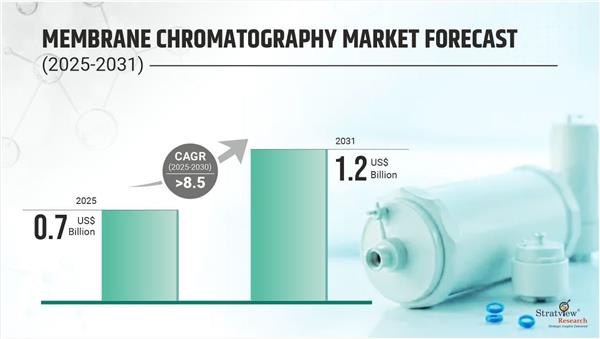
Figure 1: The Global Membrane Chromatography Market Forecast (2025-2031)
Much of today's manufacturing expansion is already taking place across the Asia–Pacific region, where governments and biopharmaceutical companies are investing heavily in domestic manufacturing capacity. China has strengthened its position through sustained investments in biotechnology research, domestic manufacturing, and national initiatives such as Made in China 2025. Meanwhile, India is emerging as one of the fastest-growing markets, supported by expanding biologics R&D, increasing contract-manufacturing activity, and government initiatives to strengthen indigenous biomanufacturing. Combined with growing healthcare infrastructure, rising investments in life sciences, and the region's role as a cost-competitive manufacturing hub, Asia–Pacific is becoming the focal point for next-generation purification technologies.
Like any emerging manufacturing technology, membrane chromatography is still evolving. Its lower DBC in some applications and the regulatory effort required to validate new purification processes can slow adoption, particularly in facilities built around established resin-based workflows. Yet such barriers are gradually diminishing as membrane manufacturers introduce higher-capacity devices, improved binding chemistries, and platforms designed for single-use and continuous manufacturing.
As biologics pipelines become more diverse and manufacturing shifts toward flexible facilities based on single-use technologies, membrane chromatography is steadily becoming a standard component of modern downstream processing.
Authored by Stratview Research. Also published on – BioProcess International