.jfif "High Performance Liquid Chromatogaphy Contnues to set the pace for Biopharmaceutical Analytics")
Biosimilars and complex biologics introduce analytical challenges that demand assays with high sensitivity, strong reproducibility, and fast turnaround times. As this market analysis shows, high-performance liquid chromatography remains the biopharmaceutical industry’s preferred technique for analytical activities.
Worldwide medicine use will cross four trillion defined daily doses (DDDs) by 2030, predicts IQVIA. Meeting this rising demand will require the pharmaceutical industry to manufacture more medicines at greater speed. That, in turn, will increase reliance on liquid chromatography (LC), one of the most widely used analytical techniques throughout the drug development and manufacturing life cycle. Among the many different techniques in the global LC market, high-performance liquid chromatography (HPLC) represents over 65% of the total value, making it by far the industry's preferred analytical platform.
Biosimilars and complex biologics such as antibody–drug conjugates (ADCs) and gene therapies introduce analytical challenges that demand sensitivity, reproducibility, and fast turnaround times. As development cycles shorten and regulatory expectations for product characterization become more rigorous, analytical laboratories are expected to deliver increasingly reliable data without creating bottlenecks in development. HPLC continues to meet such demands through advances in column chemistry, instrument performance, and software, allowing laboratories to characterize increasingly complex molecules with greater confidence.
Biologics Are Redefining What Laboratories Expect From HPLC
Biologics have raised the analytical bar for chromatography. Laboratories no longer expect HPLC simply to separate compounds; it also needs to distinguish closely related biomolecules, detect trace-level impurities, generate reproducible data, and integrate seamlessly with advanced analytical workflows. Such expectations are also changing laboratory spending. A significant share of investment now goes toward advanced HPLC instruments that deliver high sensitivity, strong automatability, and regulatory-ready data.
As analytical workloads become more demanding, laboratories are also increasing their spending on HPLC consumables, including columns, vials, pumps, filters, and solvents. The same trend is driving innovation across HPLC platforms. Instrument manufacturers are introducing, and laboratories are adopting, workflows for ultrahigh-performance liquid chromatography (UHPLC), rapid-resolution liquid chromatography (RRLC), nano liquid chromatography (nano-LC), capillary liquid chromatography (CLC), multidimensional chromatography, and integrated liquid chromatography–mass spectrometry (LC-MS).
For applications in which sample availability is limited or exceptional sensitivity is required, nano-LC and CPC have become increasingly important. RRLC, a refinement of classical HPLC, uses shorter chromatographic columns packed with smaller particles, typically between 1.8 and 3 µm, enabling significantly faster separations while maintaining chromatographic resolution and improving impurity analysis.
Whereas traditional HPLC systems typically operate at pressures of up to 6000 psi, with some modern systems reaching ≈9000 psi, UHPLC systems routinely operate between 15,000 and 18,000 psi, with new platforms exceeding those limits. Next-generation UHPLC systems continue to push operating pressures even higher to achieve faster gradients, higher flow rates, and improved separations using resin particles or channels of <2 µm.
Agilent's 1290 Infinity III LC system operates at up to 18,855 psi (1300 bar), while Shimadzu's Nexera XS inert system supports pressures of 19,000 psi (1300 bar). Thermo Fisher Scientific’s Vanquish Horizon UHPLC system extends the operating pressure further to 22,000 psi (1500 bar), allowing laboratories to analyze increasingly complex molecules without compromising analytical performance.
Modern HPLC platforms are integrating automation, predictive maintenance diagnostics, machine learning, and cloud-connected software to streamline workflows and reduce manual intervention. Systems such as Agilent’s 1260 Infinity III Method Development system can screen >100 chromatographic conditions across multiple columns and mobile phases without manual intervention, whereas the Thermo Fisher Chromeleon CDS platform offer centralized instrument control, automated readiness checks, and built-in audit trails to ensure compliance.
Expanding Beyond Pharmaceutical Manufacturing
HPLC’s footprint extends well beyond drug manufacturing. From environmental-testing facilities and food-safety laboratories to academic research centers and government institutions, the technology has become a trusted analytical platform wherever precision and reproducibility are essential (Figure 1).
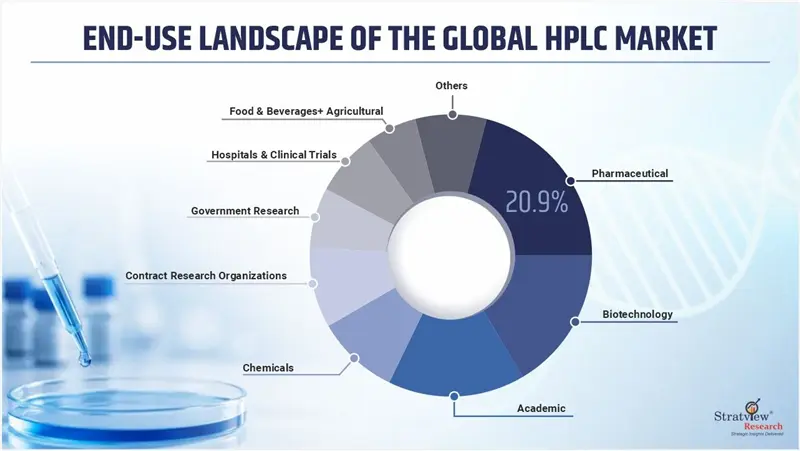
Figure 1: End-Use Landscape of the Global High-Performance Liquid Chromatography (HPLC) Market; Adapted from Reference 2.
Pharmaceuticals and biopharmaceuticals continue to account for the largest share of demand. In 2025, pharmaceutical companies around the world invested over US$1.352 billion in HPLC systems. Whereas sectors such as food and environmental testing rely on HPLC for periodic sampling or screening, pharmaceutical companies rely heavily on that technique because it is legally mandated at every stage of a drug's life cycle.
Every new clinical trial and every emerging disease adds to the number of samples that laboratories need to analyze. Hospitals and research organizations are handling that growing workload by relying on analytical techniques that can deliver accurate and reproducible results. From monitoring drug levels to identifying disease biomarkers, HPLC has become an integral part of clinical testing, making hospitals and clinical-trial laboratories some of the technique’s fastest-growing user groups in the global LC sector.
Regional Investment Patterns Reflect Broader Changes
Demand for HPLC closely mirrors global pharmaceutical manufacturing activity. North America continues to lead the market because of a high concentration of biopharmaceutical innovators, contract development and manufacturing organizations (CDMOs), advanced research infrastructure, and major instrument manufacturers. Continued investment in drug discovery and biologics manufacturing supports sustained demand for high-end analytical platforms.
The fastest demand increase, however, is occurring across Europe thanks to the region’s expanding life-sciences ecosystem. Germany (the region's largest pharmaceutical manufacturing hub), the United Kingdom (one of Europe's fastest-growing life-sciences ecosystems), and France (with strong pharmaceutical and biotechnology bases) all provide a solid foundation for analytical technologies. The presence of companies such as Merck KGaA and Sartorius AG further strengthens Europe’s position as a key customer of HPLC equipment. At the same time, strategic initiatives across the region to accelerate drug discovery, biologics manufacturing, and clinical research are steadily increasing the need for HPLC across analytical development, quality control, and regulatory testing.
Those regional dynamics are influencing product-development strategies, prompting instrument manufacturers to design systems that address both high-volume commercial laboratories and rapidly expanding research facilities.
Market Growth Reflects Changing Analytical Priorities
The evolution of HPLC is increasingly visible in market performance. If current trends continue, then HPLC is likely to become even more central to pharmaceutical and life-sciences research than it is today.
With healthcare spending increasing worldwide and pharmaceutical research and development (R&D) continuing to expand, the need for rapid, digitally connected, and highly reproducible analytical workflows will only intensify. The global HPLC market is expected to surpass $8.3 billion by 2031 (Figure 2), a reflection not only of rising instrument sales, but also of the growing analytical demands of modern drug development.
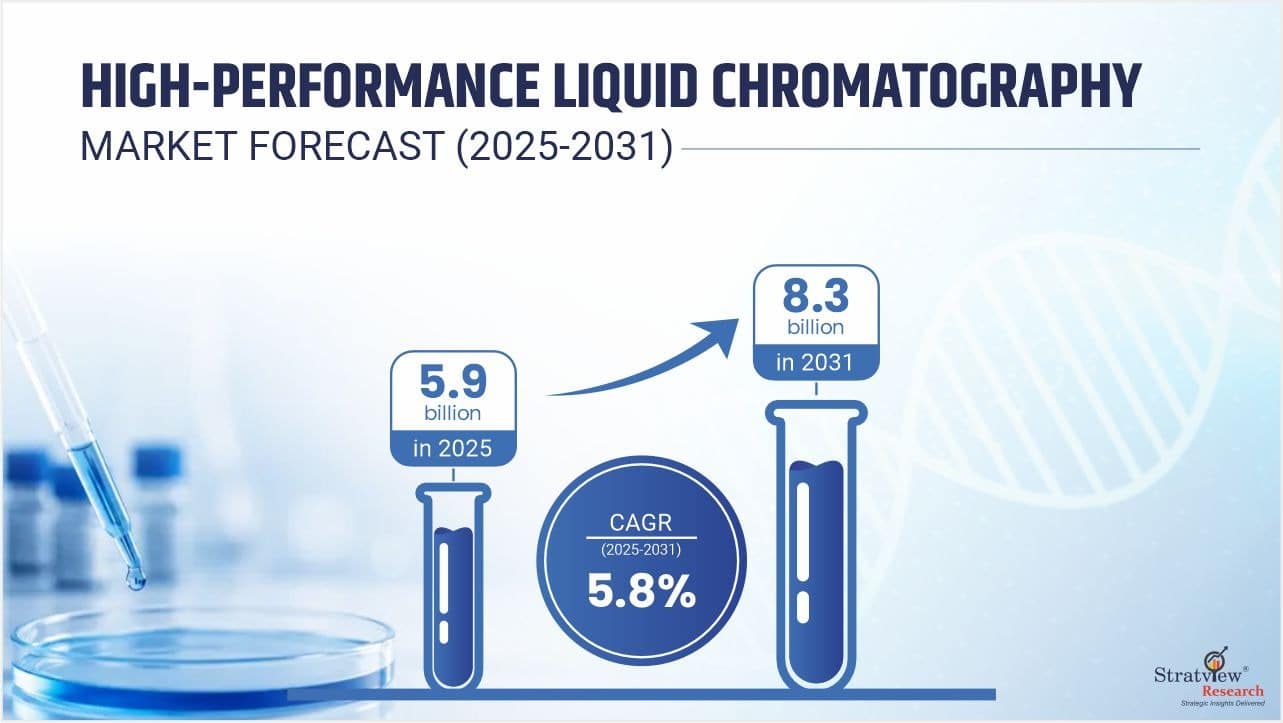
Figure 2: The Global High-Performance Liquid Chromatography (HPLC) Market Forecast (2025 to 2031)
Meeting such demand is no longer about improving chromatographic performance alone. The adoption of artificial intelligence (AI) and digital analytics in HPLC is steadily reshaping how laboratories operate. Most leading manufacturers are embedding AI and predictive capabilities into software and workflow management.
Agilent, for example, has introduced AI-powered peak detection, automated oligonucleotide analysis, proactive instrument diagnostics, and Internet of Things (IoT)–enabled laboratory management through its OpenLab and Digital Lab ecosystems, helping laboratories to automate data processing, reduce manual integration, improve sample traceability, and obtain analytical results in minutes instead of hours.
Similar strategies are visible across Thermo Fisher Scientific, Waters Corporation, Shimadzu, and other leading players, in which cloud-connected software, predictive maintenance, and centralized instrument control are reducing analyst intervention while improving compliance, reproducibility, and laboratory productivity.
The future of HPLC will be defined by its ability to combine analytical precision with digital intelligence, helping laboratories make faster, better-informed decisions as the complexity of modern medicines continues to grow.
Authored by Stratview Research. Also published on – BioProcess International