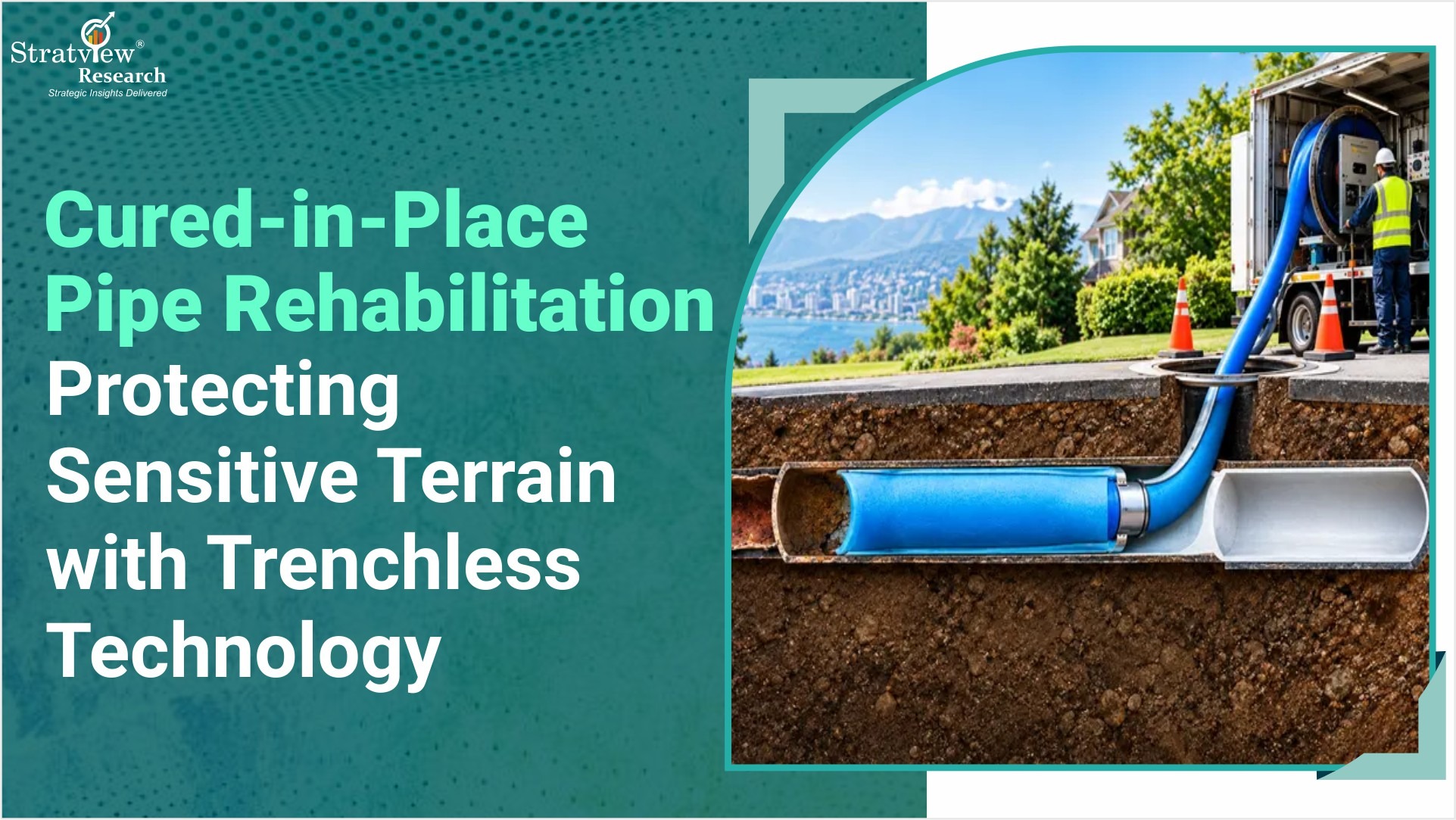
Trenchless cured-in-place pipe rehabilitation technology addresses aging water infrastructure challenges, reducing costs by 30% to 60% while minimizing environmental impact and community disruption.
Cured-in-place pipe rehabilitation offers utilities cost-effective, environmentally sustainable alternative to traditional excavation methods for deteriorating water networks.Thermocasting Fold and Form Pipe Rehabilitation.
Everyone in the water and wastewater industry agrees on one thing: Underground infrastructure is aging.
Yet a less-discussed reality is that rehabilitation efforts are struggling to keep pace. Despite record infrastructure investment commitments across North America, Europe, and parts of Asia-Pacific, rehabilitation backlogs continue to grow. The World Economic Forum estimates a $7.5 trillion (€6.5 trillion) global water infrastructure investment gap by 2040. A significant share of this investment will be directed toward modernizing aging water and wastewater pipeline networks, where conventional dig-and-replace methods remain time-, labor-, and capital-intensive and cause widespread traffic disruption, community inconvenience, and environmental impacts.
As utilities seek practical, cost-effective, and publicly acceptable ways to address deteriorating pipelines, trenchless methods like cured-in-place pipe (CIPP) rehabilitation have emerged as a viable solution to the widening gap between infrastructure deterioration and renewal capacity. The global CIPP market, according to Stratview Research, is expected to cross $3.1 billion this year.
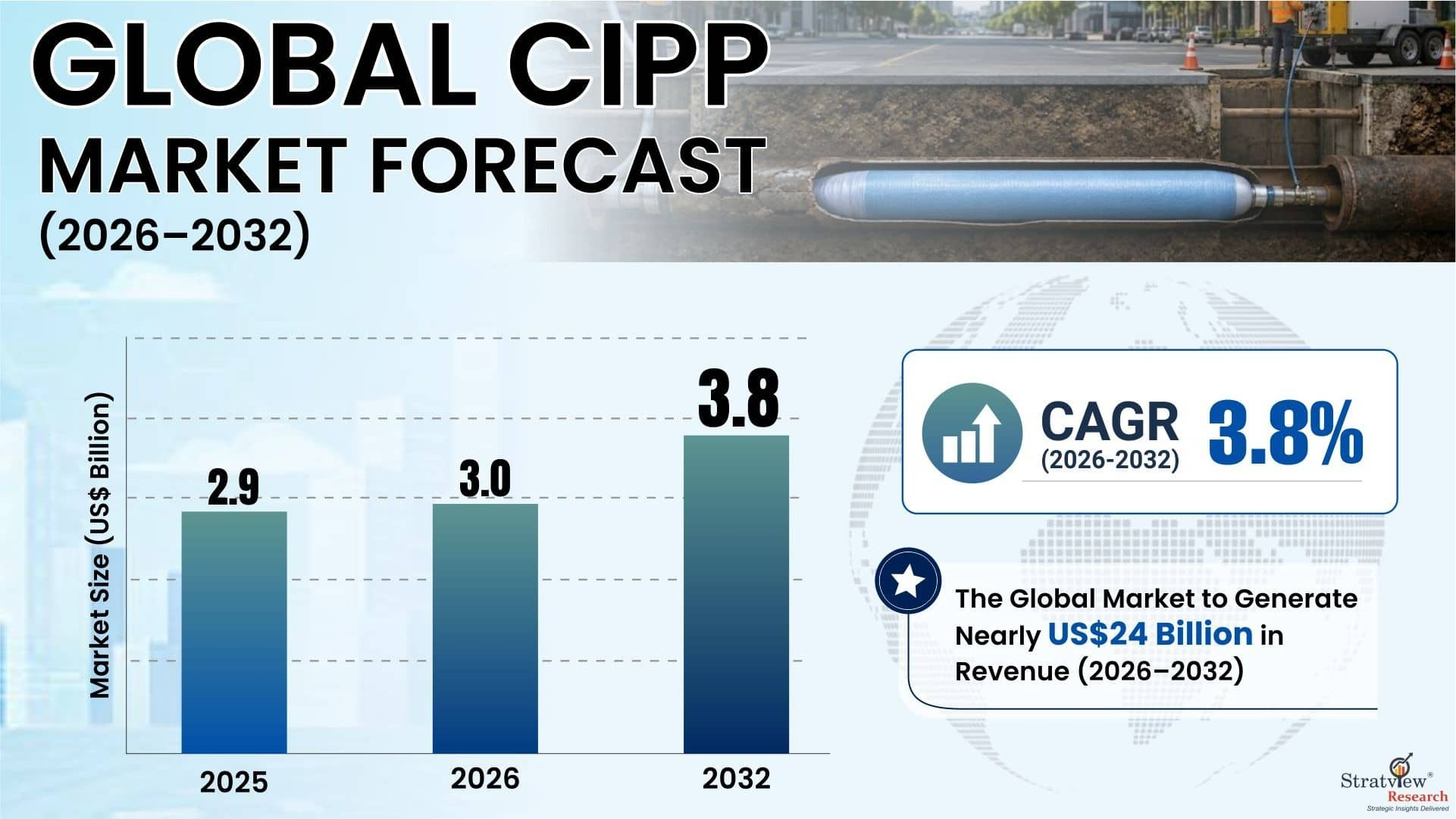
Fig 1. Global CIPP market to reach US$3.8 billion by 2032, growing at a 3.8% CAGR.
The pipe rehabilitation industry is evolving from excavation-intensive repair methods that disrupted roads, communities, and budgets to trenchless technologies that renew underground assets with minimal surface impact. What began as an alternative to traditional dig-and-replace repairs has grown into a multibillion-dollar industry. The global CIPP market, according to Stratview Research, is expected to cross $3.1 billion this year.
The hidden economics driving the shift from traditional to trenchless
For utilities responsible for thousands of miles of buried assets, rehabilitation offers a way to address structural deficiencies while preserving much of the existing network. Viewed through this lens, CIPP becomes more than a repair method. It becomes a strategic asset management tool. CIPP can extend pipeline service life by more than 30 years, allowing utilities to maximize the value of existing assets while modernizing aging infrastructure in a cost-effective and sustainable manner.
The CIPP approach becomes particularly relevant given the high costs associated with conventional open-cut replacement, where industry estimates suggest that more than 70% of total construction expenditures are often consumed by surface restoration rather than pipeline installation itself. CIPP can efficiently reduce total project costs by 30% to 60% compared with traditional dig-and-replace methods. The savings stem largely from avoiding extensive excavation, landscaping, and hardscape restoration.
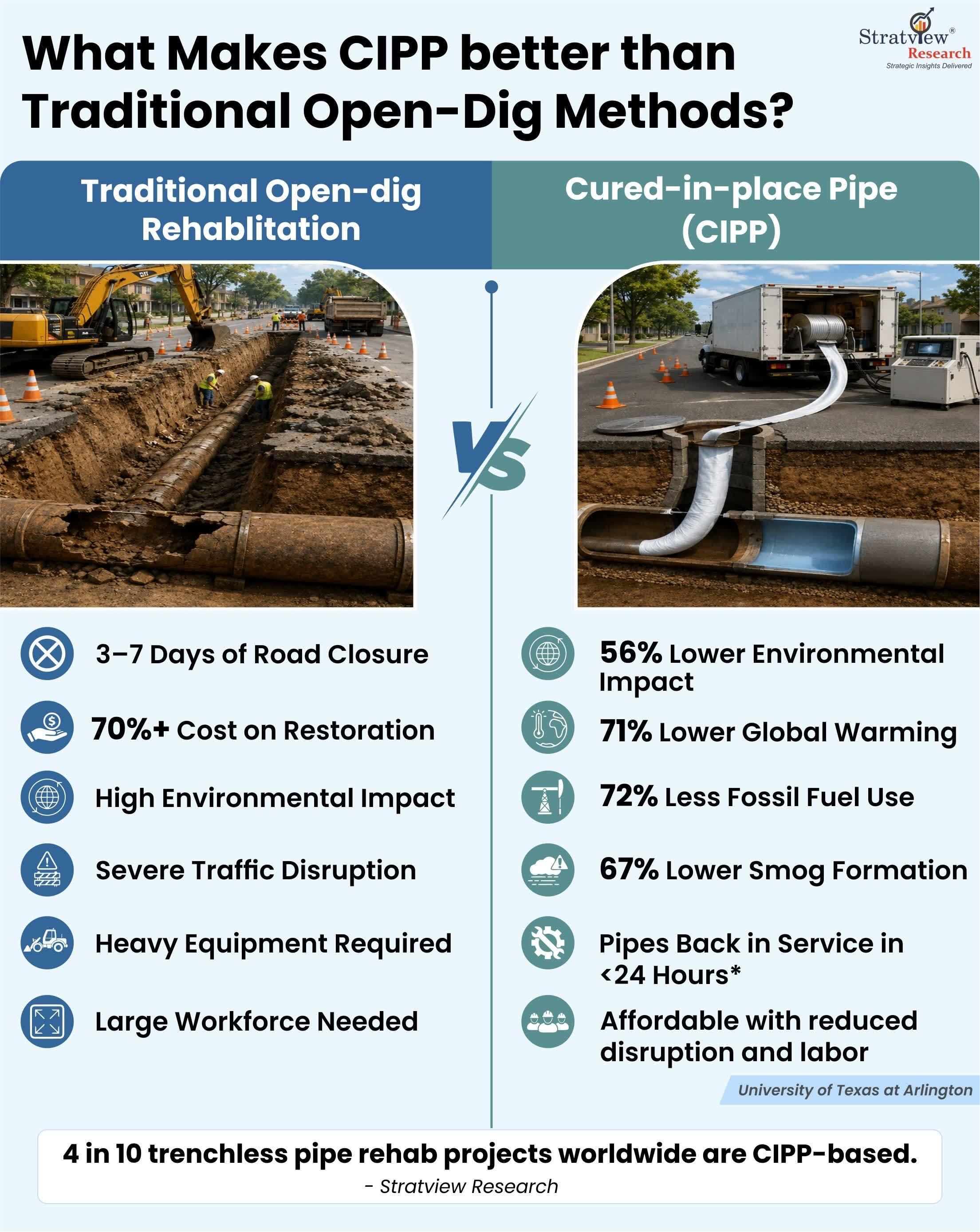
Fig 2. CIPP reduces costs, environmental impact, and disruption.
Beyond economics, rehabilitation also delivers measurable environmental benefits. A 2025 study by the University of Texas at Arlington comparing open-cut replacement with the widely used trenchless method — CIPP rehabilitation — reported 56% lower overall environmental impact, 71% lower global warming impact, 72% lower fossil fuel reduction, and 67% lower smog formation.
Estimates from residential sewer line replacement projects in North America suggest that traditional open-cut replacement typically costs approximately $5,000 to $15,000 for pipework alone, with an additional $2,000 to $8,000 or more often required for driveway, landscaping, and surface restoration. In comparison, CIPP rehabilitation generally costs approximately $4,000 to $12,000, depending on pipe length, diameter, and site accessibility, while requiring minimal surface restoration.
Time is another decisive advantage. While traditional open-cut repairs can keep roads and public spaces disrupted for three to seven days or even more, CIPP can return them to service in as little as 24 hours.
The Four decisions that define CIPP performance
The long-term performance of a CIPP installation is largely determined by four material and process decisions made well before the liner enters the host pipe.
Each material and process brings its own performance advantages, but market adoption is rarely uniform. Analysis highlights the solutions that have emerged as the industry's preferred choices.
The first is the fabric structure, which forms the backbone of the finished liner. Depending on design requirements, manufacturers use nonwoven polyester felt, woven reinforcements, fiberglass, or hybrid constructions to achieve the required structural properties. Since existing pipelines rarely have perfectly uniform dimensions, CIPP liners must be capable of conforming to irregular pipe geometries and be able to absorb resin efficiently. This is why nonwoven constructions are the most widely used fabric structure in CIPP applications.
The second decision involves the coating or film layer. Typically made from polyethylene (PE), polypropylene (PP), polyurethane (PU), polystyrene, or similar polymers, this layer helps contain the resin during installation, protects the liner during handling and inversion, and, in many designs, contributes to the corrosion-resistant surface of the rehabilitated pipe. Many CIPP projects favor PP coatings because they hold up well in chemically aggressive environments and offer lasting performance.
The third decision is the resin matrix, which ultimately binds the reinforcement into a load-bearing composite structure. Polyester is known for its cost-effectiveness, vinyl ester is selected for enhanced chemical resistance, and epoxy is selected for applications demanding higher performance, adhesion, or regulatory compliance. Polyester accounts for more than 70% of all the CIPP procedures done across the globe and is widely favorable for wastewater, sewer, and stormwater rehabilitation projects because it delivers the lowest installed cost. Epoxy is widely specified for drinking water and pressure pipelines, while vinyl ester is gaining share in UV-cured applications and is poised to expand further due to its superior resistance to corrosive environments.
Once these three elements are combined, the final performance-defining decision is the curing method. The resin-saturated liner is transformed into a structural pipe through hot water, steam, or UV-light curing, with each method offering distinct advantages in terms of installation speed, process control, and application suitability. While steam was historically the dominant curing method, UV curing has gained significant traction in recent years. Today, steam and UV are used more frequently than hot water curing, and according to Stratview Research, UV is on track to become the preferred curing method for more than 44% of CIPP projects worldwide by 2032.
Nine out of 10 small-pipe repairs choose CIPP
CIPP is used across pipe diameters ranging from less than one foot to well over five feet. However, industry data shows that its adoption is heavily concentrated in pipes below one foot in diameter.
One reason is that the resin-saturated liner forms a thin-walled pipe within the existing conduit, preserving more flow capacity than alternatives such as slip-lining and pipe bursting, which require a smaller carrier pipe and therefore a greater reduction in internal diameter. CIPP can also negotiate bends and geometric variations, making it particularly suited to the dense networks of small-diameter sewer and water pipes. The result is a clear market preference: research indicates that nearly 90% of all CIPP installations are carried out in pipes less than one foot in diameter.
However, CIPP is benefiting from a new generation of materials designed to meet increasingly stringent environmental and operational requirements.
As environmental regulations tighten, utilities and contractors are increasingly shifting toward no-styrene and low-emission resin systems. The trend is expanding CIPP's applicability in drinking water networks, urban environments, and projects with stringent air quality requirements.
Building the next generation of CIPP rehabilitation
Utilities are under pressure to reduce environmental impact, shorten project timelines, and improve asset management, pushing the industry toward digital and low-emission solutions.
At the same time, no-styrene and low-emission resin systems are expanding CIPP's use in sensitive applications such as drinking water networks and internal building plumbing.
For example, this year, in February, Colorado launched a sanitary sewer rehabilitation program covering more than 13,000 feet of pipeline using CIPP liners. In May, the City of Edmonds, Washington, began rehabilitating aging sewer pipelines through CIPP, while in India, authorities in Gurugram approved a ₹58 crore CIPP-based rehabilitation project for the deteriorating sewer network beneath the heavily trafficked corridor. Most recently, Stafford Township, New Jersey, launched emergency sewer rehabilitation works in June, relying on continuous operations to rapidly restore critical infrastructure.
The examples cited above are merely indicative of a much larger global trend. As aging pipeline networks continue to drive rehabilitation requirements, analysis suggests that the market will create a cumulative sales opportunity of approximately $28 billion between 2026 and 2032, reflecting the scale of CIPP projects anticipated worldwide over the coming years.
As liners become smarter, cleaner, and more adaptable — including for noncircular structures — the CIPP market is positioned for sustained growth across both municipal and industrial networks.
Authored by Stratview Research. Also published on – PlasticsToday